Sakana AI is taking a bold new direction. Its CEO, David Ha, says the company’s upcoming domestic foundation model — named Sawara — is aimed at more than just boosting Japan’s defense or cybersecurity. The startup sees it as central to helping Japan’s industrial and manufacturing sectors stay globally competitive.
Sawara’s Context: What Sakana AI Already Offers
Sakana AI, a Tokyo startup founded in 2023 by David Ha, Ren Ito, and Llion Jones, has already delivered multiple tools built on foreign models fine-tuned for Japan. This includes Namazu, a model specialized for Japanese language, culture, and business needs; and Fugu, a multi-agent orchestration system that taps into various large language models (LLMs) to assemble agents for different tasks. These models address limitations in off-the-shelf solutions — for example, bias, refusal to address Japan-related topics, or harsh responses to culturally sensitive prompts.
Sawara is Sakana’s move to establish its own foundation model from scratch. The plan: begin development around November 2026, release a smaller variant in early 2027, then follow up with a larger version. The smaller model will be crafted for on-premises deployment and tasks that require strong control over security and customization.
Bigger Than Defense: Industrial, Manufacturing & Gov’t Use
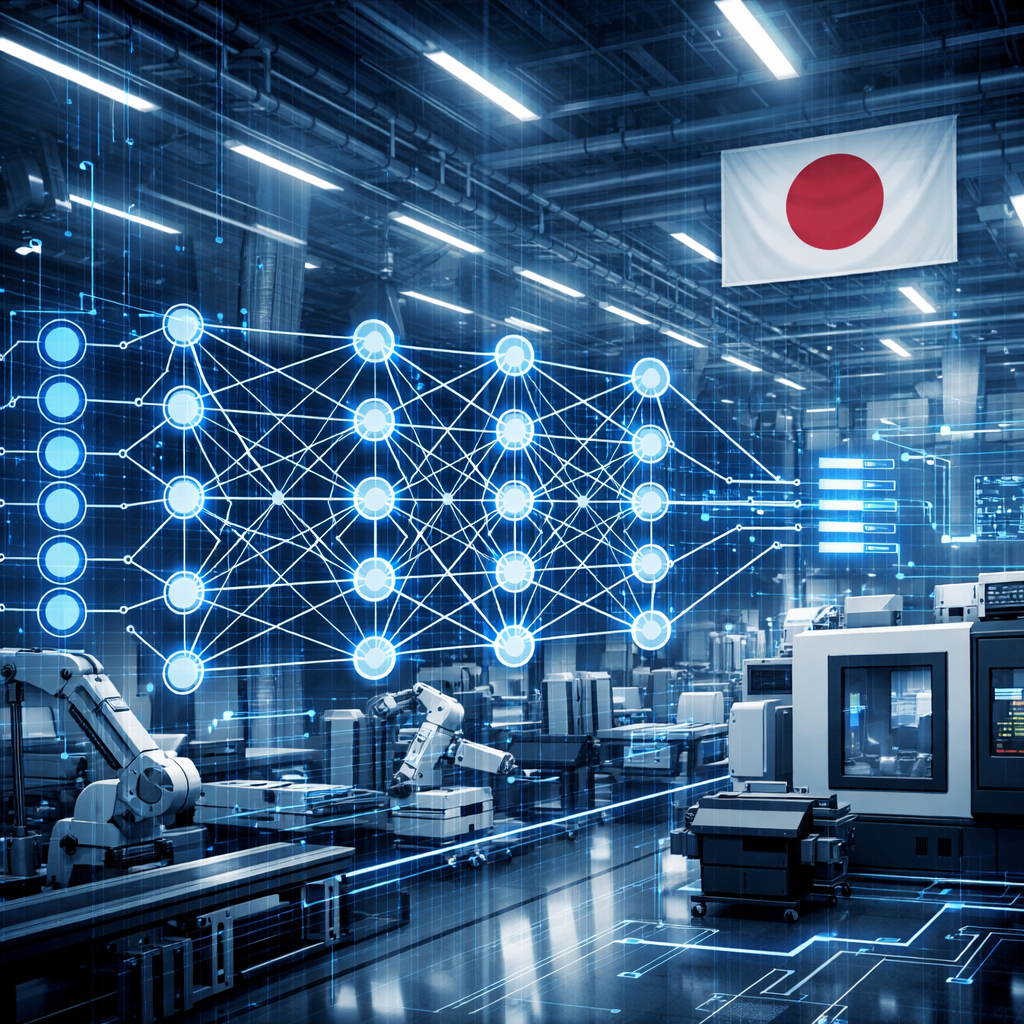
While national security gives urgency to the effort, Ha emphasizes Sawara’s relevance for Japan’s broader industrial base. The industrial and manufacturing sectors, where precision, reliability, and domain expertise matter, stand to benefit from an AI model designed with their specific needs in mind.
Sakana has already signed contracts with government agencies, including the Ministry of Defense (to explore data analysis across multiple sources) and the Ministry of Internal Affairs and Communications (for detecting disinformation). These partnerships have shaped Sawara’s development priorities — such as the ability to deploy models on-premises, audit training data, and deeply customize behavior.
Ha acknowledges that even with Sawara, Sakana won’t fully displace reliance on foreign AI systems, especially for enterprise customers who combine Namazu, Fugu, and external models. But for use-cases involving defense, critical infrastructure, or highly sensitive data, domestic capabilities are increasingly indispensable.
No IPO Yet, But Global Ambitions Intact
Speculation about Sakana AI going public has swirled following reports in Nikkei and Bloomberg. As of late November 2026, Ha says there are no near-term plans to list, though he expects Sakana will eventually IPO in Japan. The timing and valuation remain undecided.
The long-term growth strategy centers on helping Japanese manufacturers compete abroad. Sakana is positioning Sawara not just as a local solution, but as part of Japan’s economic soft power — enabling domestic firms to integrate AI-native capabilities while maintaining control over sensitive elements like data, deployment, and alignment.
Sawara comes at a time when demand for sovereign AI is rising worldwide. With concerns about supply chain risk, geopolitical friction, and AI’s strategic importance, many nations are exploring homegrown AI foundations. For Japan, known for its robust industrial output and global trade presence, having foundation models it can trust could be a competitive and security necessity.
What to watch: how Sakana balances quality, cost, and speed — especially when its new models must rival both frontier AI systems and established foreign competitors. Also key will be how Sawara performs in sensitive environments — from defense and infrastructure to industrial automation — without succumbing to biases or governance challenges. Success here could redefine Japan’s AI strategy, make it a leader in sovereign AI, and offer a model for other nations grappling with similar trade-offs.