Apple has quietly abandoned the “homeOS” name for its smart home software, moving instead to a simpler branding scheme. The system will now be known as “HomeView software,” aligning with the company’s usual references to “HomePod software” and “tvOS.”
The change was confirmed after trademarks and reports indicated “homeOS” was once in play, with filings pointing to Apple via a shell company. The hint of a distinct operating system for its smart home hub suddenly vanished in favor of adopting the HomeView moniker when the feature ships. Devices will bear version numbers like “HomeView software version 27.2.”
What This Implies for Apple’s Smart Home Strategy
The shift suggests Apple sees its smart home hub more as a flavor extension of its broader ecosystem than as a standalone platform. Rather than introducing a new OS, the company is leaning on established naming consistency—HomeView for home hub software, similar to Apple’s existing approaches for HomePod and Apple TV.
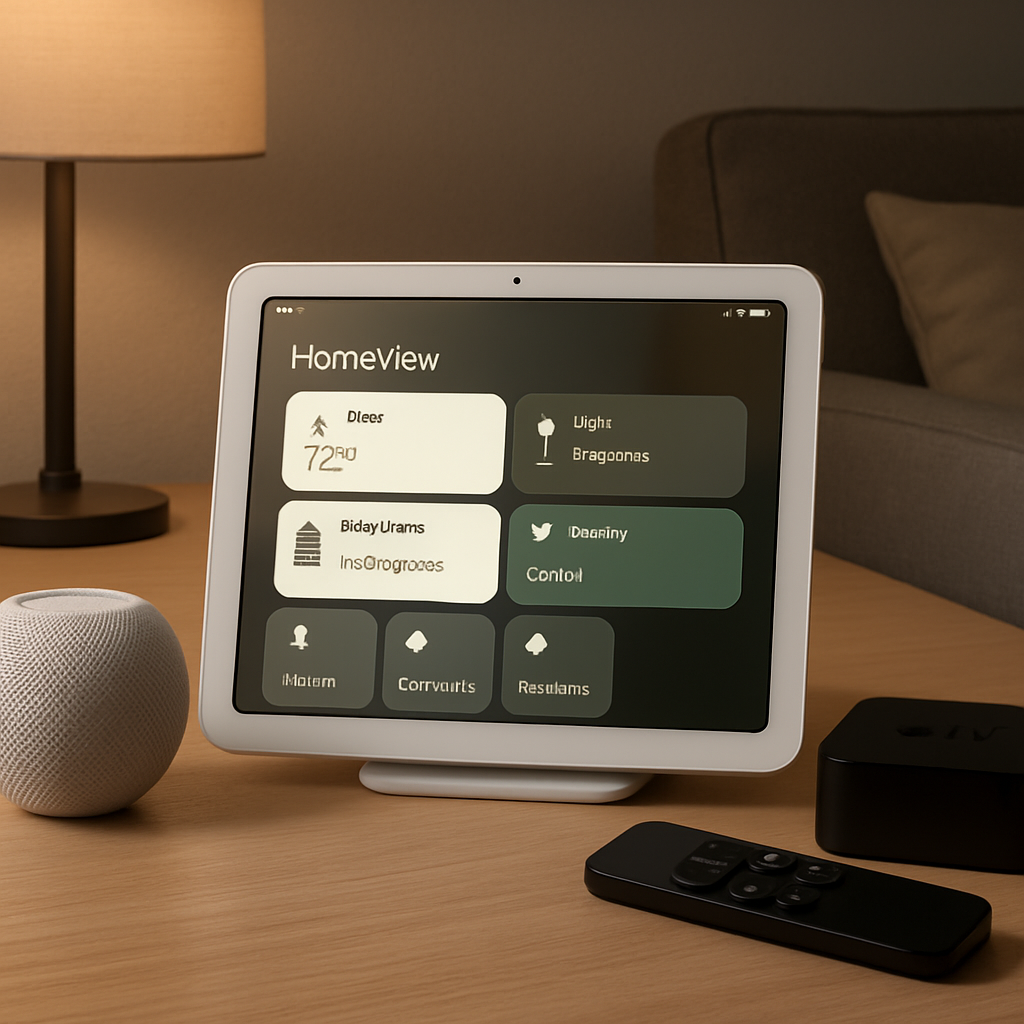
HomeView emerges in parallel with Apple’s upcoming hardware launches, including a touch-enabled smart home display labeled “HomeView” along with a revamped Apple TV 4K and HomePod mini 2. These products are expected to debut around mid-November, following the “Welcome Home” event scheduled for October 13, where the changes will be made public. The hub is expected to offer app icons, widgets, customizable clock faces, and built-in facial recognition among its features.
Until now, rumors about “homeOS” portrayed an ambitious merger of iOS, tvOS, and watchOS elements—intended for a feature-rich home device with its own identity. The move away from “homeOS” to “HomeView” signals that Apple is opting for incremental branding tweaks rather than fully launching a new operating system distinct from its existing platforms.
Apple’s decision also helps avoid confusion. A standalone “homeOS” might suggest a deeper level of separation or functionality than Apple is ready to offer. By treating the software as a versioned layer over its current ecosystem, it maintains coherence across its device lineup, from iPhone and iPad to HomePod and Apple TV.
Expect more clarity post-event regarding what HomeView will actually bring: feature set, hardware compatibility, whether third-party apps will run directly, and how deeply integrated this software will be with Apple’s AI and smart home roadmap. What Apple reveals could redefine its place in connected home environments.
Why the Naming Matters
Names carry weight, especially for Apple. A move from “homeOS” to “HomeView” isn’t just cosmetic—it reflects strategic priorities. It suggests Apple sees more value in a unified ecosystem where every new device or feature feels like part of the whole rather than a separate pillar. It also signals that marketing and perception are being carefully managed to keep things familiar.
This tactic isn’t new: Apple often refines or abandons internal names before launch, favoring those that support clarity, user expectations, and brand consistency. Using “HomeView software” likely allows for flexibility—the interface may evolve rapidly without having to live up to the expectations a new OS label brings.
Overall, the ditching of “homeOS” underlines Apple’s preference for continuity, both in ecosystem branding and software architecture. It’s a reminder that Apple’s big reveals often include what they leave behind.
Analysis: Apple’s move to retire “homeOS” and embrace “HomeView software” is more than a rebranding—it reflects how the company thinks about its smart home ambitions. By aligning the hub’s software identity with its existing ecosystem, Apple signals that the smart home won’t be a separate frontier but another node in its integrated device network. For users and developers, what to watch now are the features, limitations, and how this meshes with the rest of Apple’s AI-augmented future.