Apple has published a white paper laying out its justification for the $400 jump in price when opting for the MacBook Pro with the new PROLED XDR display instead of the standard model. At its core, the company points to display quality and tech advancements—not just the addition of touch—as the true driver behind the premium.
More Than Just a Touchscreen
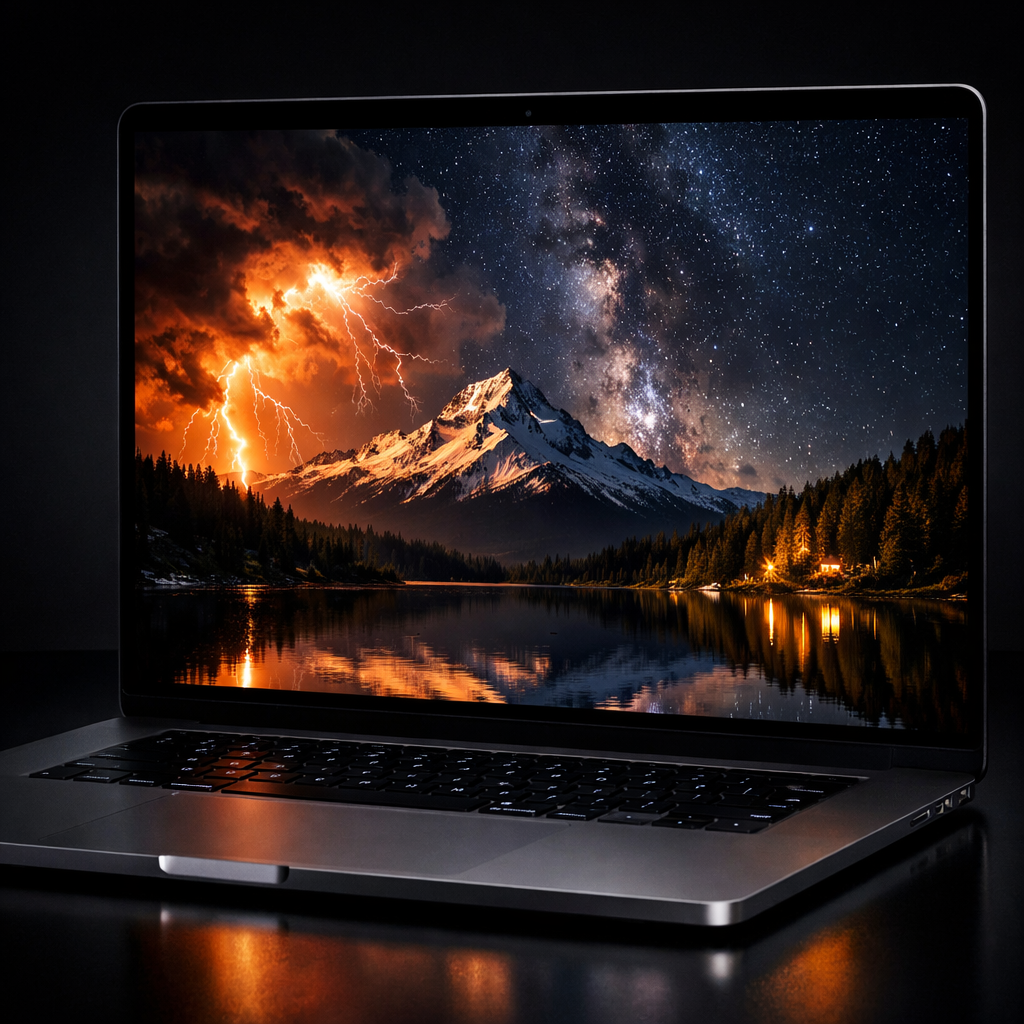
Apple insists that the touchscreen feature is a secondary perk, not the headline innovation. The real spotlight is on the display’s performance. The PROLED XDR panel delivers sustained full-screen brightness up to 1000 nits, peaks at 2000 nits for HDR content, and boasts a contrast ratio of 10,000,000:1 with precise per-pixel blacks—measures previously found only in standalone reference monitors. These specs are supported by a display engine built into the new M5 Pro and M5 Max chips, which dynamically adjusts each pixel based on content, usage, temperature and ambient light. Every panel also undergoes a refined production process that minimizes color shifts from different viewing angles and ensures consistent quality across units.
Reference-Level Display and Color Standards
Apple argues that this PROLED XDR display in the MacBook Pro closely mirrors its high-end Studio Display XDR, itself priced between $2,899 and $3,599. One key differentiator: the MacBook Pro’s PROLED display exceeds the Studio Display XDR in contrast ratio—1 million-to-1 on the Studio Display, compared to 10 million-to-1 on the laptop. It also supports Apple’s latest color matching metric, CMF 2026 (CIE 1931 standard), which more accurately aligns with the D65 white point for greater consistency across different display technologies—especially useful when creatives use multiple screens.
These enhancements are designed to deliver professional-grade visual tools out of the box, particularly for pro workflows where color fidelity and HDR performance are non-negotiable. The display engine that constantly evaluates and adjusts each pixel also plays a role in extending panel lifespan—another benefit Apple highlights.
The company explicitly frames the $400 price differential between the standard display and the PROLED version as fairly modest in light of what the technology delivers. When compared to the cost of high-end reference monitors with similar capabilities, Apple suggests this premium puts significant display power—portability included—into a single machine without breaking the bank.
What this means for buyers: For creatives, video editors, photographers or anyone who works with color-critical content and frequently deals with HDR, the PROLED XDR display is a substantial upgrade. If your workflow depends heavily on screen accuracy, performance in bright or variable light, or matching displays, the cost may be worth it. On the other hand, those more focused on standard productivity tasks or lighter use may find less value in paying the extra.
The move aligns with a broader trend in which premium laptops are leaking into the territory once reserved for dedicated monitors. By consolidating display reference quality into a portable device, Apple is both upgrading its product stack and raising the bar for what pros expect from notebooks.