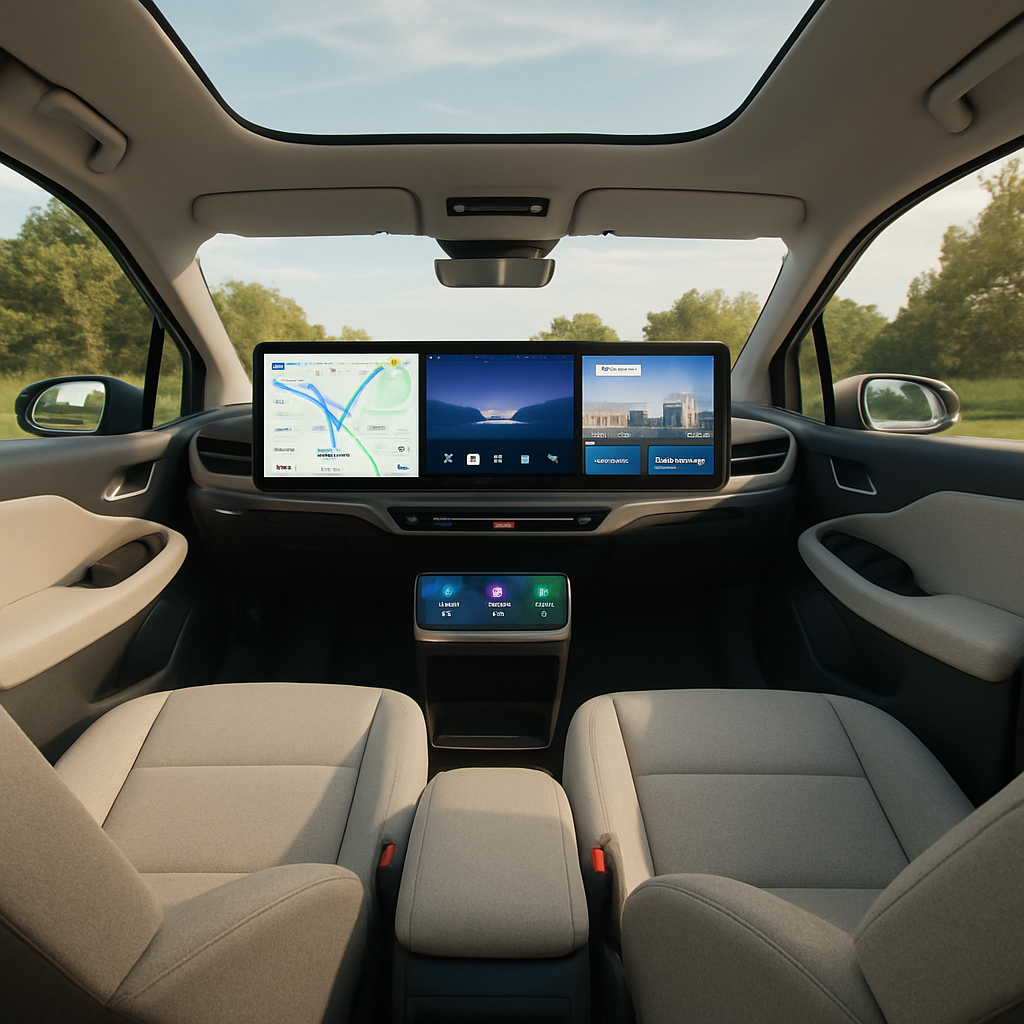
Waymo, the autonomous vehicle subsidiary of Alphabet, is enhancing its self-driving cars by integrating Google’s Gemini AI, aiming to transform the in-car experience into a ‘living room on wheels.’ This development follows the launch of Waymo’s Ojai platform in May, built on Geely’s Zeekr minivan base, which introduced a more spacious and comfortable ride.
The latest update focuses on revamping the user interface across the vehicle’s three screens, introducing a ‘lean-back’ touch interface that adapts to the number of passengers. The standout feature is the incorporation of Gemini, Google’s conversational AI, designed to act as a helpful passenger. Gemini can provide information about local landmarks, locate nearby bookstores, and adjust in-car settings like temperature, enhancing the overall ride experience.
It’s important to note that while Gemini offers interactive features, it operates independently from the Waymo Driver, the system responsible for vehicle navigation and control. Google emphasizes that Gemini does not influence the vehicle’s movement or routing and lacks access to real-time driving data. This separation ensures that the AI’s role remains supportive without compromising the vehicle’s autonomous functions.
Google’s strategy to embed Gemini across various platforms, including Workspace and macOS, now extends to autonomous vehicles. This integration positions Google to collect extensive data, potentially giving it a competitive edge in the autonomous driving sector.
As autonomous vehicles become more prevalent, enhancing passenger experience through AI integration could become a key differentiator. Waymo’s adoption of Gemini not only showcases technological innovation but also sets a precedent for future developments in the industry. Observing how competitors respond to this trend will be crucial in understanding the evolving landscape of autonomous transportation.