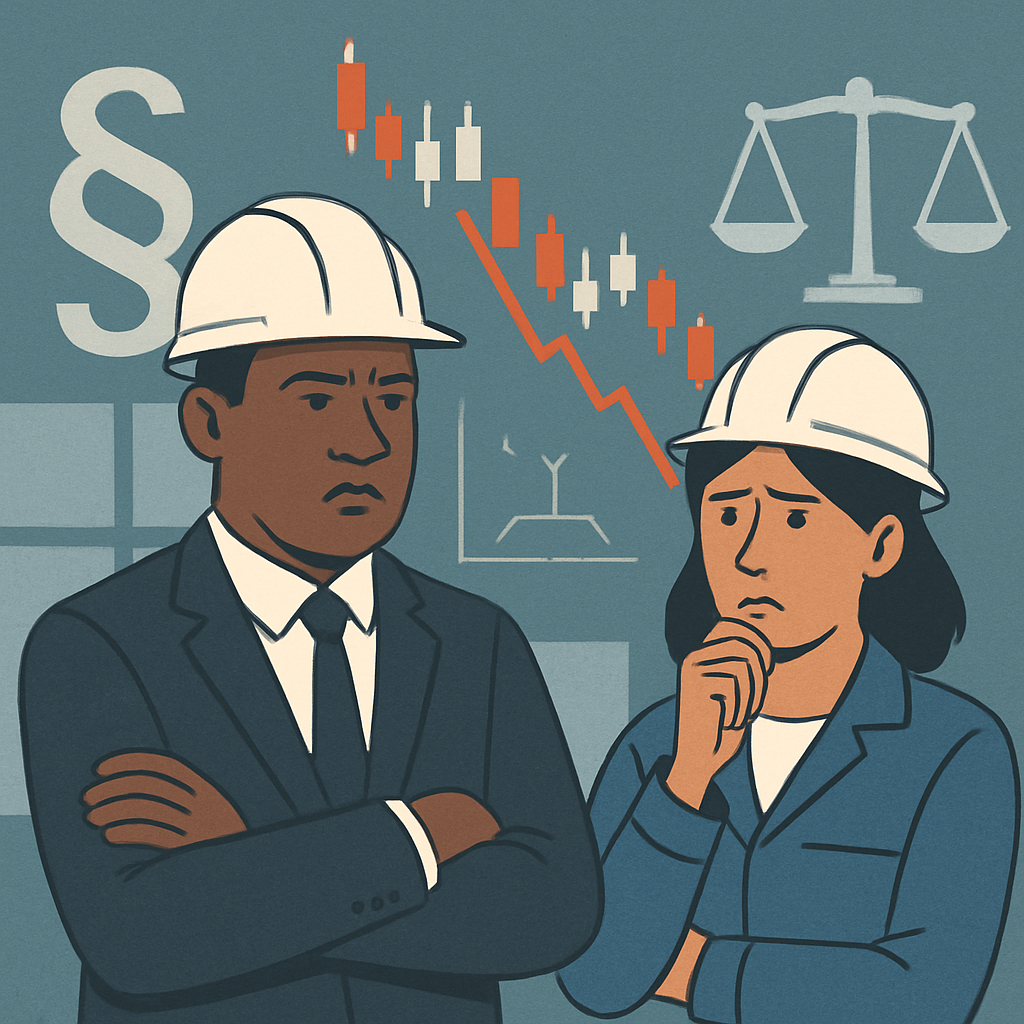
Two engineers from Volkswagen have been charged with securities fraud by the U.S. Department of Justice, accused of engaging in insider trading related to the automaker’s joint venture with electric vehicle manufacturer Rivian.
The indictment, unsealed by the U.S. District Attorney for the Southern District of New York, alleges that Michael Stamp and Marcus Plank utilized confidential information about the impending partnership—internally referred to as “Project Climb”—to purchase Rivian stocks and options before the public announcement. This maneuver reportedly netted them over $300,000 in profits.
On June 25, 2024, Volkswagen and Rivian publicly disclosed their plans to collaborate on developing electric vehicle architecture and software. Volkswagen initially committed to investing $5 billion in Rivian, with the investment contingent upon achieving specific milestones. This partnership has since expanded to $5.8 billion, positioning Volkswagen as Rivian’s largest shareholder.
Following the announcement, Rivian’s stock price surged by 23%. The indictment details that Stamp realized approximately $250,000 in profits, while Plank gained about $50,000. Additionally, a close family member of Plank profited around $12,000 from these transactions.
U.S. Attorney Jay Clayton emphasized the gravity of the situation, stating that the alleged misuse of confidential information undermines market integrity and public trust. He reiterated the commitment to holding individuals accountable for such violations.
Investigations revealed that both engineers were aware of the illegality of their actions. Prior to the public announcement, Stamp searched for information on the statute of limitations for insider trading, and Plank’s family member conducted a similar search in German regarding the prosecution of insider trading.
Both individuals, residents of San Jose, were arrested and are scheduled to appear in the U.S. District Court for the Northern District of California. If convicted, they could face up to 25 years in prison.
This case underscores the critical importance of adhering to ethical standards and legal regulations within the corporate sector. Insider trading not only jeopardizes individual careers but also erodes investor confidence and the overall integrity of financial markets. Companies must enforce stringent compliance programs and foster a culture of transparency to prevent such breaches.