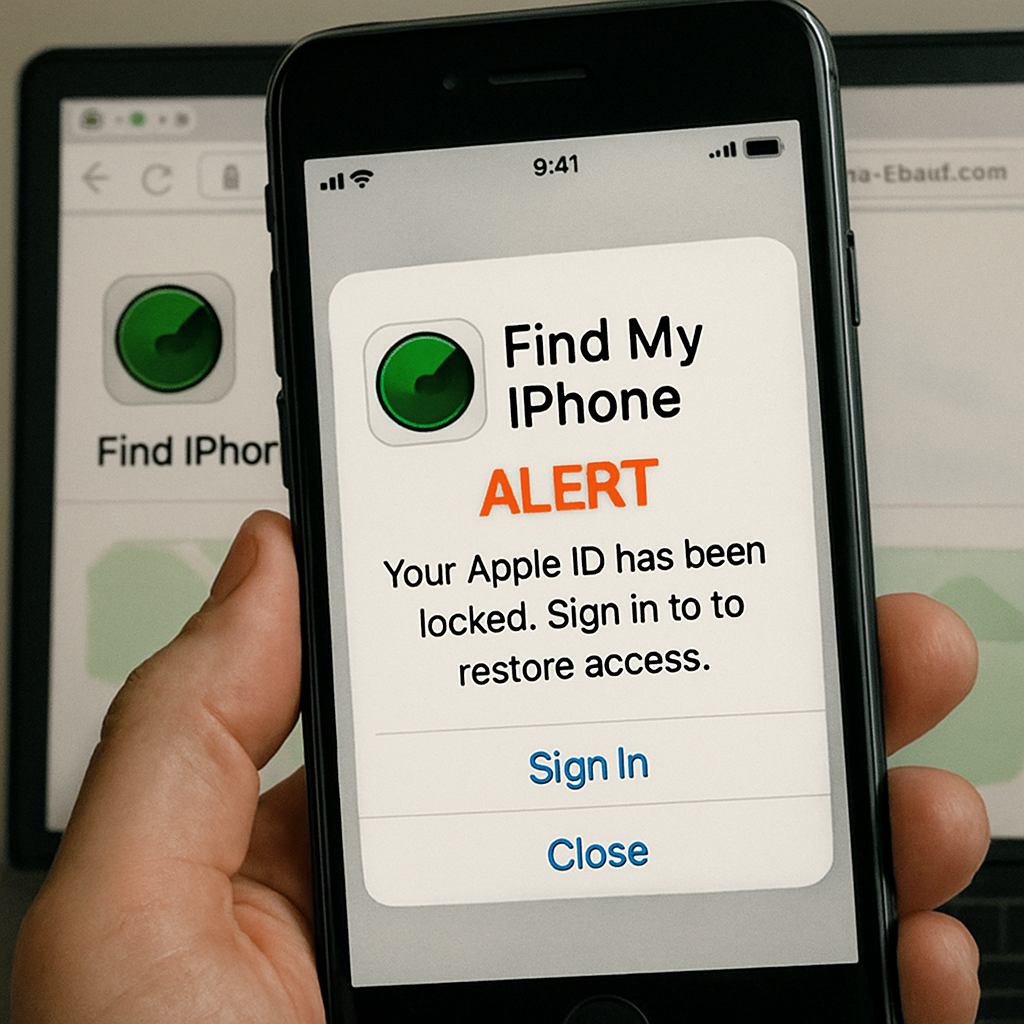
Cybercriminals are increasingly targeting iPhone users through sophisticated phishing campaigns that exploit the ‘Find My iPhone’ feature. These scams aim to steal Apple ID credentials by sending deceptive messages that appear to come from Apple, claiming that a lost or stolen iPhone has been located.
Victims receive text messages or iMessages stating that their missing device has been found, often in foreign countries, even months after it was reported lost. These messages include specific details about the device, such as model, color, and storage capacity, making them appear legitimate. The message contains a link that supposedly shows the device’s current location but actually redirects to a fake website designed to mimic Apple’s official login page.
When victims enter their Apple ID and password on this phishing page, they unknowingly hand over complete control of their account to the scammers. This allows attackers to disable Apple’s Activation Lock, a security feature that permanently connects an iPhone to its owner’s Apple ID, rendering stolen devices useless and impossible to resell.
Security analysts have noted that these attacks have become increasingly common, with scammers refining their tactics to make the messages more believable. The phishing pages are carefully designed to display what appears to be the device’s location in the background while requesting login credentials, creating a sense of urgency and legitimacy that can trick even cautious users into entering their information.
To protect against such scams, iPhone users should be cautious of unsolicited messages claiming to have found their device. It’s essential to verify any such claims through official Apple channels and avoid clicking on suspicious links. Enabling two-factor authentication for Apple ID accounts adds an extra layer of security, making it more difficult for attackers to gain unauthorized access.
As phishing techniques continue to evolve, staying informed about the latest scams and maintaining vigilant digital habits are crucial in safeguarding personal information and devices.