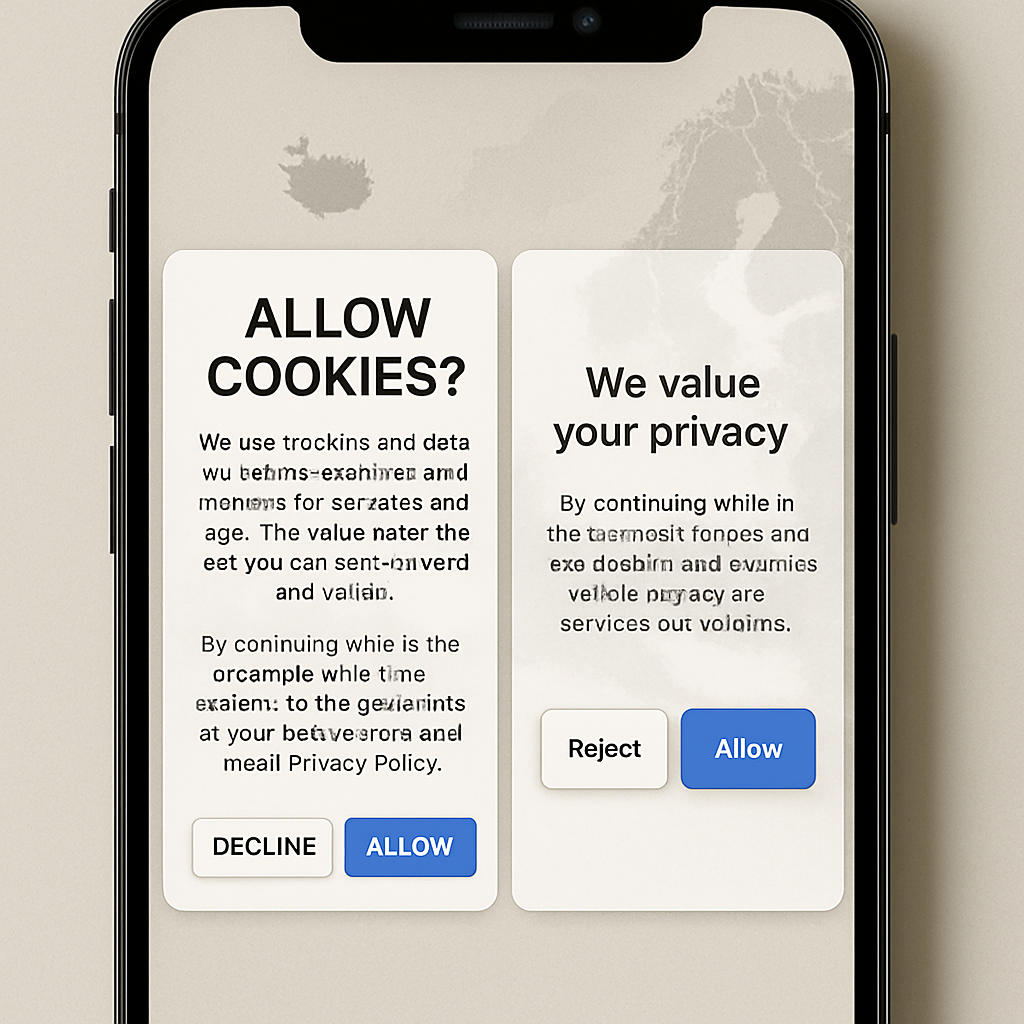
Apple is changing how its App Tracking Transparency (ATT) prompts work in the European Union in response to pressure from Germany’s competition regulator and other EU authorities. These changes will let developers use consent screens that are less aggressive in tone and design when asking users to permit tracking across apps and websites. Under the new rules, very few core elements disappear—users will still be asked to grant tracking permission—but the way the request is presented will shift.
What’s changing for EU users and apps
Rather than popping up a startling dialog box that explicitly says “tracking,” apps will be allowed to show full-screen consent screens without immediately using that word. The options available to users will also get relabeled: instead of choices like “Allow” vs. “Ask App Not to Track,” Apple will simplify this to “Allow” or “Reject.” Visual design—including colors and formatting—will be adjusted to reduce the alarm factor. Apps will also be able to include a link to more detailed information explaining why tracking is requested. These tweaks are permissibly available for apps distributed in Germany, France, Italy, Poland, and Romania.
Re-prompting frequency and why it matters
Another change: apps targeting EU users can ask again about tracking permissions one year after a user has made an earlier choice. Previously, permissions often were asked only once unless settings were reset. That re-prompt once per year is a significant shift, giving developers more opportunities to seek consent.
Why this shift is happening
Regulators have said the current ATT setup gives Apple an advantage over third-party developers. Apple’s own apps aren’t required to present the same consent screens to users when using data across its ecosystem, while other developers are. Critics argue the existing ATT framework pressures users into rejecting tracking, reducing ad revenue for third parties, while benefiting Apple’s ad business.
The new consent screen structure is the outcome of a multi-year investigation by Germany’s federal competition authority alongside other European bodies. The findings pushed Apple to allow alternate prompt formats in select EU countries.
These changes do not eliminate ATT’s requirement: user consent is still necessary, and the conditions for when prompts must appear remain intact. The adjustments focus purely on presentation—how and when users are asked, what words are used, and what design elements surround the choice.
What to watch for: How many users will change their consent decisions with the softer messaging? Will ad-supported app revenue recover? And might regulators push for the alternate consent screens to roll out EU-wide, not just in five countries? Keep an eye on whether similar shifts are forced in other regions under privacy regulators.