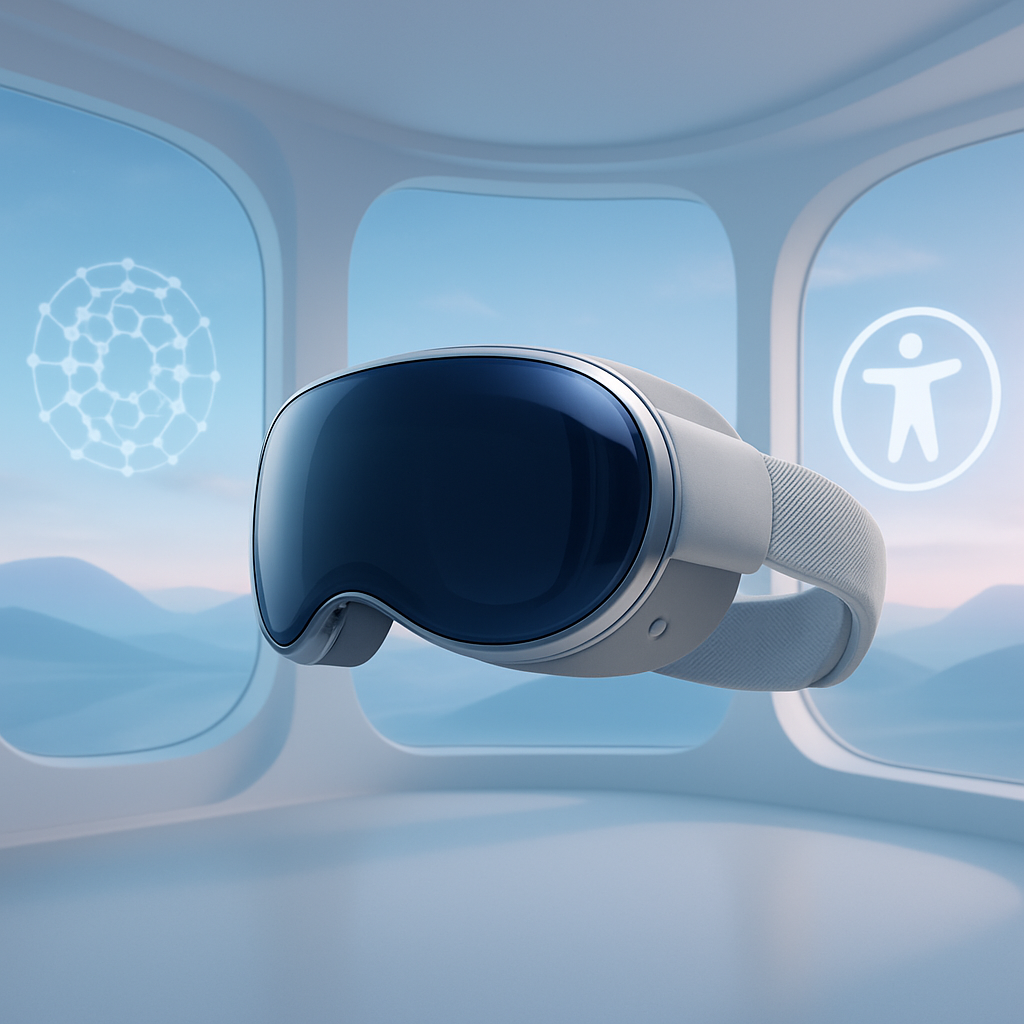
Apple has released visionOS 27, the latest major update for Vision Pro, now rolling out to both the original M2-based model and the newer M5 version. The software introduces a suite of major features focused on AI, spatial computing, and enhanced accessibility. It’s available now.
Major AI Upgrades and Spatial Features
A centerpiece of visionOS 27 is the expanded Siri AI. Users can now speak to the new Siri app using voice-first interactions, tapping into a more powerful assistant than before. Visual Intelligence adds the ability to ask Siri about what you see in your environment—everything from objects around you to text in view. Also, users in the European Union gain access to Siri AI on Vision Pro immediately, even though that rollout remains pending on iPhones and iPads in many EU regions.
On the spatial front, visionOS 27 introduces the new built-in “Thórsmörk” environment, alongside the ability to convert your own panoramas into immersive spatial scenes for use as room backgrounds. Apple is also bringing curved windows to the display architecture, enhancing how you view content in 3D space. Widgets now have an extra-small size setting, and systemwide screen recording is upgraded to deliver high-quality captures without blurring.
UI Refinements and Accessibility Focus
A redesigned Control Center makes its debut in this release, streamlining how you access settings. Notifications get smarter too: you can now expand them with just your eyes, no hands required. Across core apps like Home, Safari, and Image Playground, there are new AI-based tools to improve usability and visuals.
Accessibility gets a lift with two new capabilities. Vehicle Motion Cues are designed to help users who want guidance in settings with moving vehicles—presumably aiding those sensitive to motion. There’s also a Wheelchair Control feature, meant to improve interaction for wheelchair users. Throughout, Apple’s goal seems to be making Vision Pro more intuitive across a wider range of use cases.
Overall, visionOS 27 shifts Vision Pro closer to Apple’s long-stated ambition: turning spatial computing into a pervasive, voice-driven environment where physical and digital realities fuse. From AI that understands visual input to hands-free notification control, and immersive backgrounds born of personal panoramas, this update is a big step forward.
Why it matters: These additions suggest Apple sees Siri and Visual Intelligence as central to the future of mixed reality—tools for seeing, talking, and interacting without being bound by touch. The inclusion of accessibility enhancements shows the company wants this tech to be inclusive. Users should watch how well these features work in real-world use, especially visual recognition, eye tracking, and system performance in demanding spatial environments.