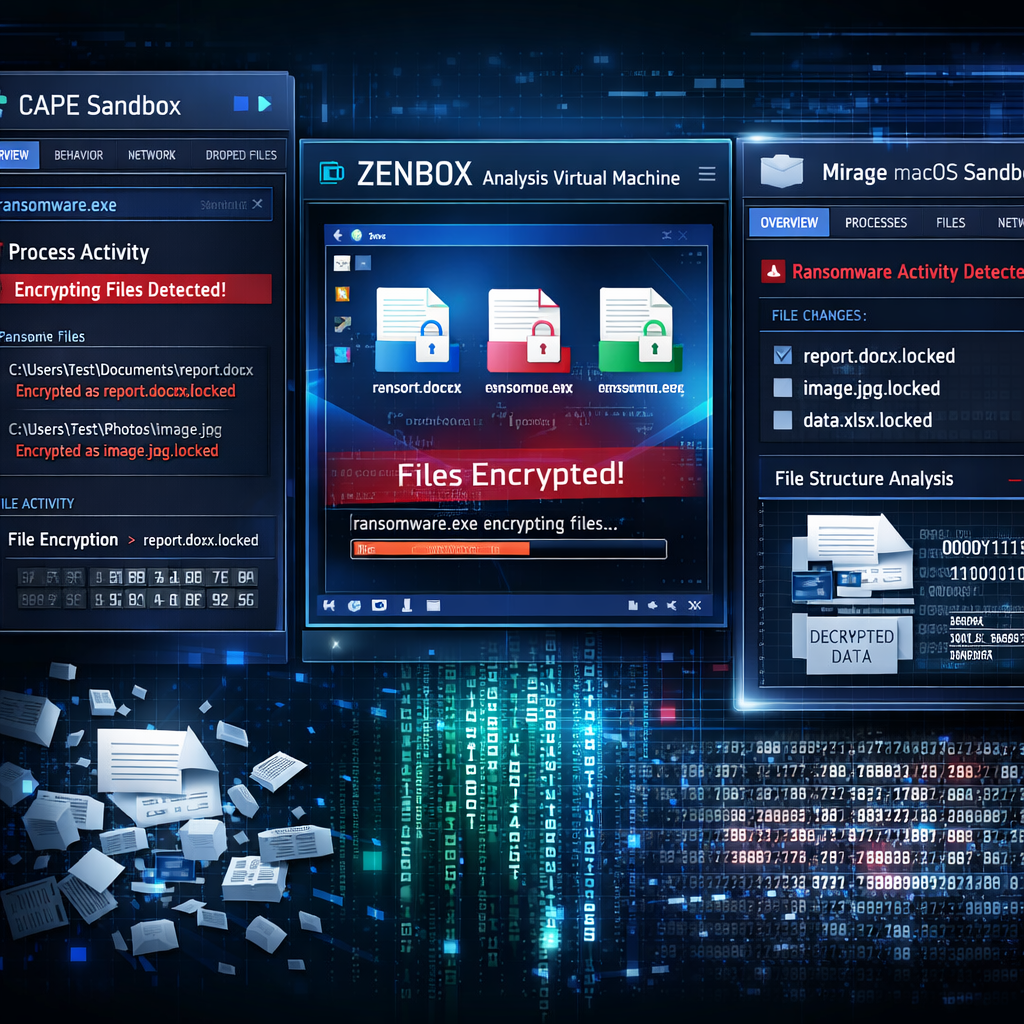
VirusTotal has launched a major update to its ransomware detection capabilities, introducing behavior‐based checks designed to catch file‐encrypting malware that static antivirus scans miss. The new system verifies whether suspicious files actually encrypt user documents during execution, expanding the detection scope beyond known signatures.
How the New Detection Works
The updated infrastructure employs three sandbox environments—CAPE Sandbox, Zenbox on Windows, and macOS Mirage for Apple Silicon—to assess whether malware modifies real user files. During execution, the sandboxes examine changes to documents, looking for signs such as broken file structures, odd byte patterns, or elevated data randomness on disk. This approach moves past earlier methods that flagged ransomware mainly based on encrypted payloads, installer behavior, or heavy file activity.
Two new identifiers help security teams surface truly malicious samples: the tag:encrypts‐files search tag and the behavior tag
Real-World Findings & Implications
A striking example involves a Python ransomware strain tied to the .k404 extortion campaign. When submitted around November 17–18, it yielded zero detections across 75 antivirus engines. Nonetheless, Zenbox identified its malicious behavior: the malware ran via pythonw.exe, deleted itself, and encrypted Desktop documents using the .k404 extension. Other samples—such as K404T_Fidye.exe and lkd.exe—had very low detection scores but were confirmed as ransomware through observed document encryption.
Another case involved a strain labelled “INC Ransom,” which encrypted files using the .INC extension and left ransom notes. This group has links to attacks in healthcare tied to the Vanilla Tempest threat actor. In total, from roughly 328,000 new unique files submitted since November 17, the platform identified 55 samples matching the new encryption tags. Manual review found none of them to be benign.
The system also allows real‐time searches via VirusTotal Livehunt using the YARA-X trait vt.BehaviourTrait.ENCRYPTS_FILES. Adding a low antivirus detection threshold gives analysts a way to efficiently focus on new threats that are flying under the radar. However, it’s important to understand that tags only confirm observed encryption during sandbox execution—they don’t guarantee absence of malware when encryption isn’t seen, nor permanence of antivirus detection scores.
Overall, the update offers strong improvements in ransomware detection through behavior monitoring rather than solely static signatures. Early data suggests the method is both precise and effective without overwhelming analysts with false positives.
What this means: Behavior‐based analysis marks a turning point in threat detection, especially for malware that evades signature‐based tools. Organizations should integrate the new tags and live hunting tools into their SOC workflows. The real power here comes from visibility—seeing the damage, not just the code.