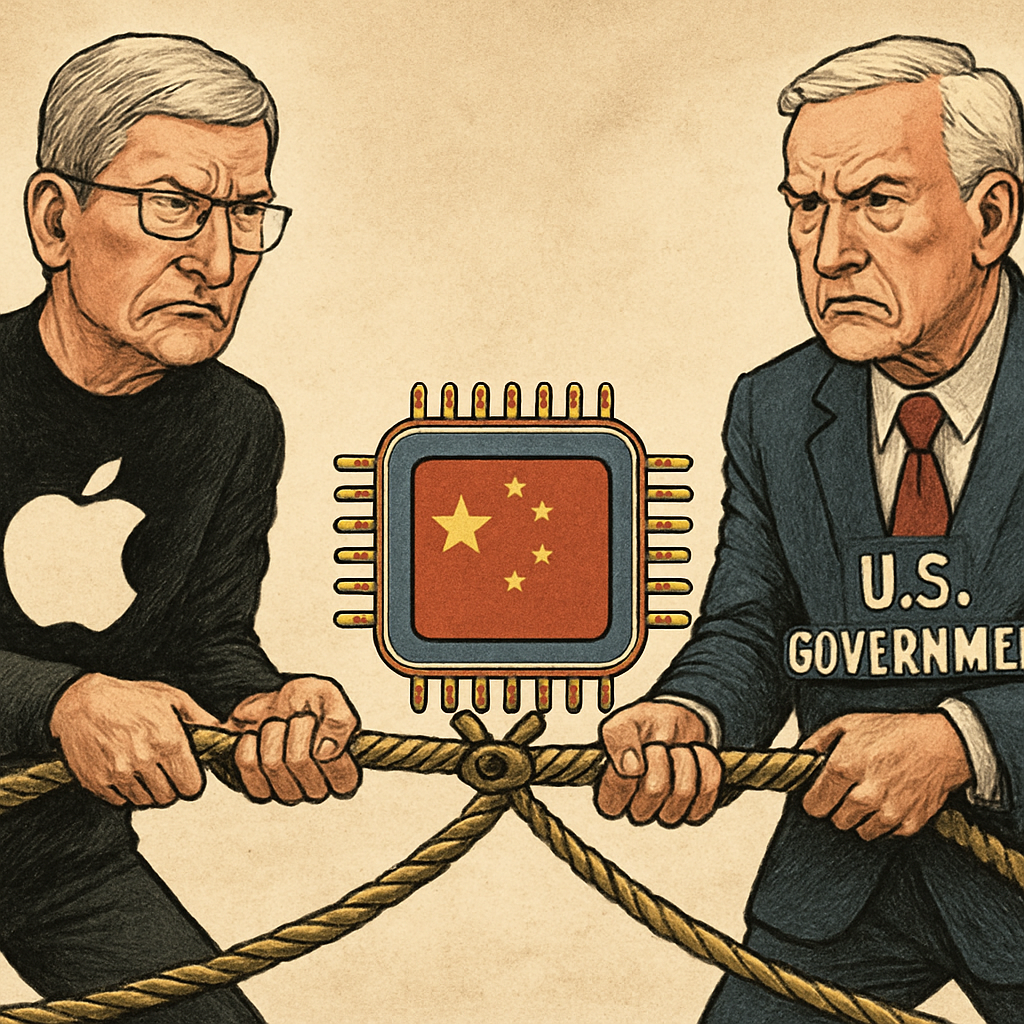
The United States government has expressed opposition to Apple’s potential procurement of memory chips from Chinese manufacturers, citing national security concerns and the need to protect American technological interests.
In recent months, Apple has been exploring options to diversify its supply chain amid a global memory chip shortage. This exploration included discussions with Chinese companies ChangXin Memory Technologies (CXMT) and Yangtze Memory Technologies Co. (YMTC). Both firms have been designated by the Pentagon as having ties to the Chinese military, raising red flags within the U.S. administration.
Commerce Secretary Howard Lutnick recently articulated the administration’s stance, stating that the U.S. does not support Apple sourcing memory components from these Chinese entities. He emphasized the importance of seeking alternative solutions that do not involve reliance on Chinese memory chips.
Apple’s Chief Operating Officer, Sabih Khan, acknowledged that while many iPhone components are customized, memory chips often require less customization. This characteristic could make it feasible for Apple to integrate off-the-shelf memory chips from various suppliers. However, should customization be necessary, sharing product information with CXMT or YMTC would be subject to stringent U.S. export-control regulations, necessitating specific licenses from the Commerce Department.
Apple’s pursuit of Chinese memory chips has faced bipartisan resistance. Lawmakers have expressed concerns that such partnerships could bolster state-backed Chinese competitors, potentially undermining U.S. companies and posing security risks. Despite these challenges, Apple has been actively lobbying the administration to reconsider its position, arguing that diversifying its supplier base is crucial to mitigating the impact of the ongoing chip shortage.
Commerce Secretary Lutnick’s recent comments underscore the administration’s firm stance against Apple’s proposed sourcing strategy. He highlighted the need for American companies to seek solutions that do not involve Chinese memory components, suggesting that alternative avenues should be explored to address the supply chain issues.
Apple’s efforts to secure approval for using Chinese memory chips have been met with consistent opposition from both the government and domestic industry stakeholders. The administration’s position reflects broader concerns about national security and the competitive landscape of the technology sector. As Apple continues to navigate these challenges, the company may need to identify alternative suppliers or invest in domestic manufacturing capabilities to ensure a stable and secure supply chain.