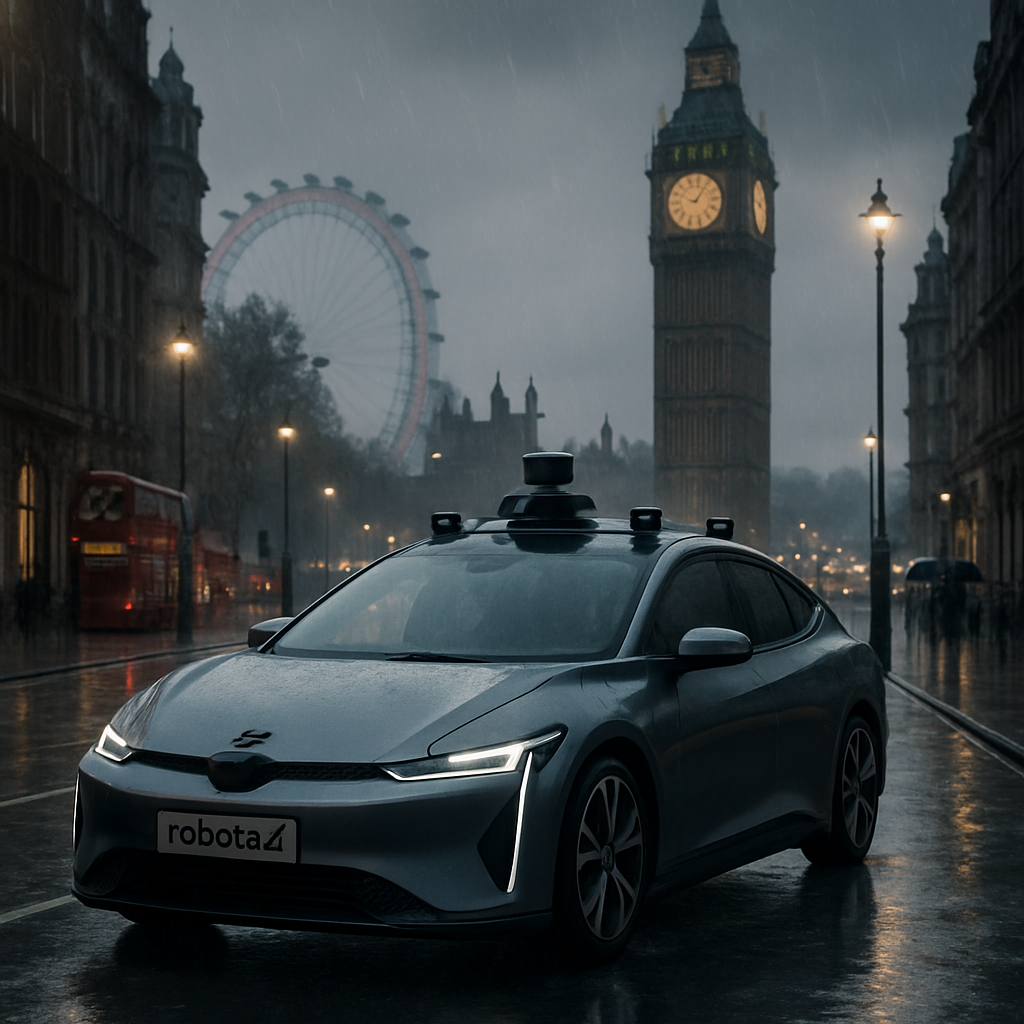
Uber and Pony.ai have revealed plans to deploy robotaxi services in London, rolling out Pony.ai’s Gen-7 driverless cars for testing in the city within the coming weeks. This marks an expansion of their increasingly global effort to bring autonomous vehicle (AV) ride-hailing to major urban markets.
Growth Through Partnerships and Pilot Deployments
The collaboration between Uber and China-based Pony.ai builds on a broader strategy by Uber to partner with multiple AV firms. The company aims to operate autonomous trips in up to 15 cities globally by the end of 2026—split between domestic U.S. and international locations. Their relationship with Pony.ai, first established in May 2025 with a focus on the Middle East, has since grown to include European markets, targeting deployments that begin with Zagreb, Croatia.
In Zagreb, Uber, Pony.ai, and regional partner Verne recently launched an autonomous ride-hailing fleet. Pony.ai supplies the autonomous driving system along with the Arcfox Alpha T5 robotaxi (developed with BAIC), Verne operates the fleet, and Uber connects riders via its app. While in London, the companies haven’t yet disclosed which entity will own or manage the robotaxi fleet.
Competition and Expansion in London and Beyond
Uber’s robotaxi push in London isn’t limited to its partnership with Pony.ai. After investing heavily in Wayve—a UK startup focused on self-driving technology—Uber plans separately to introduce robotaxi services in London using Wayve’s systems. Wayve secured a hefty funding round in February 2026, backed by Microsoft, Nvidia, and Uber itself, conditional on robotaxi deployment.
Pony.ai adds to its global footprint by already running robotaxi services across four cities in China, and forging partnerships with transportation authorities in Europe and the Middle East, including Qatar. These moves signal its ambition to become a key provider of autonomous mobility outside its native market. Meanwhile, Uber is following a multi-partner approach in other global cities: in Dubai, for instance, it has struck deals with Baidu and WeRide.
What London Might Expect
Details remain sparse around how Uber and Pony.ai will structure the London launch: ownership, fleet operation, regulatory approval, fare pricing, and rollout areas are yet to be confirmed. However, London has become a key proving ground for robotaxi technology thanks to its dense urban layout, variable traffic, and complex street environment—ideal conditions for testing AV systems. The Gen-7 robotaxis which Pony.ai plans to test are central to their international ambitions.
Regulators in the U.K. have been grappling with guidelines to safely integrate autonomous vehicles on public roads. Any full launch will likely require demonstration of safety standards, insurance frameworks, and coordination with city transport authorities. London’s ride-hail ecosystem and public tolerance of AV testing may also play a role. Though we’ve seen test deployments elsewhere, scaling them up remains a tough bridge to cross.
For Londoners, this could mean one of the first chances to ride in a truly driverless taxi. Depending on how the rollout proceeds, Uber might control customer experience and booking, while Pony.ai (or a partner) handles vehicle maintenance and autonomy tech. These models mimic what’s happening in Zagreb under the Uber-Pony.ai-Verne partnership.
For the autonomous vehicle sector, the significance is clear: crossing into London isn’t just about prestige—it’s about proving that robotaxis can function in some of the most demanding urban environments in the world. Success or setbacks here could influence global regulatory paths, public perceptions, and investor confidence.
Why This Matters & What To Watch
This move underscores a growing convergence between ride-hail incumbents and autonomy start-ups. Uber is diversifying its approach—working with Pony.ai, Wayve, Baidu, WeRide—to hedge bets in the race for autonomous mobility. London is a high-stakes stage: its traffic density, weather, and user expectations make it one of the toughest real-world labs. If Gen-7 robotaxis perform reliably here, it will push forward global deployment plans and set benchmarks for safety, operations, and regulation. Key indicators to monitor: regulatory approvals from UK authorities, licensing for robotaxis, customer adoption rates, and whether pricing makes this service competitive. London’s launch could reshape how we think about urban transport in the AV era.