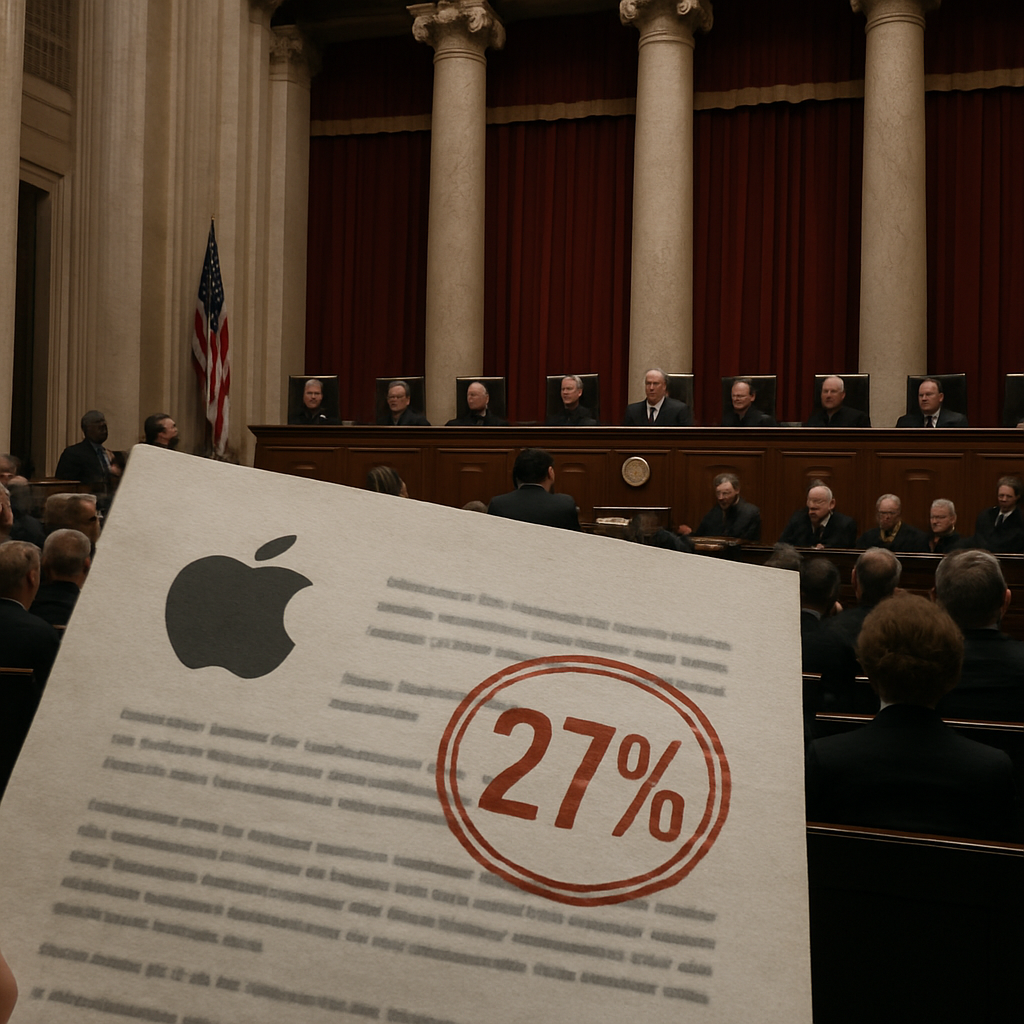
The Justice Department (DOJ) and a coalition of business and legal groups are pressing the Supreme Court this week to reverse a civil contempt ruling against Apple related to its App Store commission policy. The showdown stems from Apple’s enforcement of a 27% fee on purchases made via links to external purchasing systems — a move the government argues was never clearly banned by prior court orders.
What Sparked the Controversy
The issue began after a court-ordered injunction required Apple to allow apps to redirect users to external purchasing options, in addition to App Store’s own In-App Purchase system. Despite this, Apple continued to charge a 27% commission on those external transactions. Epic Games challenged this as a violation of the injunction, and a district court found Apple in civil contempt over the fee applied to external purchases. Apple has since stopped charging the commission while the case makes its way through the courts.
Apple argues the original injunction did not explicitly forbid imposing a commission on purchases made outside of the App Store. The company contends the contempt ruling leans heavily on what it calls the “spirit of the injunction” rather than its precise wording, raising concerns about legal uncertainty for companies complying with court orders.
DOJ and Allies Push Back
This week, the DOJ filed an amicus brief supporting Apple’s position on the commission. Their argument centers on established legal standards for civil contempt: punishment is only warranted when a defendant’s conduct is plainly prohibited by the exact terms of a court order. Since the injunction did not specifically ban commission charges for external purchases, the DOJ says the contempt ruling in that respect should be overturned.
However, the DOJ doesn’t defend all aspects of the contempt finding. It agrees that Apple was properly in contempt for violating the part of the order that required them to allow both buttons *and* links directing users outside the App Store. According to the DOJ, Apple effectively limited the implementation to links alone — withholding the “plain button” element that the injunction explicitly included.
Other amicus briefs from groups like the Chamber of Commerce, software trade associations, and former antitrust officials echo the central argument: courts must enforce injunctions based on their precise language, not interpretations or broader public policy goals. One brief argues that allowing courts to punish based on fuzzy terms risks judicial overreach. Another warns that leaving key terms vague forces companies into guesswork over what behavior might incur legal penalties.
What Comes Next
The Supreme Court has already accepted Apple’s appeal, and the DOJ urges the high court to reverse the contempt ruling around the 27% commission. At the same time, it asks for other contested issues — like button vs. link distinctions and where external purchase links may legally appear — to be sent back to lower courts for reconsideration under a standard recognizing “fair ground of doubt.” Meanwhile, ongoing proceedings are determining just how much commission Apple can, if at all, charge on linked-out purchases while the case continues.
Why This Matters: This case could reshape how injunctions are drafted and enforced, particularly in tech and antitrust litigation. If courts insist that only what’s in the text matters, companies gain clearer legal certainty but may lose flexibility in meeting broader policy goals. Keep an eye on how the Supreme Court rules—especially on what legal clarity means for commission models, app marketplaces, and third-party sales going forward.