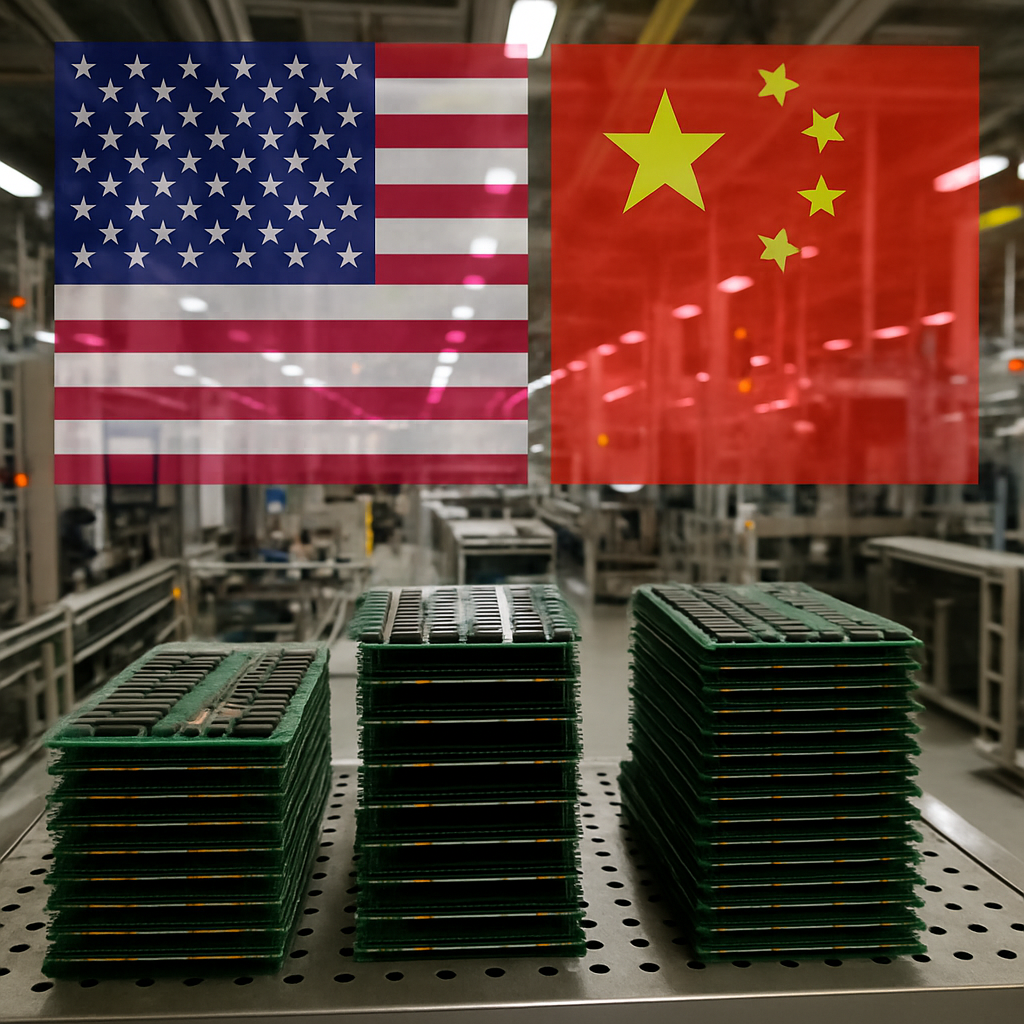
The Trump administration is reportedly considering permitting Apple to buy memory chips from CXMT and YMTC—Chinese firms currently on U.S. blacklists—as part of a strategy to use trade policy as a diplomatic tool. The move would coincide with President Trump’s planned meeting with Chinese President Xi Jinping in September. The idea is based on a claim from a leaked post on Weibo attributed to a user called “Mobile Chip Expert,” relayed via Wccftech.([appleinsider.com](https://appleinsider.com/articles/26/08/24/trump-may-use-apple-chinese-ram-buy-request-as-diplomatic-tool/))
Why It Matters
Apple and many other tech firms have been scrambling with rising memory costs, and access to Chinese suppliers could ease that burden. The proposal outlines that allowing Apple to acquire RAM from CXMT and YMTC could be framed as a diplomatic concession. Officials might present it as a gesture of goodwill aimed at restoring or boosting trade ties between the U.S. and China.([appleinsider.com](https://appleinsider.com/articles/26/08/24/trump-may-use-apple-chinese-ram-buy-request-as-diplomatic-tool/))
According to the leak, products containing the Chinese-made chips would not be bound for U.S. markets. Instead, the memory would be used in devices intended for sale in China. Such geographic restrictions could be structured to allay concerns about national security, import controls, and political optics.([appleinsider.com](https://appleinsider.com/articles/26/08/24/trump-may-use-apple-chinese-ram-buy-request-as-diplomatic-tool/))
Caveats, Credibility, and Context
The notion originates exclusively from social media (Weibo) and third-party tech coverage. Despite discussions on Wccftech and the Weibo account, no major outlet has yet independently corroborated the claim.([appleinsider.com](https://appleinsider.com/articles/26/08/24/trump-may-use-apple-chinese-ram-buy-request-as-diplomatic-tool/))
Permitting purchases from blacklisted memory suppliers is politically sensitive. CXMT is heavily restricted under U.S. sanctions, and YMTC has likewise faced limitations. Some analysts say the proposal is plausible: it allows Apple to mitigate supply shortages by reallocating what it buys in China toward its non-U.S. product lines.([appleinsider.com](https://appleinsider.com/articles/26/08/24/trump-may-use-apple-chinese-ram-buy-request-as-diplomatic-tool/))
Nevertheless, the leak lacks supporting details, leaving many unknowns—if it comes from a high level in the administration, whether there’s formal legal work done, how the supply chain would be partitioned, and if any bipartisan review would be required.([appleinsider.com](https://appleinsider.com/articles/26/08/24/trump-may-use-apple-chinese-ram-buy-request-as-diplomatic-tool/))
Strategically, this represents another example of trade policy being considered as foreign policy leverage. What Apple pays to Chinese memory makers may end up functioning as a bargaining chip in superpower diplomacy—if the story holds up.