Microsoft is introducing a new policy in Teams that enables administrators to automatically block external meeting bots detected joining meetings. This update, detailed in notice MC1459141 released on August 21, 2026, aims to prevent third-party bots—such as unsolicited notetakers, AI assistants, or transcription tools—from accessing meetings without explicit approval. ([cybersecuritynews.com](https://cybersecuritynews.com/microsoft-teams-policy-to-block-bots/))
How the policy works
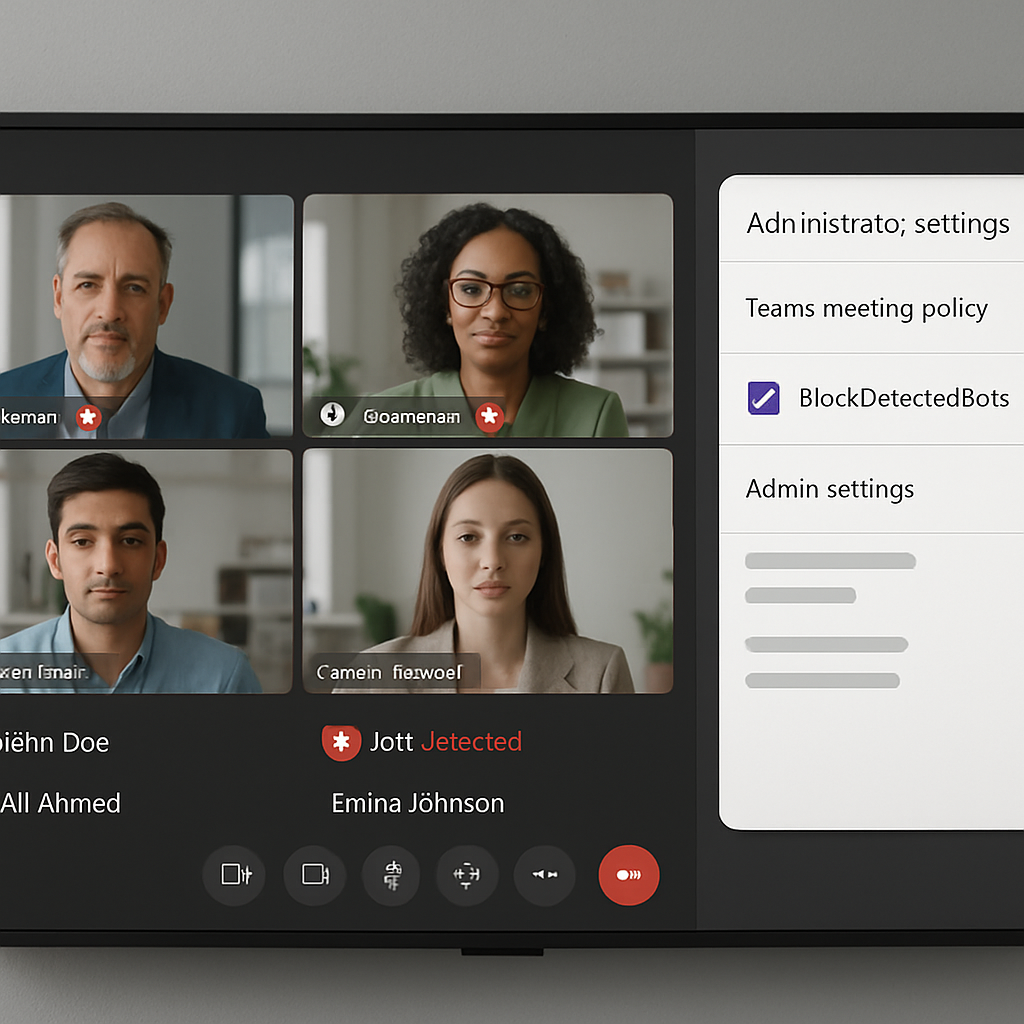
The policy adds a new value to the existing ExternalBotAccessMode setting found in meeting policies under “Manage external bots and their access to meetings.” Admins now have three options:
- AllowAllBots: bots are not detected and join meetings like regular external participants; this option does not require detection. ([cybersecuritynews.com](https://cybersecuritynews.com/microsoft-teams-policy-to-block-bots/))
- RequireApprovalWhenDetected: detected bots are routed to the lobby, where the organizer must approve their entry; this is the current default. ([cybersecuritynews.com](https://cybersecuritynews.com/microsoft-teams-policy-to-block-bots/))
- BlockDetectedBots: detected external bots are blocked automatically—no lobby wait, no organizer approval. ([cybersecuritynews.com](https://cybersecuritynews.com/microsoft-teams-policy-to-block-bots/))
Admins can apply this policy tenant-wide or limit it to individual users or groups. Policy configuration is possible through the Teams admin center or via PowerShell using the Set-CsTeamsMeetingPolicy cmdlet. ([cybersecuritynews.com](https://cybersecuritynews.com/microsoft-teams-policy-to-block-bots/))
Rollout timeline and cautions
The “BlockDetectedBots” option began its rollout in early August 2026 to tenants in the Targeted Release program, with expectations to complete by late August. Broader General Availability—including worldwide and GCC environments—is slated between late August and late September 2026. ([cybersecuritynews.com](https://cybersecuritynews.com/microsoft-teams-policy-to-block-bots/))
This stricter mode is off by default. Organizations must opt in or assign the new setting to any part of their user base. Microsoft urges administrators to first inventory existing legitimate bot use cases—approved AI transcription services, meeting-recording bots, etc.—before enforcing the block policy. Communication with meeting organizers and updating support documentation are also recommended to avoid unexpected disruption. ([cybersecuritynews.com](https://cybersecuritynews.com/microsoft-teams-policy-to-block-bots/))
Why this matters
As AI notetaker bots and external transcription tools become more common, so do risks around privacy, inadvertent data sharing, and unauthorized access. These bots sometimes join without clear awareness from hosts, capturing or storing sensitive conversations in external systems. With automated detection and the ability to completely prevent external bots from entering meetings, organizations can reduce exposure to such leakage. ([cybersecuritynews.com](https://cybersecuritynews.com/microsoft-teams-policy-to-block-bots/))
Before this change, the default was that detected bots could enter meetings only after organizer approval. That left gaps—especially in back-to-back meetings or when hosts use “Admit all”—which could allow a bot to slip in unnoticed. The new policy closes those gaps. ([cybersecuritynews.com](https://cybersecuritynews.com/microsoft-teams-policy-to-block-bots/))
This policy is a significant shift in how automated tools are regulated in collaboration platforms. It offers admins more control over meeting safety, sharper compliance posture, and a clearer boundary around who—or what—can attend sensitive discussions.
Implications: For sectors handling regulated data—finance, legal, HR—the ability to automatically block external bots adds a valuable safeguard. But because bot detection is heuristic, false positives or missed detections remain possible. Organizations should pursue a phased deployment—testing with smaller groups first, mapping out essential bot-based workflows, and training organizers on identifying bots. Over time, this change could reshape norms around AI tools in meetings: bot participation will go from assumed to intentional.