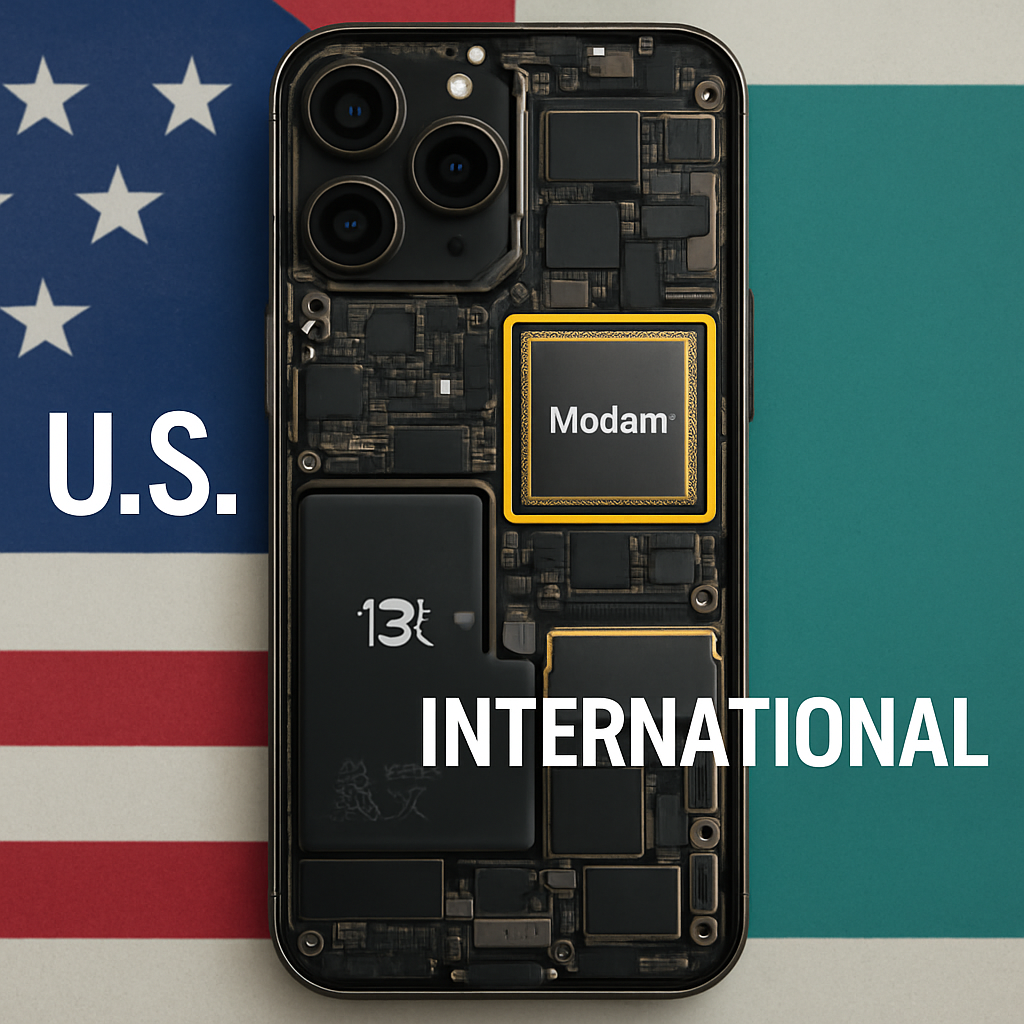
Apple’s newest teardown reveals that the U.S. version of the iPhone 18 Pro Max retains Qualcomm’s Snapdragon X80 cellular modem, while models outside the U.S. switch to Apple’s own C2 modem. Teardown specialists at TechInsights confirmed the presence of the X80 in U.S. units and noted that firmware traces also reinforce this finding. In contrast, both the iPhone 18 Pro (all regions) and the iPhone 18 Pro Max outside the U.S. rely solely on Apple’s custom C2 modem.
Modem Differences
The Snapdragon X80 has been used in previous iPhones globally, including the iPhone 17 Pro and Pro Max. However, it’s only the U.S. iPhone 18 Pro Max that continues with X80; elsewhere, Apple’s C2 takes over. The C2 modem had already achieved parity in mmWave 5G support in the U.S., a capability previous Apple modems like C1 and C1X lacked. With the C2, upload speeds are reported to be significantly better than the earlier C1X design, while using around 15% less power.
Reasons & Implications
Apple hasn’t officially explained why only the U.S. Pro Max retains Qualcomm’s modem. One possibility is compliance with contracts: in 2023, Qualcomm disclosed it will supply modems to Apple through 2026, potentially explaining the minimal continued use of X80 in a single model. Samsung and others in Apple’s supply chain plan have already begun adopting the Apple‐designed C2 across devices outside certain markets, likely to reduce dependence on third parties.
Another interesting hardware detail surfaced in the teardown: the U.S. Pro Max has a newly identified mmWave antenna module from Apple. This reinforces Apple’s broader focus on ensuring high-speed wireless connectivity in markets where mmWave 5G remains favored.
Performance comparisons between the C2 and Snapdragon X80 remain pending. Analysts and users will be watching closely to see whether Apple’s in-house modem can match or exceed Qualcomm’s long-standing performance in real-world conditions—especially in terms of bandwidth, latency, and efficiency.
What this means is that Apple is transitioning away from third-party modem dependency, making strides with its own silicon, but still relies on Qualcomm where legacy support or contractual obligations demand it. For consumers, the key takeaway is that the U.S. iPhone 18 Pro Max may offer different wireless behavior than its international counterparts—something to bear in mind for network performance and potential resale value. Looking forward, C2 performance tests and Apple’s next modem roadmap will be especially important as the company continues this shift.