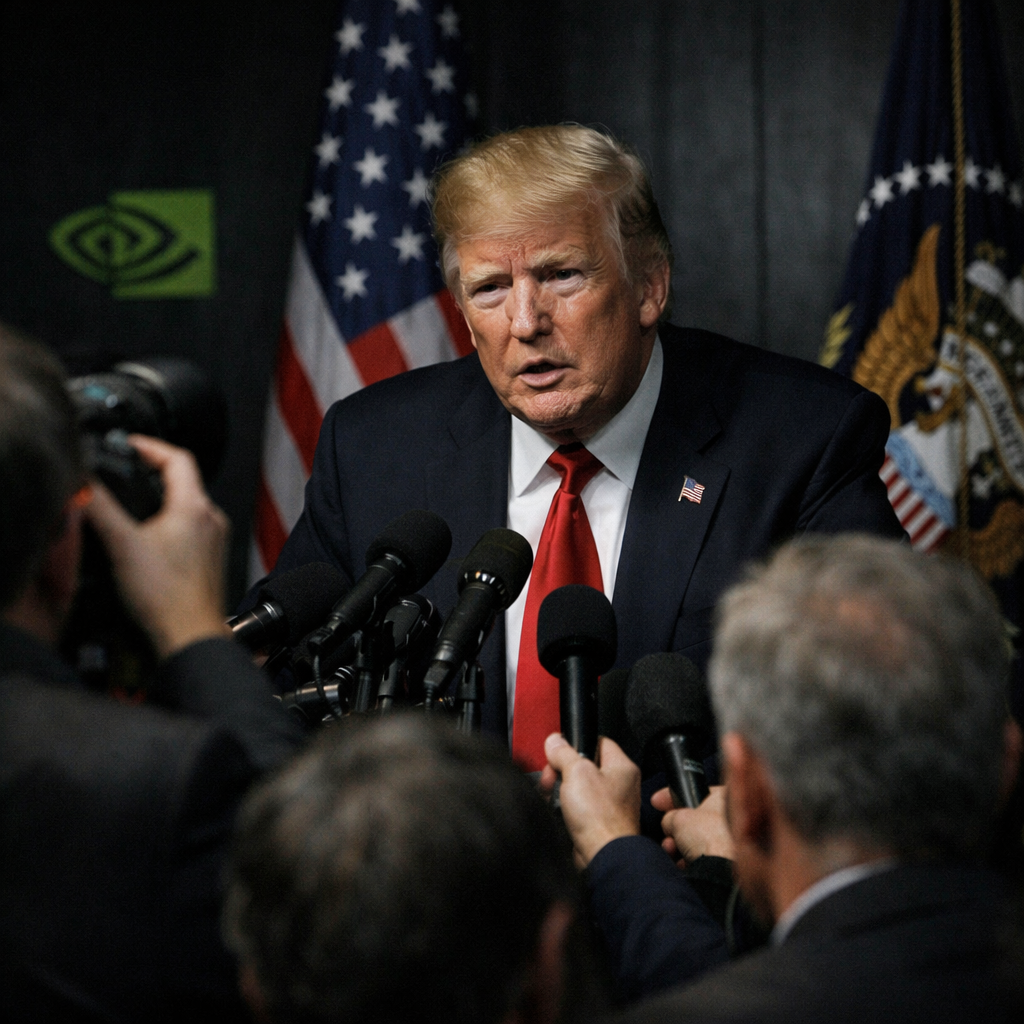
President Donald Trump pushed back Monday against intelligence reports suggesting Jensen Huang, the former head of Nvidia, compromised U.S. national security by having an affair with someone alleged to be a Chinese spy. Trump told reporters he believes Huang’s relationship did not threaten the country, and questioned whether the woman, Alice Huang—formerly of the Megaspeed firm—actually is a spy. He emphasized that no definitive proof has been presented.
Previous intelligence findings, reportedly overseen by Secretary of State Marco Rubio last year, identified Alice Huang as an operative for China’s Ministry of State Security. The findings were circulated among high-level officials and briefed to Trump multiple times, including during a May meeting aboard Air Force One, just ahead of a trip to China where the former Nvidia CEO was present. But Trump maintained during Monday’s remarks that he was not aware of those allegations, and stressed that without proof, he saw no reason to believe national security had been compromised.
In addition to the alleged espionage claims, other investigations have been underway. Both U.S. and Singaporean authorities probed Megaspeed for allegedly smuggling Nvidia chips to China in violation of export controls. Meanwhile, reporting revealed Huang also had romantic relationships with two Nvidia employees, at least one of whom reported directly to him.
Following the public exposure of these various affairs, Huang stepped down from leadership at Nvidia, where he had worked for over three decades. The revelations sparked backlash from industry figures including Elon Musk, Garry Tan, and Tim Sweeney, who signed an open letter urging Nvidia’s board to reinstate Huang.
Donald Trump, speaking of praise from notable tech leaders, said there’s growing support for Huang’s return. He noted that people believe “Jensen should go back” to his former role, and floated his own recommendation of bringing back another top tech leadership figure, Tim Cook.
Background
Jensen Huang, founder and longtime CEO of Nvidia, has been a towering figure in AI and semiconductor industries. Nvidia’s chips are central to powering artificial intelligence workloads, and the U.S. closely regulates their export to China in order to protect its technological edge. Allegations that someone close to Huang might be an agent for China’s intelligence services have raised serious concerns, especially amid broader worries about supply-chain security, intellectual property, and foreign interference.
Meanwhile, allegations of channeling sensitive technology via firms like Megaspeed have become a recurring theme in U.S. security policy. Singapore, given its position as a regional hub, has been involved in several investigations tied to export violations, adding international dimensions to enforcement of U.S. sanctions.
Where this lands
The controversy around Huang touches on multiple fractures: personal conduct, national security, and the integrity of AI supply chains. If true, intelligence accusations could form the basis for major policy or legal consequences—for Huang, Nvidia, and others implicated. But with Trump denying that Huang’s affair crossed into national security violations, uncertainty remains.
What to watch: will U.S. intelligence declassify or share solid evidence? Might lawmakers call for investigations into Nvidia’s oversight, or broaden export control enforcement? And how will tech firms respond if their leaders’ personal affairs become entangled with espionage claims?