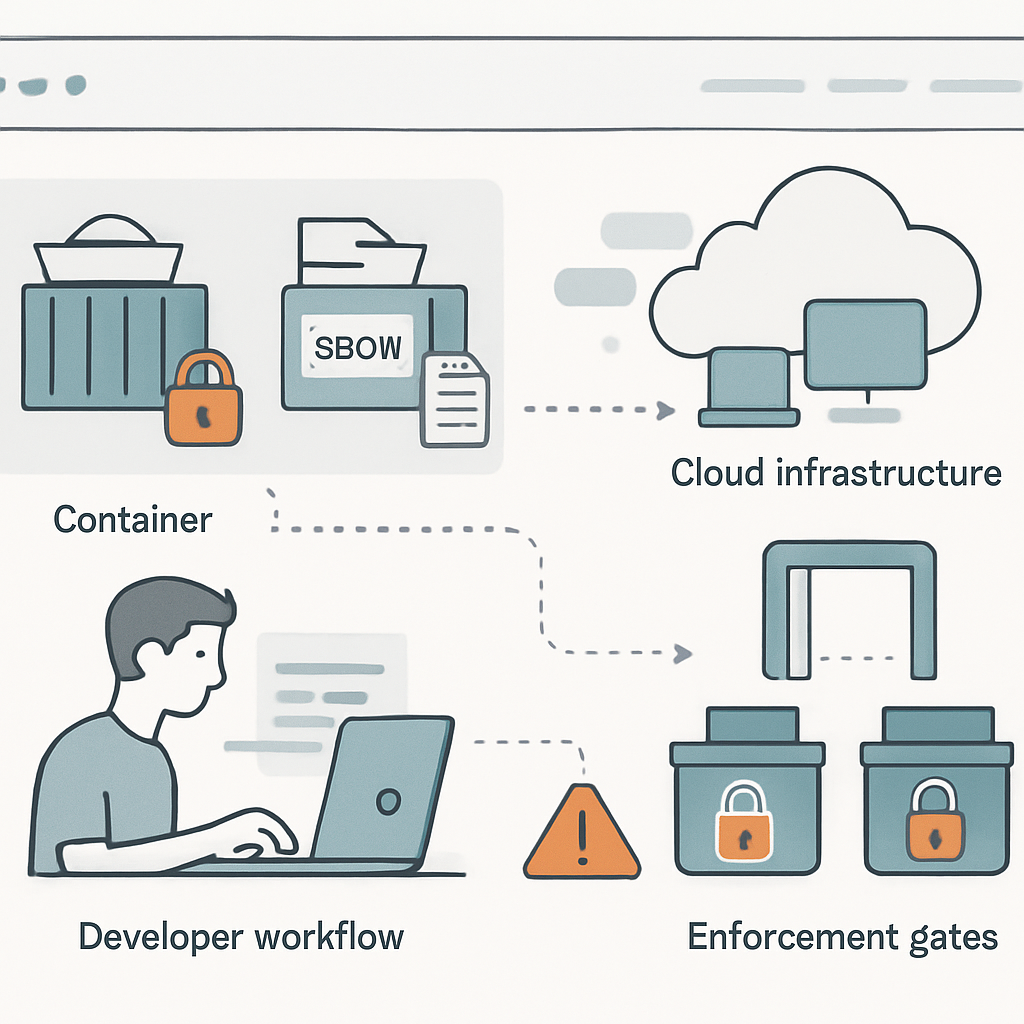
Container registries are the gatekeepers of your software supply chain. Every image deployed must pass through these registries, making registry security essential. In 2026, image scanning, SBOM (Software Bill of Materials) generation, image signing, and admission controls have moved from optional to essential—especially with regulations demanding SBOMs with provenance and policies like SLSA. Our evaluation of the top tools pivots on five weighted criteria: scanning depth (25%), SBOM/provenance support (25%), enforcement (20%), developer workflow (15%), and clarity of value and pricing (15%).
Leading Tools in Container Registry Security
The free and open-source options represent a robust foundation. Harbor—a CNCF-graded registry—provides integrated scanning (via Trivy), image signing (with Notary or Cosign), role-based access control, replication, and webhook support without licensing fees. Anchore’s OSS tools, Syft and Grype, deliver SBOM generation and CVE scanning as part of a federal-grade compliance stack when you opt into enterprise features. Chainguard offers hardened base images, SLSA-aligned builds, and daily rebuilt minimal image bases—ideal for organizations more interested in preemptive risk reduction than dealing with remediation.
On the commercial side, these tools excel depending on what your priorities are:
- Aqua Security layers registry scanning, drift prevention, runtime protection, and SBOM signing over the trusted Trivy engine. Best if you want a full lifecycle platform. Enterprise pricing applies.
- Snyk is developer-friendly through actionable base‐image upgrade recommendations, free tier access, and a strong focus on fix‐driven workflows. Downside: costs rise with team size, and enforcement isn’t as strong as others.
- JFrog Xray is registry-native, especially for shops using Artifactory. It scans artifacts deeply, generates SBOMs, and lets you gate releases. Boundary: its value is tightly linked to staying within the JFrog ecosystem.
- Sysdig adds runtime intelligence—flagging vulnerabilities only when they’re actually in use in production. It’s a powerful way to cut noise and focus your security work. Requires deploying runtime agents.
- Prisma Cloud excels in policy enforcement across multiple registries, compliance mapping, and enterprise-scale workflows. Strong enforcement breadth; best suited if you manage many teams or cloud-native setups.
- Red Hat Quay brings registry and scanning together, with built‐in Clair scanning, robot accounts and strong integration with OpenShift. If you live in the Red Hat/OCP world, this pulls double duty.
- Docker Scout is lightweight and developer-focused—providing layer‐by‐layer vulnerability attribution, base image fix advice, and integration with Docker Desktop and Hub. Great if you want minimal friction.
Putting It All Together: Which Tool Fits Your Needs?
Start with the open-source foundation: Harbor for registry + scanning/signing, paired with Syft or Grype for SBOMs. From there, choose the commercial solution that fills your biggest gap. If your bottleneck is developer velocity or remediation backlog, Snyk or Docker Scout will help. If policy enforcement or compliance is more urgent, platforms like Aqua, Prisma Cloud, or Sysdig bring heavier guardrails.
Another game-changer: hardened images. Chainguard reduces attack surface by shipping minimal, signed images with near-zero known vulnerabilities. It’s preventive security—if your team can do the migration, the effort may pay off by shrinking future scanning workload.
Pricing models vary widely—per developer (Snyk), per workload (Aqua, Sysdig), per image (Chainguard), tiered (JFrog), or free + enterprise (Anchore). Estimating cost ahead of time, especially as your team or image count scales, is essential.
Bottom line: Strong registry security requires more than scanning. SBOMs with provenance, image signing, and admission/gate policies aren’t optional anymore—they’re becoming procurement and compliance essentials. The tools listed here represent both the current state of the art and what you should benchmark against.
Analysis: The shift in 2026 is clear. The open-source floor—Harbor plus tools like Syft, Grype, Trivy—is now production‐grade, enough for many organizations. Commercial platforms compete by how deeply they enforce policy, streamline developer workflows, and provide verifiable provenance. Watch for tools that reduce your attack surface upstream (hardened bases, minimal images) or those that reduce the noise downstream (prioritizing only what matters in runtime). As SBOM mandates, SLSA provenance, and cloud‐native enforcement grow, neglecting any of these layers will be an expensive oversight.