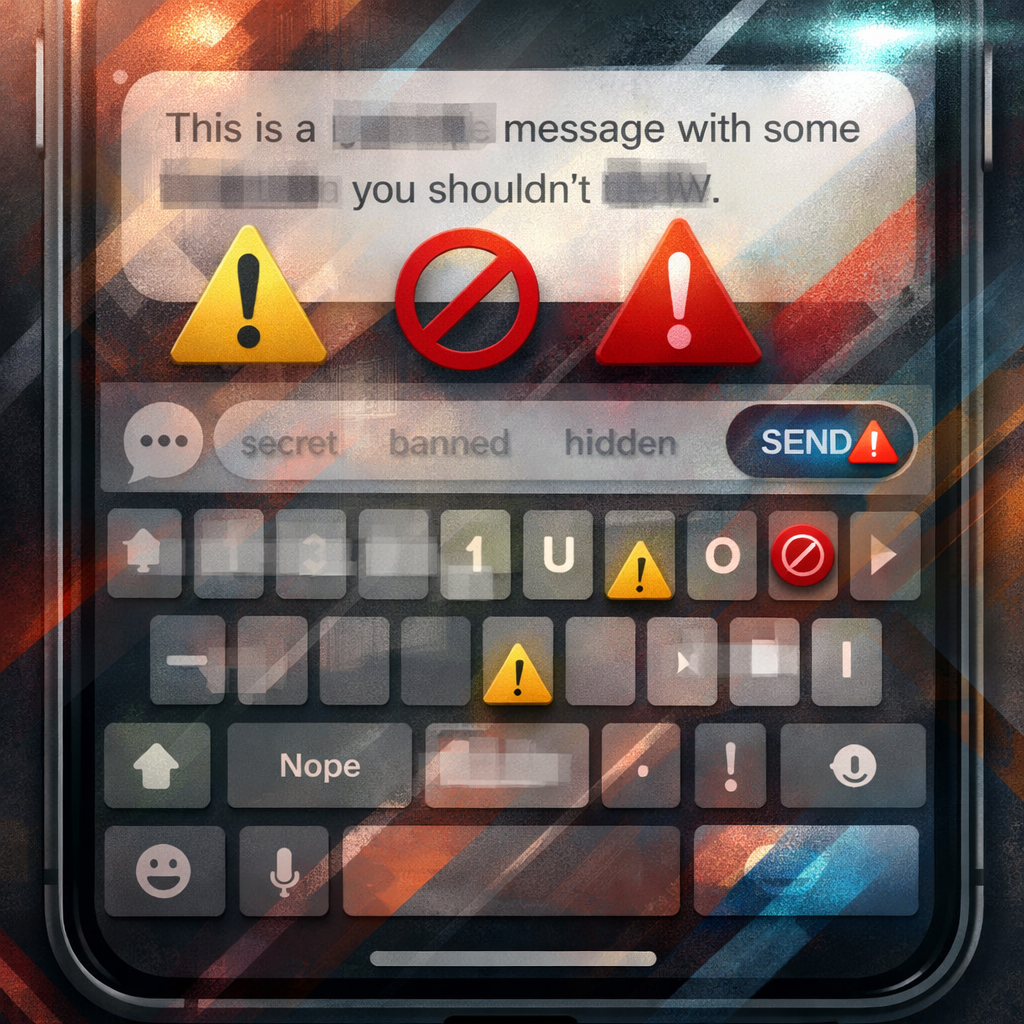
It turns out the iPhone’s keyboard has a built-in blacklist of thousands of words and phrases its predictive text, autocorrect and swipe functions will never suggest. A site called Swipeblocked has surfaced this hidden list, which includes slurs, profanity, references to drugs, certain political slogans and public figures, as well as controversial historical events. Yet users can still type these words—Apple simply omits them from suggestions.
What words get blocked and why
The list breaks “offensive” words into three categories: vulgar, offensive, and sensitive. Among the blocked terms are those close to more common words to avoid autocorrect mistakes—slurs, for example, that differ by a letter from frequently used words. Apple appears to design this system to reduce the risk of offensive suggestions replacing more likely correct words.
Swipeblocked notes that some non-offensive or seemingly benign expressions are also filtered. Phrases like “left wing conspiracy,” “right wing propaganda,” “Santa isn’t real,” or “left wing conspiracy” cannot be swiped or predicted. When the keyboard tries, it offers substitutions like “left wrong conspiracy.”
How the list was obtained
The full forbidden list isn’t published by Apple. Swipeblocked instead extracted it from internal data files in iOS 27.
The blocked words vary by language: each supported language in iOS has its own version of the list, with terms tailored to local culture and sensitivities.
Despite these limitations, there’s no restriction on typing the words manually. The blockage only applies to predictive text, autocorrect, and swipe features; the keyboard still accepts the input.
This behavior isn’t a sudden shift. Apple has long prioritized certain suggestions over others to avoid miscommunication or offense, by suppressing words that are close to harmless ones or could be misinterpreted. The Swipeblocked catalog simply makes visible what has been quietly enforcing how the system behaves.
For those curious, Swipeblocked has made available the full list of blocked English words and phrases.
Understanding that the keyboard’s blacklist operates behind the scenes raises questions about how such lists are curated: What criteria decide whether something is sensitive, non-suggestable, or offensive? The answer seems opaque. Apple does not publish the process or criteria.
Why it matters and what to watch
This quietly enforced filtering reflects a balancing act—between protecting users from offensive or harmful suggestions, and preserving free expression. On one hand, it helps avoid embarrassing or harmful miscorrections. On the other, it shapes the vocabulary users are nudged toward. Going forward, it could become a flashpoint as people debate who gets to define what’s sensitive. Transparency around blocked content and granting users control (or at least insight) might be the next demands. Also worth examining: how newer features or future iOS versions adjust or expand these lists, especially in politically charged or culturally diverse contexts.