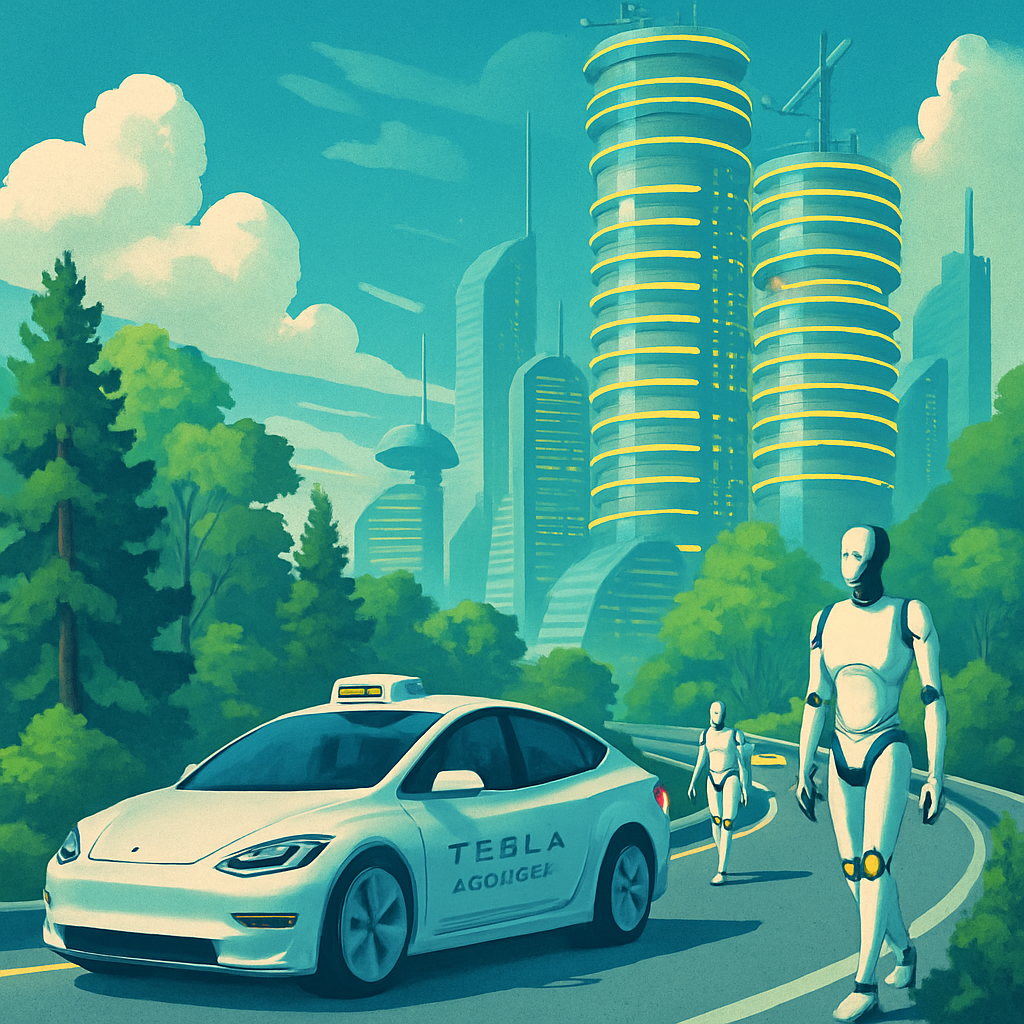
On September 1, 2025, Elon Musk unveiled Tesla’s fourth Master Plan, promising expansive technological dreams wrapped in lofty language. What the plan lacked was clarity. A year later, Tesla’s ambitions still rise high, but what “abundance” actually means in practice remains vague and disconnected from concrete roadmaps. What was meant to be a bold manifesto is now a central pillar for justifying one of the biggest pay packages in history—even as the mechanics of how this future will be built are mostly missing.
The Shift from ‘Sustainable’ to ‘Amazing’ Abundance
For years, Tesla’s goals were centered on climate and sustainability: accelerating the world’s transition to sustainable transport and energy. Those precise statements gave way to broader concepts. Recently, “sustainable abundance” was replaced with “amazing abundance,” with Musk noting that “amazing” simply sounded more joyful. The change signals a huge shift—from defining metrics like emissions reductions and renewable energy to an open-ended vision where robots, AI, and universal access to care govern the plan.
Promises Without Anchors
While Musk has painted vivid pictures of a future where robots perform surgery, AI eliminates shortages, and even everyone can own a penthouse if they wish, those images are unmoored from specifics. Musk has said “anyone can have anything they can think of,” but the plan does not explain how Tesla will deliver on promises such as three billion underoccupied penthouses or zero-deforestation in preferred locations. The narrative sometimes even co-opts environmental language—mentioning national parks and the Amazon—yet supporting politicians with anti-environmental track records undermines these claims.
Without concrete milestones, Tesla is relying heavily on Musk’s rhetoric to tether its grand aspirations. ″Amazing abundance″ is more than a slogan—it’s used as a guiding principle in regulatory filings. During the discussion over Musk’s $1 trillion compensation package approved in late 2025, Tesla explicitly tied this vision to performance goals: deliver 20 million vehicles, secure 10 million Full Self-Driving (FSD) subscriptions, deploy one million robotaxis, and deliver one million “bots.” But it is not clear how or when these goals will translate into meaningful outcomes for consumers or society at large.
Where the Tension Lies
Musk’s optimism leans hard on transformative technologies like AI and robotics. These are positioned as the engines behind Tesla’s vision—tools that will unlock abundance for all. But building humanoid robots at scale, perfecting FSD, and achieving robotaxi fleets are monumental technical hurdles. So far, some products like Optimus are being experimented with internally rather than sold; others like robotaxis are piloted under tight constraints. The gap between aspiration and execution remains wide.
Tesla’s evolving mission statement, too, reflects this tension. With “sustainable” removed, the company seems less tethered to environmental goals. Meanwhile, Musk’s public statements—on podcasts, regulatory filings, and shareholder letters—continue to expand the scope of what abundance might include: universal healthcare access, unrestricted access to goods and services, and environmental preservation. Yet these remain visions rather than tactical plans.
Ultimately, Tesla’s definition of abundance remains almost poetic—not operational. Its corporate materials lean into future-sketches and layered metaphors more than they lay out paths. Goals like millions of bots or robotaxis are meaningful only if paired with timelines, budgets, technical feasibilities, and impact assessments—none of which have been fully disclosed.
Why this matters: this shift from detailed sustainability to boundless abundance reflects both Tesla’s strategy and its risk. Without clarity, the company has strong narrative power but weak accountability. Investors, policymakers, and the public deserve to know: what does abundance cost, what behavior will change, and who will benefit? Tesla’s next moves—product roadmaps, ecological impact assessments, and regulatory transparency—will show whether “amazing abundance” becomes useful, or just another inspiring soundbite.