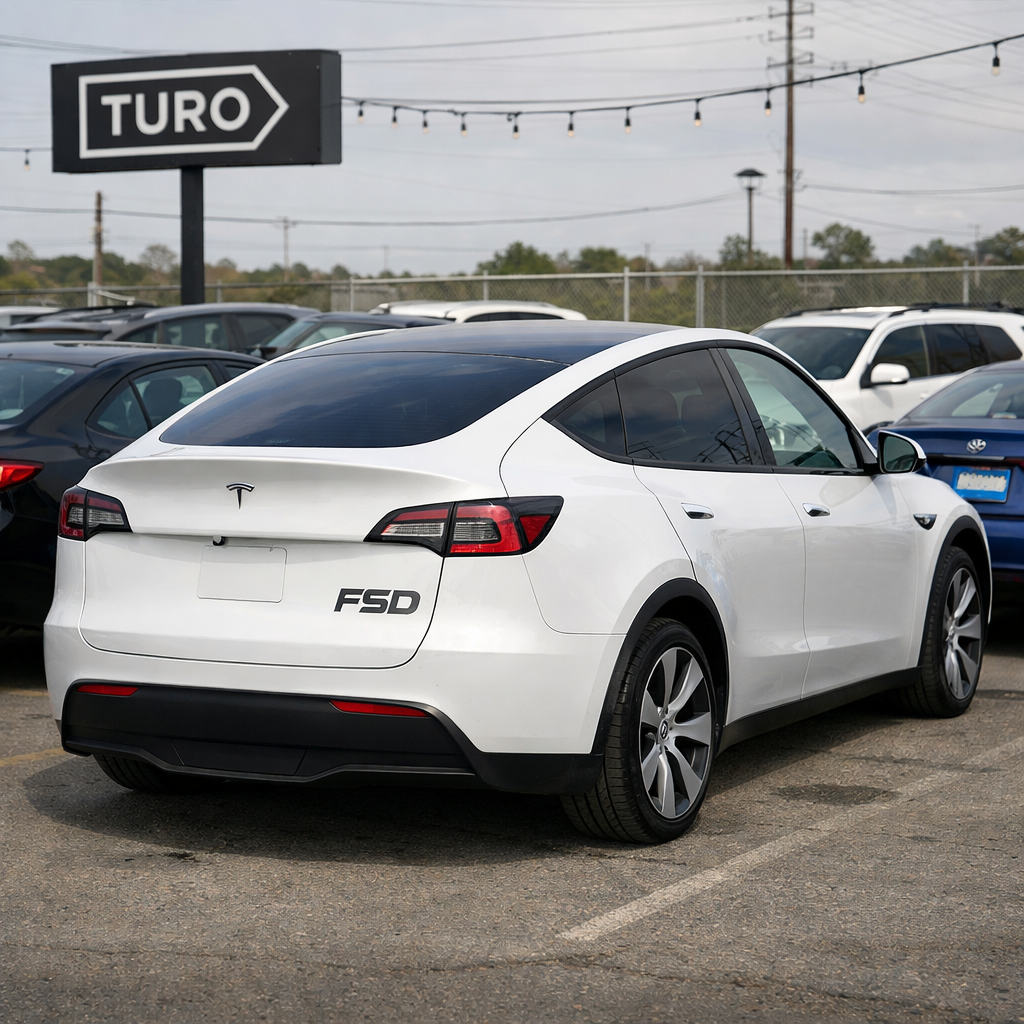
Tesla and car-sharing marketplace Turo have struck a partnership designed to increase visibility and usage of Tesla’s FSD (Full Self-Driving, Supervised) system. Under the new deal, Turo will highlight which vehicles in its listings include FSD, allow verified Tesla hosts to receive a free one-month FSD trial, and use Tesla’s API for verifying FSD activation on eligible cars.
What’s changing on Turo
Hosts listing Teslas on Turo will see their ads display whether a car is equipped with FSD. Those meeting eligibility requirements will also gain access to a one-month trial of the system—which handles most driving tasks but still requires driver supervision. Turo confirmed it is working directly with Tesla to tap into the carmaker’s API, ensuring cars labeled “FSD-enabled” are correctly flagged.
For renters, listings featuring Teslas with FSD will include alerts warning that the system still demands active monitoring and readiness to take control. An optional tutorial created by Tesla will also be available to help drivers understand how it works.
Why Tesla is making the push now
Tesla has recently provided updated metrics showing growing customer adoption of FSD globally. Of the over 10 million Teslas produced and sold to date, around 1.7 million have paid for FSD. In North America, more than three-quarters of those who ordered new Teslas in the third quarter subscribed to FSD—a surge from the second quarter—despite overall declines in U.S. EV sales during that period.
The automaker has shifted its showroom strategy to emphasize FSD as a major selling point. Executives report a change in how buyers approach the purchase: FSD is increasingly the feature people ask for first, with the specific Tesla model becoming secondary.
What it means for Turo and the market
Turo already lists Tesla’s Model 3 and Model Y among its top rental choices this year. By incorporating FSD visibility and trials, Turo hopes to tap into growing consumer fascination with assisted driving, boosting host earnings and differentiating its vehicle offerings. Their market research suggests that interest in autonomous vehicle features is high—about 55% among general U.S. consumers, and up to 71% among Gen Z.
This integration is positioned as a way to turn curiosity into hands-on experience. It gives drivers access to driver assistance tech, somewhat rare so far outside of ownership settings.
The move also serves Tesla’s interest: more subscriptions mean recurring revenue. The partnership with Turo provides a novel pathway for people to try FSD without committing to buying a car or subscribing long-term, potentially lowering barriers to adoption.
Analytical Angle: This collaboration marks a turning point in how high-end driver assistance features are marketed and experienced. By leveraging the sharing economy through Turo, Tesla sidesteps some of the traditional obstacles to FSD adoption—namely hesitation around cost, oversight, and hands-on exposure. What to watch: whether trials convert into long-term subscriptions, how liability and safety messaging hold up, and whether rival OEMs follow suit with similar integrations.