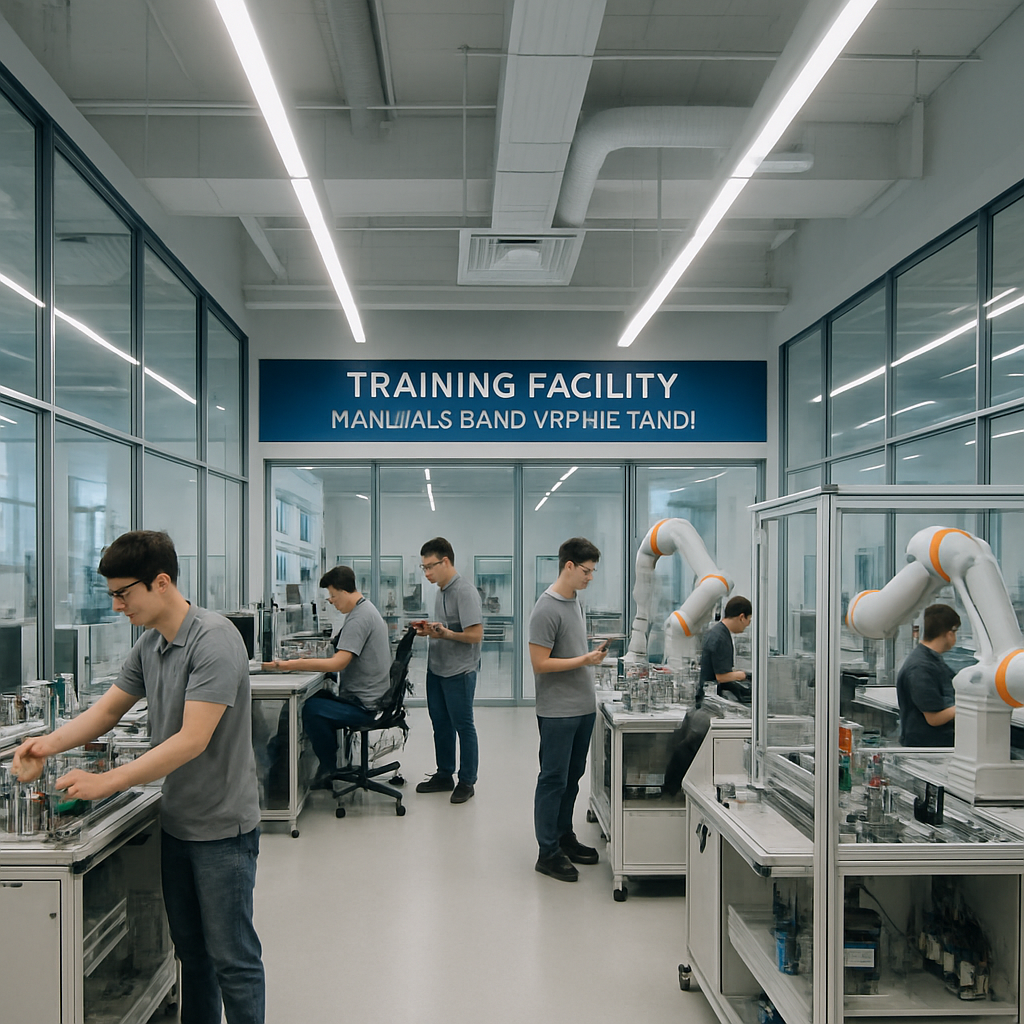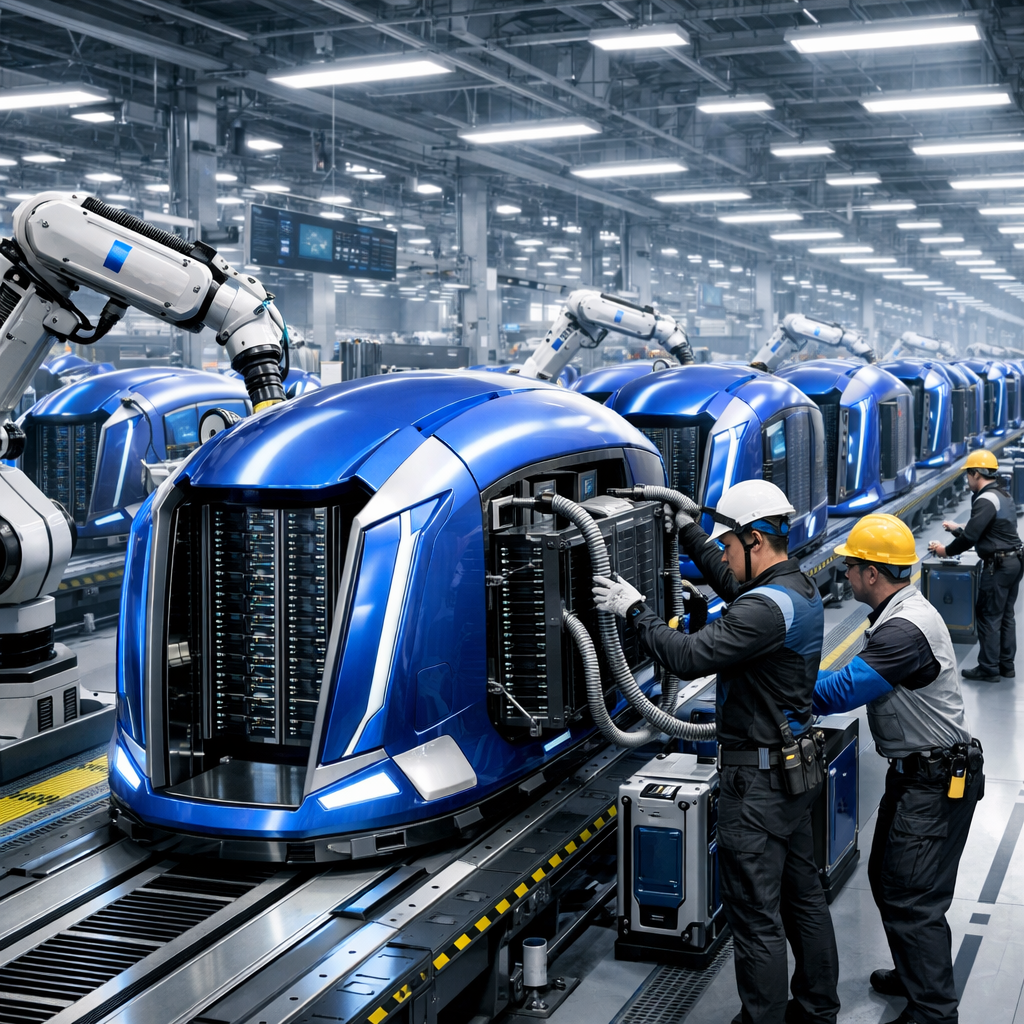
Runware, a company focused on AI infrastructure, is betting its future on making modular data centers at factory scale—produced like cars and deployable in just 48 hours. The startup’s flagship product is the Sonic Inference Pod, a prefabricated unit built in Romania and shipped ready for setup. The ambition now is to build a factory that assembles these pods via a full production line, pushing for speed and scale.
Speedy Deployment: Factory Assembly and Rapid Setup
Runware has operated one factory for pod production and is building a second, expected to go live early next year. The plan is to ramp up to 30 megawatts per day by 2028, equal to nearly one gigawatt monthly capacity. That’s about what the U.S. is projected to add in data center power this year. Pods will be built faster—today’s three-week build time will shrink to a single day once the scale is reached. Setup and commissioning, however, still target a 48-hour window, including site install and activation.
Customization, Costs, and Resource Efficiency
Runware offers flexibility: while pods follow a standard blueprint, they can be adjusted for preferred GPU models or client-specific requirements. Because GPU lead times tend to lag, the company plans to align infrastructure delivery with arriving chip shipments. It designs many internal components, especially for cooling, while sourcing standard parts for pumps, fans, and networking. It depends on external partners like Nvidia for network elements.
Costs will come down via streamlined production, lower overhead, and by hiring experts from automotive manufacturing. Runware’s $50 million Series A funding (raised last December) is being used to finish and activate the new factory, though it has raised over $60 million total and is eyeing a Series B. To date, it claims $1 billion in committed interest for its Sonic pods—representing over 20 megawatts of demand—since external customers were first offered them just a month prior.
Infrastructure, Environment, and the Global Push
The pods are designed for minimal site needs—only power and internet. A closed-loop liquid cooling system with air-cooled radiators handles heat, so running water isn’t required. Sites generally will be smaller than those used by hyperscaler data centers and often pre-existing power infrastructure is leveraged. The approach is engineered to reduce strain on energy grids.
Runware also claims the pods operate quietly—in temperatures up to 86 °F—and seek to use renewable power wherever possible. Its site pipeline already spans 397 megawatts, with potential to climb to 1.2 gigawatts. The company plans to activate its new factory early next year and extend its model into the U.S. and other geographies. In its view, modular pods like these aren’t just a niche solution—they could become the standard for large-scale AI deployments.
Bringing this to life will mean solving for supply chains, workforce scale, and manufacturing consistency. The company emphasizes buying off-the-shelf where possible and optimizing headcount and materials. A former automotive plant manager now leads factory operations alongside Runware’s hardware leads to drive that execution.
Whether Runware can pull it off remains to be seen. Scaling factory output, meeting aggressive timelines, and maintaining quality all have precedents of failure—especially for newcomers. Investors will be watching closely as the startup transitions from prototype to mass production.
Why This Matters: If Runware succeeds, it could shake up the AI infrastructure industry. The ability to treat data centers like consumer goods—manufactured at scale, shipped, and operational within days—promises to accelerate AI deployment, reduce cost per watt, and challenge the traditional model of multi-year, highly localized data center builds. For customers, this could mean faster access to compute, more modular scaling, and potentially greener operations through standardized, efficient cooling and renewable sourcing.