On August 24, 2026, Anthropic introduced enterprise-managed authorization for its Model Context Protocol (MCP) connectors, making the feature generally available. This upgrade streamlines how organizations enable workplace tool integrations across their environments. Previously, admin intervention and individual user approvals were both required. ([cybersecuritynews.com](https://cybersecuritynews.com/anthropic-enterprise-managed-mcp-connectors/))
What’s Changing
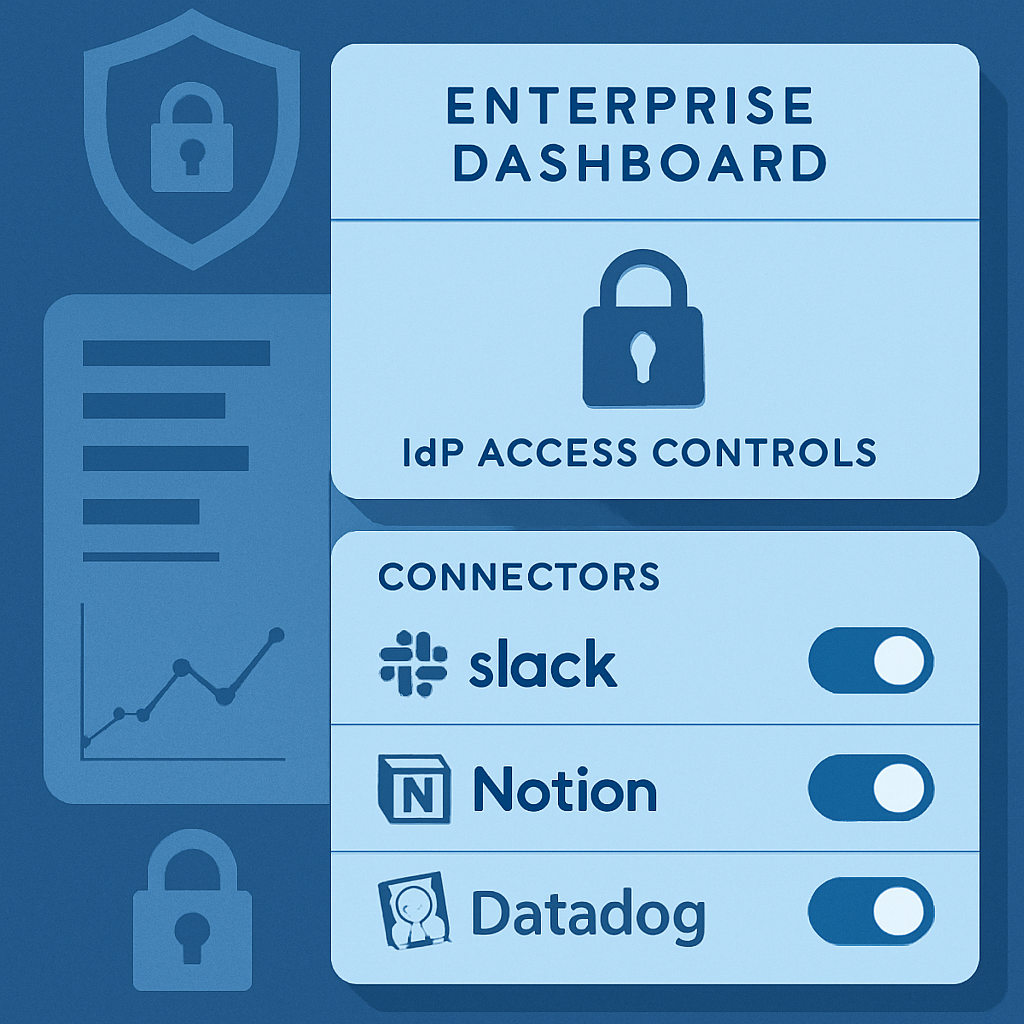
The new system eliminates the requirement for each employee to authorize a connector after an administrator enables it. Now, once an admin activates a connector, access is granted to all users who belong to appropriate identity provider (IdP) groups or roles. The change removes the need for separate OAuth flows or consent prompts for every user. ([cybersecuritynews.com](https://cybersecuritynews.com/anthropic-enterprise-managed-mcp-connectors/))
At launch, enterprise-managed auth supports connectors with Datadog, Notion, and Slack, expanding its compatibility with tools already on Anthropic’s supported list, which includes Asana, Atlassian, Canva, Figma, Granola, Linear, and Supabase. Additional connectors like Exa, Miro, and Zoom are expected to be added soon. ([cybersecuritynews.com](https://cybersecuritynews.com/anthropic-enterprise-managed-mcp-connectors/))
Security and Identity Controls
This update builds on the MCP framework, which allows any connector—including custom in-house ones—to adopt enterprise-managed behavior via an extension. Currently, the identity system integrates with Okta, leveraging its Cross App Access protocol and identity assertion JWT grants. This lets organizations reuse existing OAuth infrastructure instead of deploying separate authentication paths. ([cybersecuritynews.com](https://cybersecuritynews.com/anthropic-enterprise-managed-mcp-connectors/))
Admin tools now include centralized auditing, fine-grained group-based access control, and real-time revocation when employee access is removed. Organizations can enforce stricter token lifetimes to reduce risk from stale sessions. It’s also possible to restrict connector use strictly to enterprise-controlled accounts, preventing personal account links. These controls are consistent across Anthropic’s suite including Claude chat, Claude Code, and Cowork. ([cybersecuritynews.com](https://cybersecuritynews.com/anthropic-enterprise-managed-mcp-connectors/))
Early Adoption & Broader Implications
Companies like Ramp, Webflow, and HubSpot are among those already deploying enterprise-managed authorization. Ramp in particular has enabled the setup for roughly 2,000 employees without manual configuration. ([cybersecuritynews.com](https://cybersecuritynews.com/anthropic-enterprise-managed-mcp-connectors/))
As AI systems increasingly handle sensitive business operations, integrating identity governance into connector access addresses a gap that often created friction or security lapses. By treating connector access like any other SaaS application, enterprises can apply existing workforce identity discipline to AI tools. ([cybersecuritynews.com](https://cybersecuritynews.com/anthropic-enterprise-managed-mcp-connectors/))
What this means is that the gap between productivity and security in generative AI tools is narrowing. As businesses adopt tools like Claude more deeply, having an admin-managed connector policy reduces exposure risk, simplifies onboarding, and improves compliance. For teams evaluating AI tools, watch for which identity providers are supported next, whether custom connectors maintain this seamless authorization, and how well token lifecycles are enforced in practice.