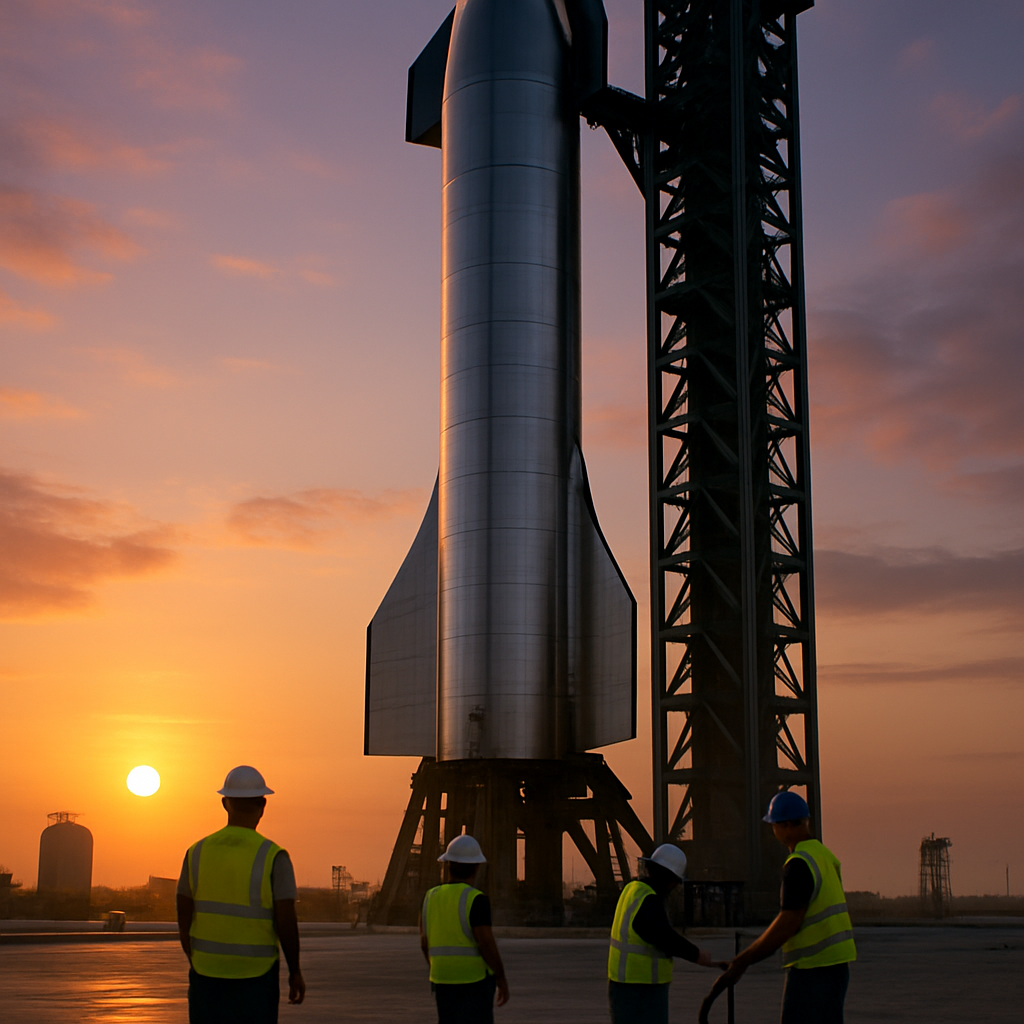
The Federal Aviation Administration (FAA) has granted SpaceX approval to resume Starship prototype flights following the identification of the cause behind the booster stage failure during a May test. The upcoming launch, potentially as early as Thursday, July 16, will mark the second flight of the third iteration of Starship, known as V3.
In this mission, Starship is set to deploy the first batch of third-generation Starlink satellites into orbit. These advanced satellites are designed to enhance the network’s capacity and user speeds, connecting with the existing Starlink constellation via high-capacity lasers. Previously, Starship missions carried only dummy versions of these larger, more powerful internet satellites.
This flight also represents SpaceX’s first Starship test since becoming a publicly traded company. The firm completed its initial public offering on June 12, raising nearly $86 billion and positioning itself among the world’s top ten most valuable companies. This test will gauge market reactions to SpaceX’s iterative development approach, often characterized by rapid testing and learning from failures.
The May 22 test flight of Starship V3 achieved several milestones. The Super Heavy booster successfully propelled the 407-foot rocket into space, allowing the upper stage to separate and deploy 20 satellite simulators, along with two modified Starlink units that captured footage of the Starship exterior. However, the booster failed to re-ignite its engines for a simulated landing in the Gulf of Mexico, resulting in an uncontrolled descent into the water.
Investigations by SpaceX and the FAA pinpointed the issue to the moment of booster separation. Minor discrepancies in engine startup on the ship caused the booster to rotate 90 degrees incorrectly. To address this, SpaceX has adjusted the engine startup sequence to ensure the booster flips in the intended direction and has enhanced the booster to improve engine re-light reliability.
The FAA identified the primary causes of the failure as heat effects on propulsion system components during ascent and incorrect engine alarm system settings. In response, SpaceX has updated Starship’s engine alarm and abort systems to minimize the likelihood of similar issues in future flights.
During the May flight, the upper stage of Starship V3 managed to deploy its test payload and simulate a landing in the Gulf, despite losing one of its three vacuum-optimized Raptor engines. SpaceX has since implemented several hardware and operational modifications to prevent such engine losses in upcoming missions.
The forthcoming Starship test flight is a pivotal step for SpaceX, as it aims to demonstrate the viability of its fully reusable rocket system. Success in this endeavor is crucial for the company’s ambitious plans, including deploying space-based data centers and pursuing interplanetary travel.
As SpaceX continues to push the boundaries of space exploration, the upcoming Starship launch will be a critical test of the company’s ability to learn from past challenges and advance its technology. The integration of third-generation Starlink satellites also underscores SpaceX’s commitment to enhancing global internet connectivity through its expanding satellite network.