SpaceX’s Starship V3 Launch Halted Moments Before Liftoff
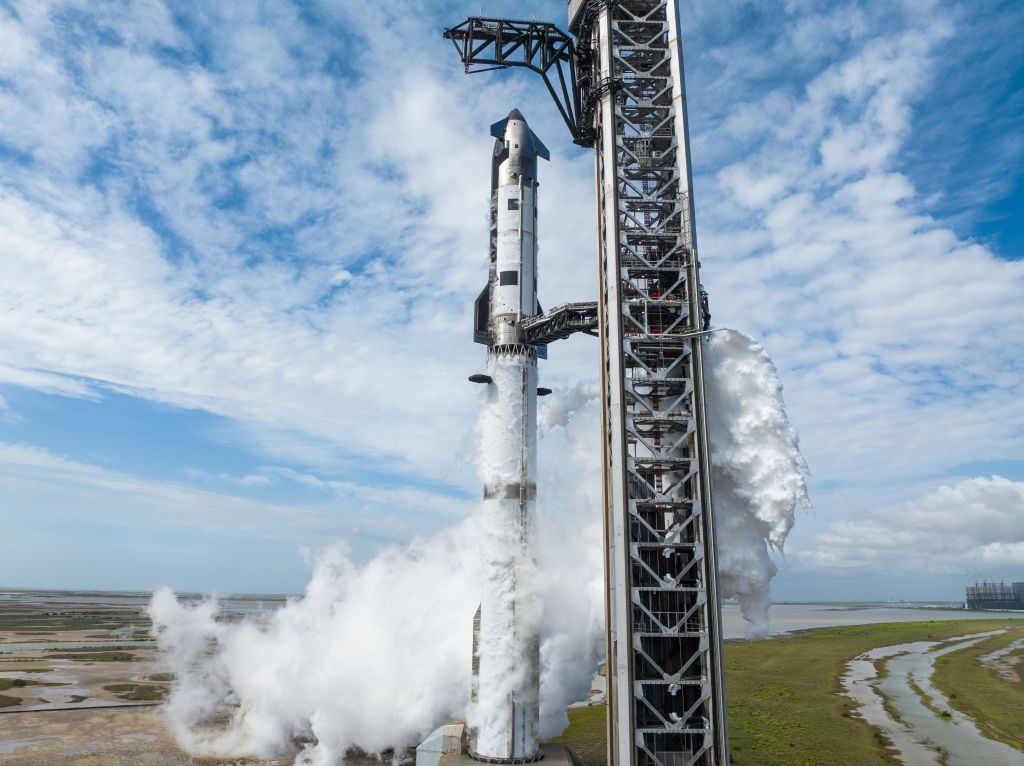
On May 21, 2026, SpaceX aborted the inaugural launch of its third-generation Starship rocket system at the Starbase facility in Texas. The company plans to attempt the launch again on Friday.
This mission is pivotal for SpaceX, marking the first real test of the upgraded Starship V3 hardware. The timing is particularly significant as the company has recently filed for an initial public offering (IPO) and is expected to go public within weeks. Demonstrating progress in its next-generation rocket program is crucial for investor confidence.
The launch, designated as Starship’s 12th, would have been the first flight since October 2025. In the intervening months, SpaceX has focused on developing and testing the third version of Starship, encountering challenges along the way. Notably, in November, a V3 booster experienced an explosion during testing.
On Thursday, the launch faced multiple delays, with the countdown reaching under T-40 seconds before being halted. Issues with rocket and launchpad systems led to several countdown resets. CEO Elon Musk explained on X (formerly Twitter) that a hydraulic pin holding the [launch] tower arm in place did not retract, adding that the company would attempt another launch on Friday at 5:30 p.m. local time if the issue could be resolved overnight.
The Starship V3 introduces significant upgrades in vehicle design and launchpad infrastructure. The third-generation Raptor engines provide increased thrust with a streamlined design. The new booster is designed for easier recovery by the launch tower and features one fewer grid fin.
To enhance reliability, SpaceX has implemented changes to prevent propellant leaks in the Starship upper stage, a problem encountered in previous test flights. The overarching goal is to achieve full reusability of the vehicle, akin to the Falcon 9 rocket.
For this flight, SpaceX does not plan to recover the booster or the Starship vehicle. Both are expected to perform soft landings in the ocean—the booster in the Atlantic and Starship in the Indian Ocean. Additionally, Starship will not achieve a true Earth orbit during this mission, meaning further tests are needed to demonstrate the rocket’s capability to deliver commercial payloads.
The success of Starship V3 is vital for SpaceX, particularly due to its investment in the Starlink satellite constellation, which generated $11 billion in revenue last year, according to the company’s IPO filing. While previous launches have deployed dummy versions of upgraded Starlink satellites, SpaceX has yet to place a functional payload into orbit using the new rocket system.