Sonos has officially named its latest software platform “Sonos 27,” unveiling four significant features that will roll out this fall. The company’s announcement arrives alongside the launch of two new hardware products, the Sonos Ace Ultra headphones and the Sonos Beam Ultra soundbar, but it’s Sonos 27 itself that promises changes in how users interact with their audio ecosystem.
What’s new in Sonos 27
The update brings four headline features to enhance both flexibility and control:
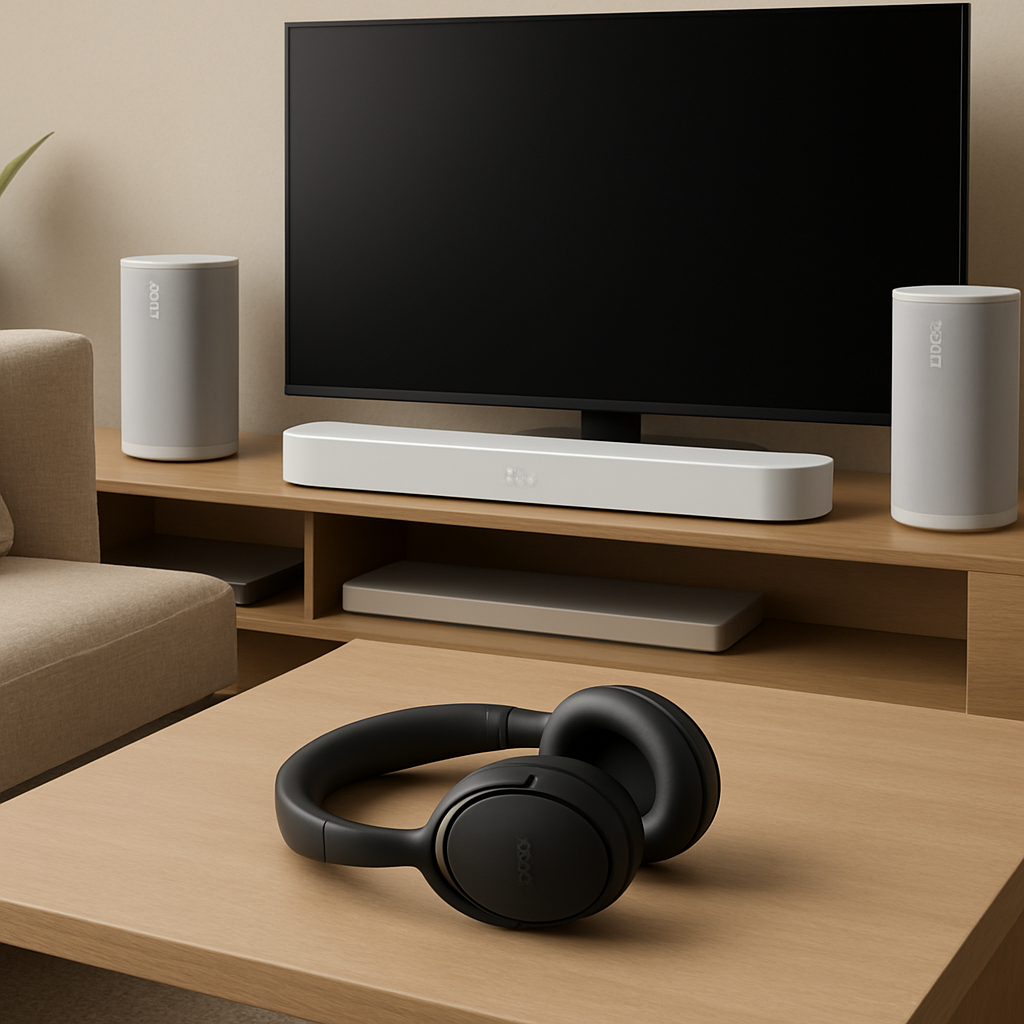
- Portable surrounds: Users will be able to turn two compatible portable speakers into wireless rear surround sound speakers for movie nights. Once the show’s over, those speakers can go back to their regular spots without requiring any rewiring or moving of furniture.
- Personal listening: Called “headphone linking” and currently in Early Access, this lets you move audio between Sonos Ace Ultra headphones and a Wi-Fi connected speaker or speaker group at the press of a button. Moreover, you’ll be able to browse and control whatever you’re listening to on the headphones using the Sonos app—while still on your home network.
- Sonos 27voice: A new voice interface designed specifically for music, allowing more natural commands. Users will be able to use conversational phrases like “Play that song I had on in the kitchen last night” or “Put on something downstairs that the kids will like,” without needing rigid, predefined voice commands.
- Sonos MCP: Sonos is opening its platform further with “MCP,” which connects its system to external large language models (LLMs). This means users will be able to control their Sonos setup through familiar chatbot-style interfaces, combining ongoing conversational reasoning with playback through speakers.
Why Sonos 27 matters
While Sonos has offered software updates consistently, giving its software a distinct identity signals a new phase. Labeling it Sonos 27 formalizes what’s already in play while introducing features that lean heavily into smarter home integration, seamless audio transitions, and AI-enhanced voice control. These aren’t small tweaks—they represent Sonos aiming to compete not just in sound quality, but in how users expect devices to adapt and respond.
By introducing portable surrounds, Sonos is acknowledging that home audio setups should be flexible—not just in where speakers are placed, but how dynamically they can shift roles.
Personal listening via headphone linking reflects users’ increasing demand for seamless switching between private and shared listening modes, especially in multi-room environments.
With Sonos 27voice and the MCP expansion, the company is betting on more natural, conversational interaction—less “Hey assistant, do X,” and more “Hey, play what I was hearing earlier.” The use of external LLMs suggests a deliberate push toward smarter, more tailored experiences in the Sonos ecosystem.
Whether this will transform the experience depends on the rollout: which devices will support these features, how well the voice recognition works in real-world settings, and what level of control users have when deploying chatbot-based commands via MCP. These are the pieces that will determine whether Sonos stays ahead in an era where audio hardware increasingly lives or dies by software innovation.