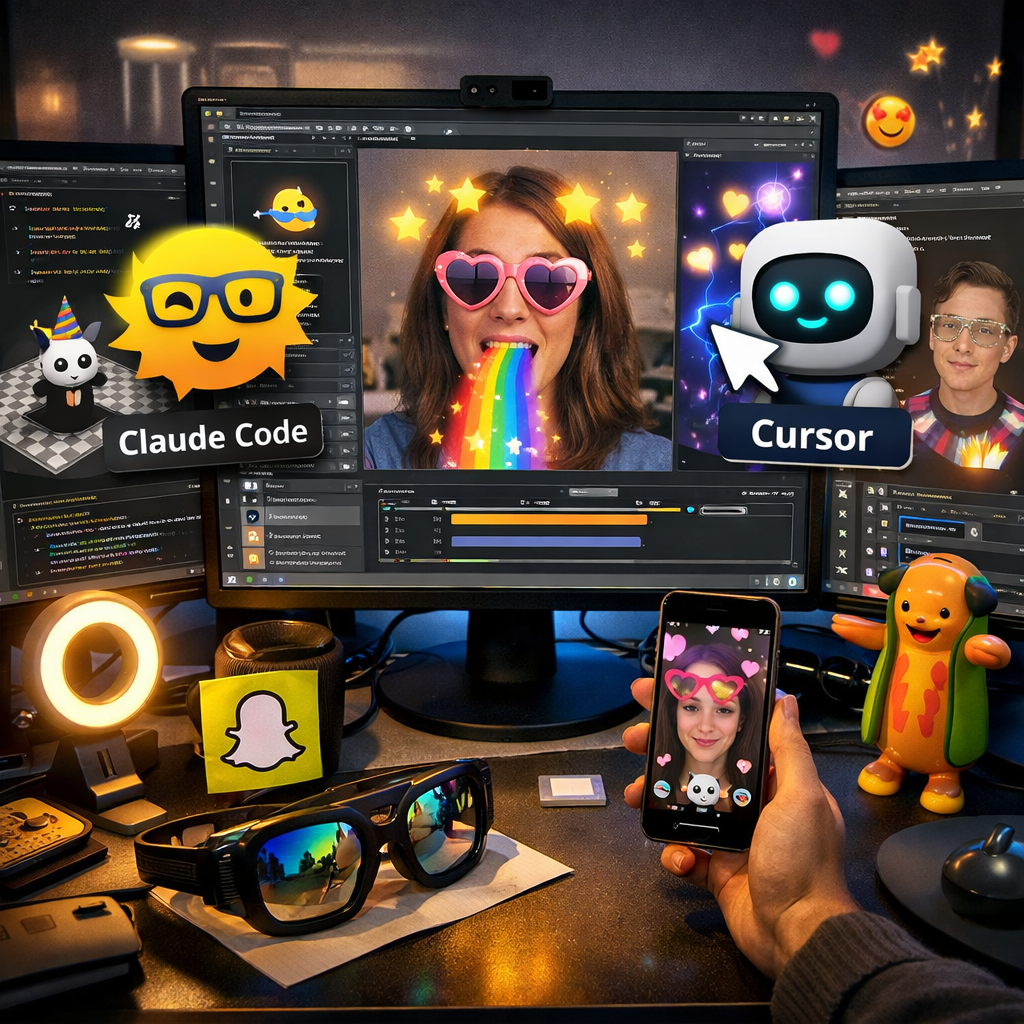
Snapchat is making AR Lens creation easier with its new Easy Lens CLI, enabling developers to build lenses using AI coding tools like Claude Code, Cursor, and Codex. Designers already familiar with AI assistants can now use those same tools to create Snap Lenses, rather than mastering Snapchat’s proprietary development environment.
Lenses have long been a defining feature of Snapchat, allowing users to apply augmented reality (AR) effects—from whimsical filters to interactive overlays—to their surroundings via the camera. With Easy Lens CLI, Snapchat is giving creators a streamlined path: describe the vision in plain language, and let their AI assistant manage everything else, including asset generation, errors, previews, and publishing. That encompasses over 100 AR building blocks and around 50 AI asset generators.
Democratizing AR Development
Instead of being tethered to Snapchat’s own complex tools, creators can remain in their usual AI-assisted workflows. Whether using Claude Code, Cursor, or Codex, they can prompt the assistant, and allow it to generate Lenses compatible with Snapchat. The tool supports usage across Mac, Windows, and Linux.
The interface is designed to accommodate various creators: game developers can convert browser-based experiences into Web Lenses with leaderboards; creators focusing on aesthetics can integrate their preferred art assets and retain style; agencies or brands can morph existing videos or imagery into AR experiences. Snapchat estimates that a Lens can go from basic concept to published experience in a single day without manual coding.
Monetization & Ecosystem Impact
Developers in Snapchat’s Lens+ Payouts program are eligible to earn from Lenses crafted via Easy Lens CLI. The platform distributed $1.8 million in payouts to Lens+ creators just one month ago. Participation in that program means creators can build with AI assistants, publish their work, track performance, and collect earnings—all from within Snapchat’s ecosystem.
This shift suggests Snapchat is pushing to expand its pool of Lens makers by lowering technical barriers. With AI assistants becoming more central to developer workflows, this move aligns Snapchat with broader trends in creative tooling and AR content democratization.
The rise of Easy Lens CLI reflects ongoing industry momentum. As consumers expect richer AR experiences—and more companies invest in spatial computing—tools that streamline creation (especially tools grounded in AI assistance) will likely be key differentiators.
This update matters because it shows Snapchat betting that creative potential lies not just in what new AR effects can do, but who can build them. By integrating AI assistants directly into Lens development, Snapchat is opening AR up to artists, marketers, and developers who weren’t previously tapped into its platform. The coming months will reveal whether this lowers the barrier as promised, and how quality, diversity, and innovation in AR content scale as a result.