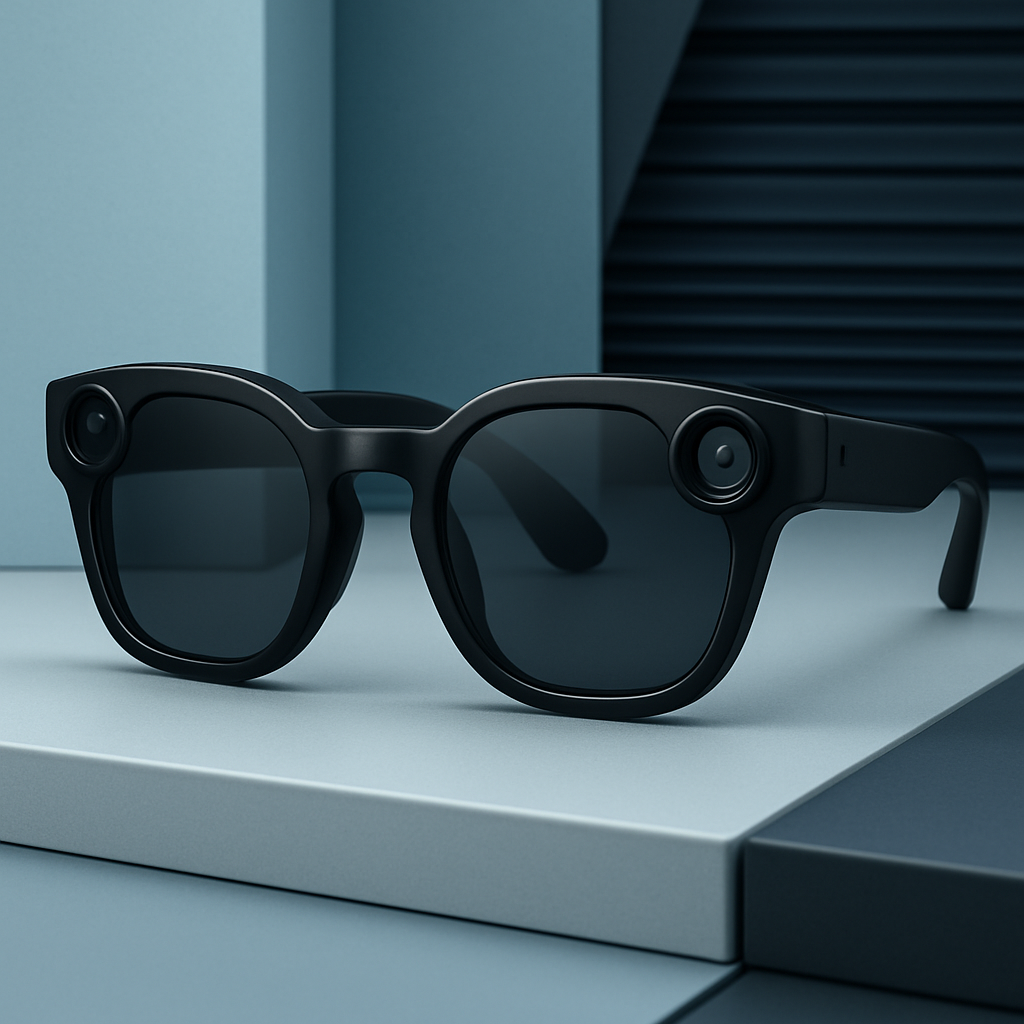
Snap has officially introduced its long-anticipated augmented reality (AR) glasses, named Specs, at a spatial AI convention in Long Beach. Priced at $2,195, these glasses are now available for preorder with a $200 refundable deposit, and shipments are expected to commence this fall in the United States, the United Kingdom, and France.
The Specs glasses are designed to function independently without the need for external devices like pucks or tethers. They are powered by dual Snapdragon processors and offer up to four hours of continuous battery life. An accompanying charging case extends the total usage time to 20 hours.
In terms of functionality, Specs provide a range of features. Users can engage in games, including shared multiplayer experiences through a feature called “EyeConnect,” which activates when two users make eye contact. The glasses also support video playback with a 51-degree field of view and 16 million colors, point-of-view recording, internet browsing, and access to productivity applications.
A notable feature of Specs is its contextual AI capability. By looking at an object and inquiring about it, the glasses can provide relevant information, showcasing an advanced AI-assistant layer.
Regarding design, Specs are available in two sizes: a 47mm model weighing 132 grams and a 52mm model at 136 grams. While heavier than Meta’s Ray-Ban Wayfarers, which weigh under an ounce, they are significantly lighter than Apple’s Vision Pro, which weighs between 26.4 to 28.2 ounces.
Privacy considerations have been addressed with a built-in LED light that illuminates when recording is active. Users also have control over data storage, synchronization, and deletion.
Snap’s journey to develop consumer-facing AR glasses has spanned over a decade. The last consumer version was released in 2019, with subsequent iterations being developer-focused. Earlier this year, Snap established a new subsidiary dedicated to bringing Specs to market, culminating in this recent launch.
The introduction of Specs marks a significant milestone in the AR industry. However, the $2,195 price point may limit its accessibility to a broader consumer base. As the AR market continues to evolve, it will be interesting to observe how Snap’s offering competes with other products and whether future iterations will become more affordable for the general public.