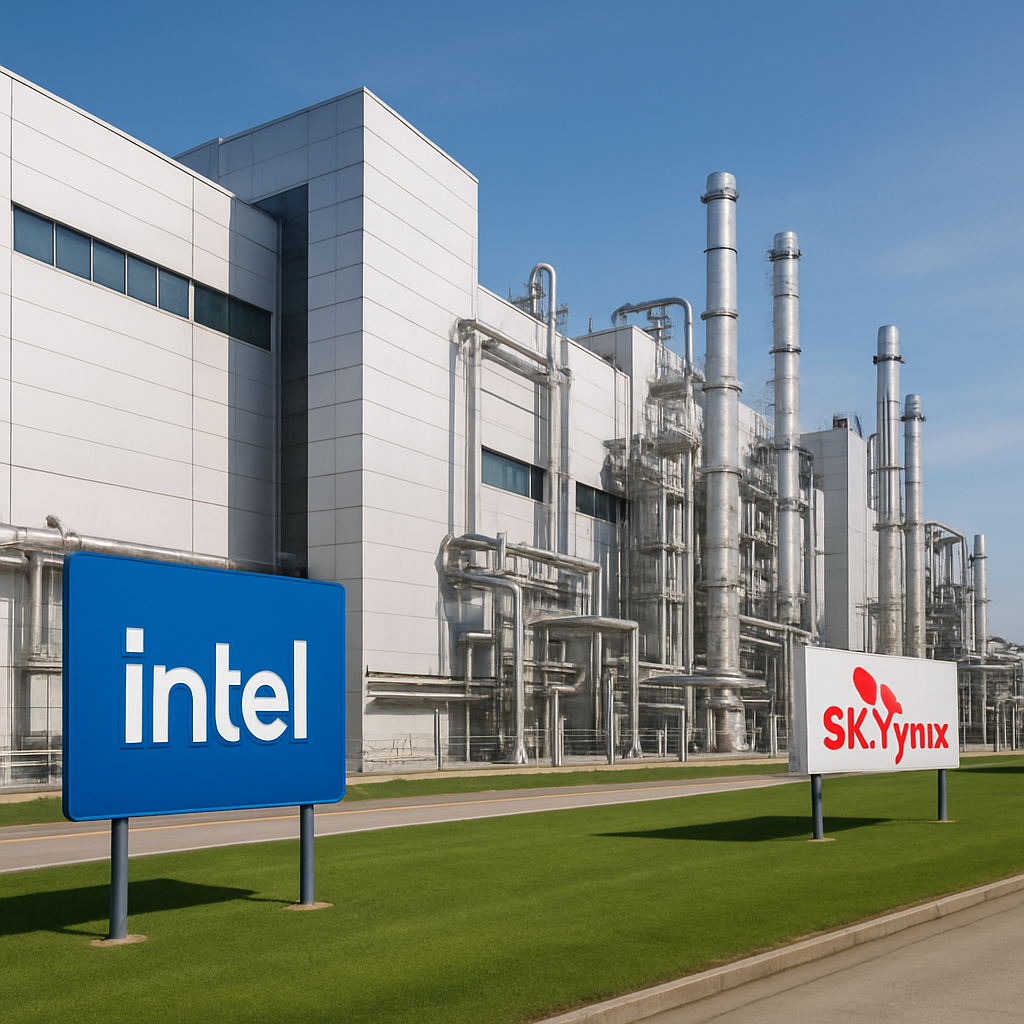
SK Hynix is in early discussions with Intel about manufacturing memory chips on U.S. soil, marking a major potential shift for the Seoul-based semiconductor giant. Sources say SK Hynix is exploring options that include leasing space at Intel’s upcoming Ohio fab or forming a joint venture with Intel and possibly cloud-service providers. Nothing has been finalized yet, according to SK Hynix.
New U.S. Facility Plans Still Unsettled
Though the talks are underway, SK Hynix confirmed there are no binding agreements in place. The company is assessing multiple scenarios but emphasizes that decisions on what kind of facility, partners, or production types are still to be made.
Strategic Backdrop: AI, Chips, and Geopolitics
SK Hynix has become a key player in high-bandwidth memory (HBM), increasingly used in AI data centers. To support this surge in demand, the company is building a $3.8 billion advanced packaging and research facility in West Lafayette, Indiana, where it will begin mass production of AI chips by 2029. This factory will package DRAM wafers from South Korea into HBM devices.
This potential Ohio partnership comes amid broader U.S. efforts to bolster domestic semiconductor manufacturing. The current administration has proposed tariffs on semiconductor imports, alongside incentives to stimulate investment in U.S.-based chip factories. At the same time, SK Hynix is under pressure to ensure that any overseas operations don’t trigger national security concerns in South Korea, where laws require government review of sensitive tech exports.
SK Group’s chairman previously expressed support for building more chip facilities in the U.S., if feasible, as part of expanding the company’s global footprint. Earlier this year, SK Hynix also expanded its access to American investment markets by listing its American Depository Receipts on Nasdaq.
What’s Unclear So Far
The talks leave several key details undetermined, including which memory chip types would be produced in the U.S., the exact structure of any joint venture, and the allocation of roles between SK Hynix and Intel in manufacturing and tech transfer. South Korea’s government could conduct reviews under export-control laws if critical technology is included.
Intel, meanwhile, has a prior relationship with SK Hynix—it sold its NAND flash-memory business to SK Hynix in 2020.
What this means:If SK Hynix does decide to produce memory chips in Ohio, it would mark a significant expansion of U.S. semiconductor capacity—especially for memory technologies where supply has lagged demand. For SK Hynix, this could reduce shipping lead times and costs, enhance resilience against geopolitical supply chain disruption, and increase its influence in the booming AI infrastructure market. For U.S. tech policy, it may fulfill part of the push for domestic chip sovereignty. What to watch next: where exactly such a facility might be built, what types of memory chips are targeted, and how both governments respond to issues of tech transfer and trade regulation.