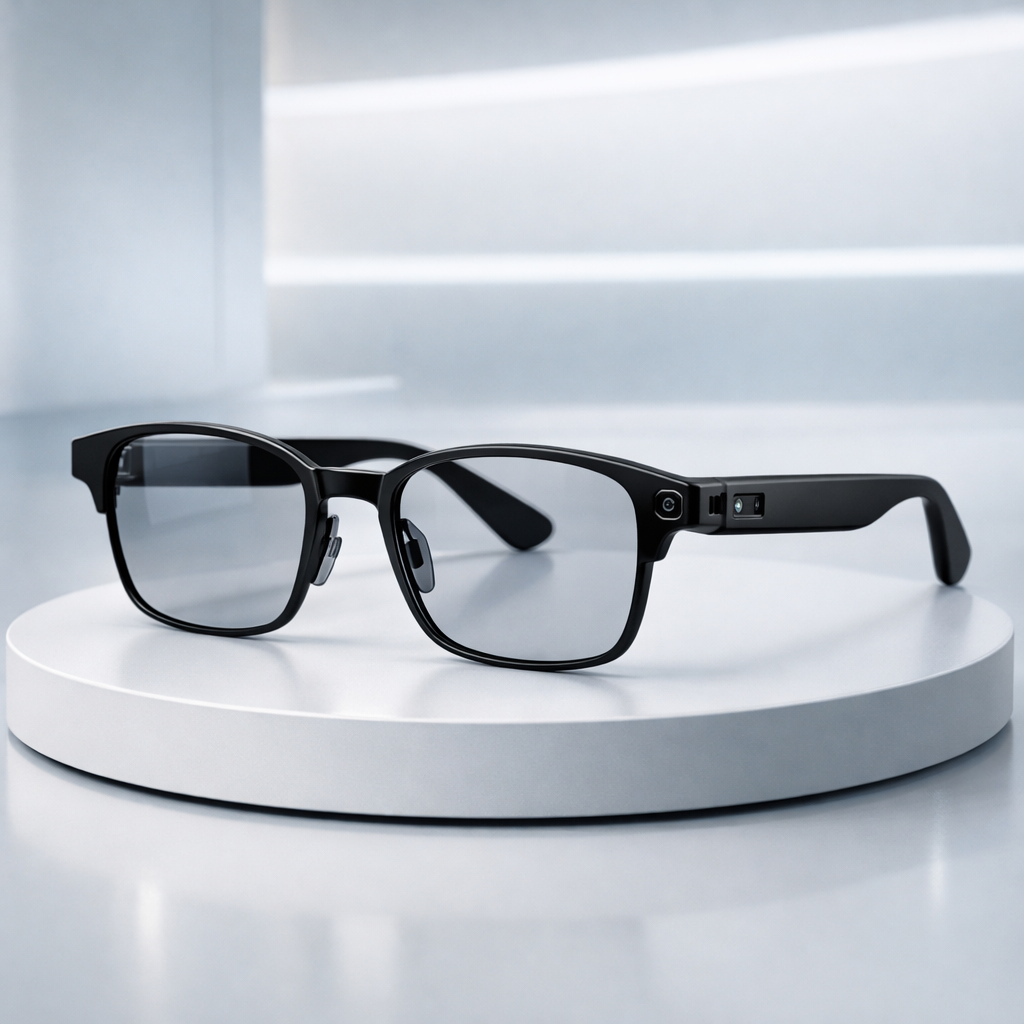
Samsung is preparing to launch its inaugural AI smart glasses—dubbed “Intelligent Eyewear”—in mid-December, with the first sales expected in South Korea and the United States. The company has not confirmed the date publicly, and finalized pricing remains under negotiation.
What We Know So Far
The glasses will operate on Google’s Android XR platform and include Gemini AI features. Unlike augmented reality devices with display systems, these models are voice-driven, relying on built-in cameras and microphones for environmental awareness and tasks such as real-time translation and spoken navigation. Additional workflows are expected as well, such as capturing documents or meeting visuals and automatically organizing them within the Notes app on a connected Galaxy phone.
Design-wise, Samsung has partnered with Gentle Monster and Warby Parker for the frames, unveiling four styles: two shown at Google I/O earlier this year and two more at the Galaxy Unpacked event. Hardware is powered by Qualcomm’s Snapdragon AR1 Gen1 chip. Battery life is reported to reach up to nine hours per charge. There is no integrated display in this first wave of devices.
Launch Timing and Market Strategy
Samsung initially hinted at a November release. However, recent information suggests that global retail availability will begin in mid-December, starting with the US and South Korea. Major regions including Europe, China, and Japan are reportedly excluded from the debut. The firm appears intent on monitoring early sales and user feedback in those two markets before rolling out more broadly.
Core details like pricing, product name, and availability across design styles (Gentle Monster vs. Warby Parker frames) remain unconfirmed. Sources note that while functionality is clear, many manufacturing and market rollout specifics are still in flux.
Weight is also under discussion: Samsung indicates these glasses will be lighter than many competitors, with some reports suggesting they may be roughly five grams lighter than base-model Ray-Ban Meta glasses, though no official number has been confirmed.
Early previews showed how the eyewear is intended to serve as an extension of one’s smartphone, not a replacement device. Functions like contextual recommendations, calendar control, and note organization lean heavily on integration with a Galaxy phone, while the glasses themselves act as hands-free access points to AI and environmental awareness.
Samsung’s strategy echoes its previous release pattern with the Galaxy XR headset, which also launched first in South Korea and the US before expanding to other countries. A similar phased launch seems likely here as well.
What’s Still Unknown & What to Watch
Key unknowns include the final retail price and naming details. While Samsung has suggested these will walk the “premium” line at a “reasonable” price, no specific figures have been verified. How pricing, design, and functionality compare to Meta’s smart glasses will matter a lot.
Other open questions are whether all four design styles will be available at launch, whether prescription lens options exist, which frame brand styles will be available in which markets, and whether features will vary depending on whether the glasses are paired to a Galaxy phone or another Android/iOS device.
Privacy mechanisms are also in focus. Samsung has said there will be LEDs inside and outside the frames that indicate when the cameras are recording. The camera reportedly disables itself if the external indicator is obstructed. But how users respond to these measures will be crucial.
Inside the Bigger Picture
The wearable tech field is still largely dominated by display-less smart glasses. Meta has around 94% of that segment. Samsung’s entry changes the dynamic—bringing its strengths in design, the Galaxy ecosystem, and access to Google’s AI systems to challenge Meta’s hold.
For users, the appeal of hands-free translation, voice interactions, and capturing contextual data without pulling out a phone promises nontrivial enhancements. But success will depend heavily on battery life under real-world use, comfort, price, and the value of the companion-phone model compared to full onscreen AR.:
Analysis: Why This Matters & What to Watch
Samsung’s Intelligent Eyewear marks a pivotal moment in the smart glasses era. It’s arguably the first mass-market Android XR device aimed at everyday wear, prioritizing voice and AI over immersive visuals. What will define its ultimate impact isn’t just how stylish or light it is, but how seamless the Galaxy integration is, how useful services like live translation or document capture feel in common scenarios, and whether the price lands in a ballpark that rewards premium expectations rather than feeling like a tech showcase. Keep an eye on the official launch date, precise pricing, and user feedback from the US and South Korea—in these markets, the reaction will likely determine whether Samsung’s approach sets a new standard for smart eyewear or struggles into niche status.