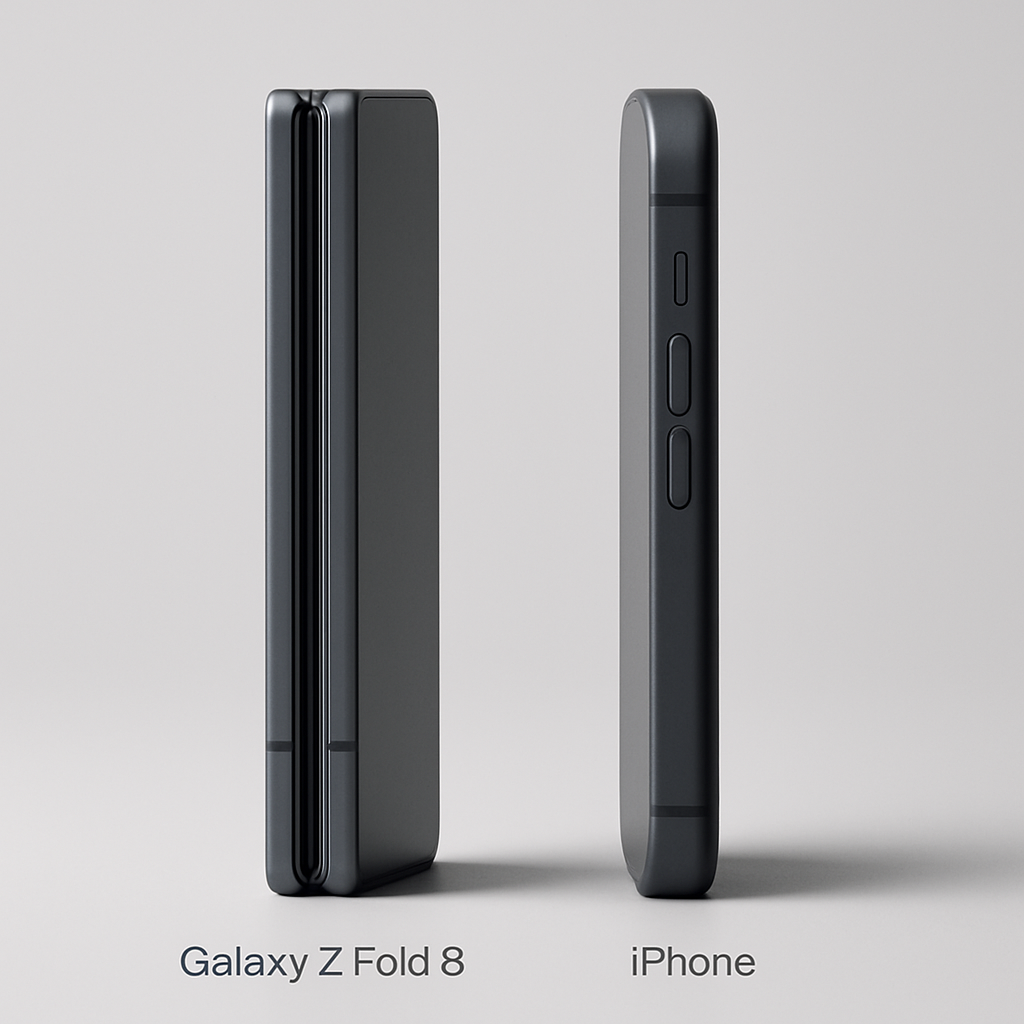
Samsung’s foldable phones have come a long way, and with Apple preparing to enter the market, Samsung has one clear piece of advice: focus on weight. Leaders from Samsung’s Advanced Mechanical R&D group and Smartphone R&D group emphasized that reducing weight is key to delivering top value in the foldable space.
Why Weight Is a Game Changer
Foldable phones have always had a trade-off: more screen real estate, but also more bulk. The earliest devices weighed significantly more than today’s flagship slabs—not just by a few grams, but enough that holding one for extended periods would clearly feel different. Samsung notes that even in its recent models—like the Galaxy Z Fold 8—it has managed to trim weight to around 201 g, which puts it well under many traditional premium phones, like the Galaxy S26 Ultra, which weighs about 214 g. This kind of drop isn’t just cosmetic; lighter devices are easier to carry, use, and justify in price.
Apple’s Foldable Enters the Ring
Apple is rumoured to be unveiling its first foldable iPhone (reportedly called “iPhone Duo”) that will mirror Samsung’s Z Fold 8 in form factor. From the leaks and expert reports available, Apple’s hinge design is expected to compete closely, but its projected weight—between 230 and 241 g—is notably above what Samsung has achieved with its latest foldables. For context, Apple’s current top slate, the iPhone 17 Pro Max, comes in at about 233 g.
This weight disparity isn’t just number-watching—it’s about user comfort. A device over 230 g will feel heavier in one hand and more cumbersome over long usage. Even a small reduction—say, 20–30 g—would bring an iPhone foldable more in line with Samsung’s well-balanced Z Fold models.
The Big Picture
Samsung views Apple’s entrance into the foldable market as welcome: increased competition could draw more eyes, investment, and legitimacy to this relatively new sector. Despite Android brands leading so far, a strong offering from Apple could push innovation further—especially in areas like hinge engineering, durability, and reaching lighter device weights without sacrificing build quality.
As it stands, much of Samsung’s edge in foldables comes from iterative improvements—lightening materials, optimizing hinge mechanisms, thin-fold displays—any of which could help Apple close the gap. But weight remains a key differentiator.
From where things stand, weight could be Apple’s litmus test. The company’s first foldable will be judged not only on its novelty, design, or software polish—but how well it balances innovation with everyday usability. If Apple delivers a foldable that tilts the scale in favour of comfort as much as style, it may succeed; if not, Samsung may retain the best seat in this very tight class.