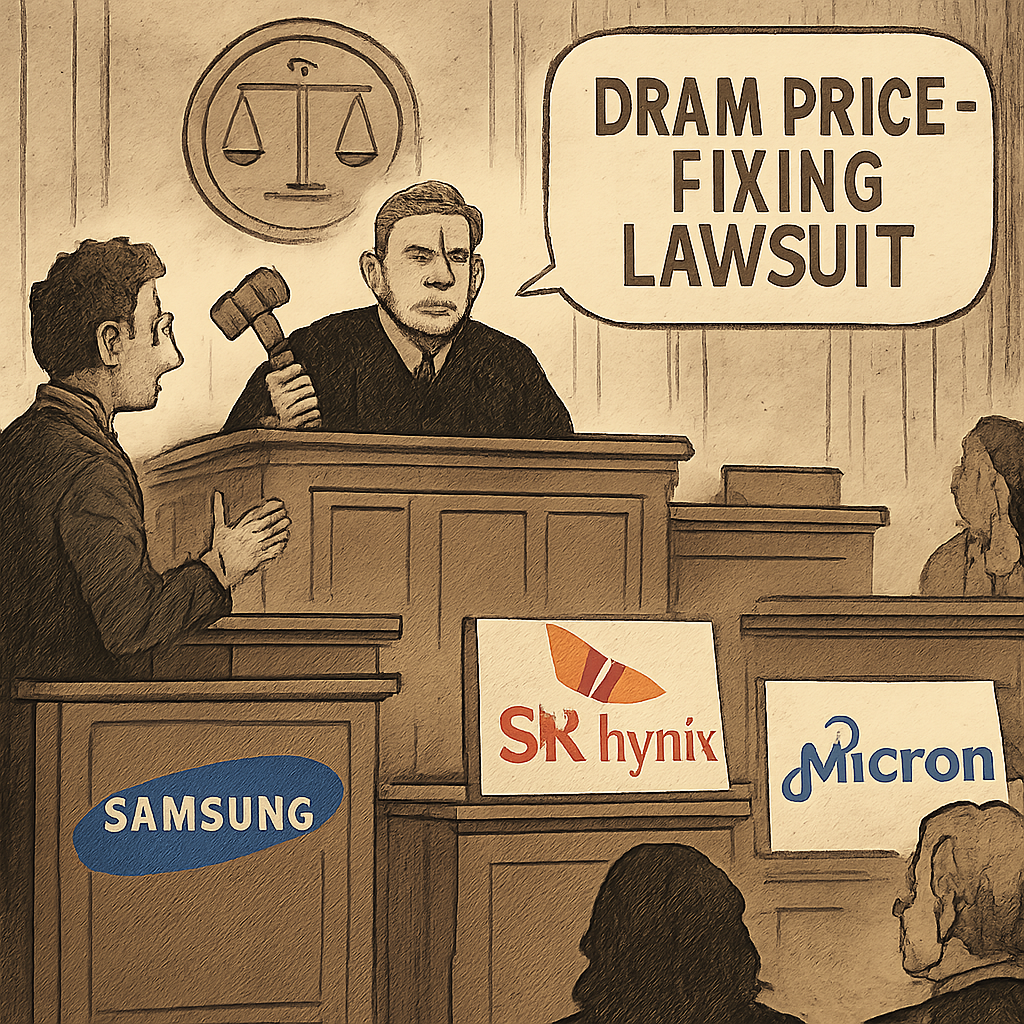
Three leading memory chip manufacturers—Samsung Electronics, SK Hynix, and Micron Technology—are facing a class-action lawsuit filed in California. The plaintiffs, comprising consumers and small businesses, allege that these companies coordinated to reduce the production of Dynamic Random-Access Memory (DRAM), leading to inflated prices in the market.
DRAM is a critical component in various electronic devices, including computers, smartphones, and servers. The lawsuit claims that the defendants deliberately shifted their manufacturing focus toward High Bandwidth Memory (HBM), which is in high demand for artificial intelligence applications, at the expense of producing standard DRAM modules like DDR3 and DDR4. This strategic shift is alleged to have created artificial shortages, driving up prices for conventional memory products.
According to market research, Samsung held a 38% share of global DRAM revenue in the first quarter of 2026, followed by SK Hynix at 29% and Micron at 22%. This concentration gives these companies significant influence over the memory supply chain. The plaintiffs argue that in a competitive market, at least one supplier would typically increase production in response to rising prices. However, the coordinated reduction in DRAM output suggests potential collusion among the manufacturers.
It’s important to note that Apple, a major customer of these memory suppliers, is not implicated in the lawsuit. Nonetheless, the alleged price manipulation has had a direct impact on consumers, as Apple has raised prices on several products, citing increased costs for RAM and storage components.
This isn’t the first time these companies have faced such allegations. In the early 2000s, both Samsung and SK Hynix pleaded guilty to participating in a DRAM price-fixing conspiracy, resulting in substantial fines and prison sentences for some executives. While past convictions don’t directly establish wrongdoing in the current case, they provide context for the industry’s history with antitrust issues.
The outcome of this lawsuit could have significant implications for the tech industry and consumers alike. If the allegations are proven, it may lead to increased regulatory scrutiny and potential reforms in the memory chip market. For consumers, a favorable ruling could result in more competitive pricing and greater transparency in the supply chain. As the case progresses, it will be crucial to monitor how these developments influence both the legal landscape and the broader technology sector.