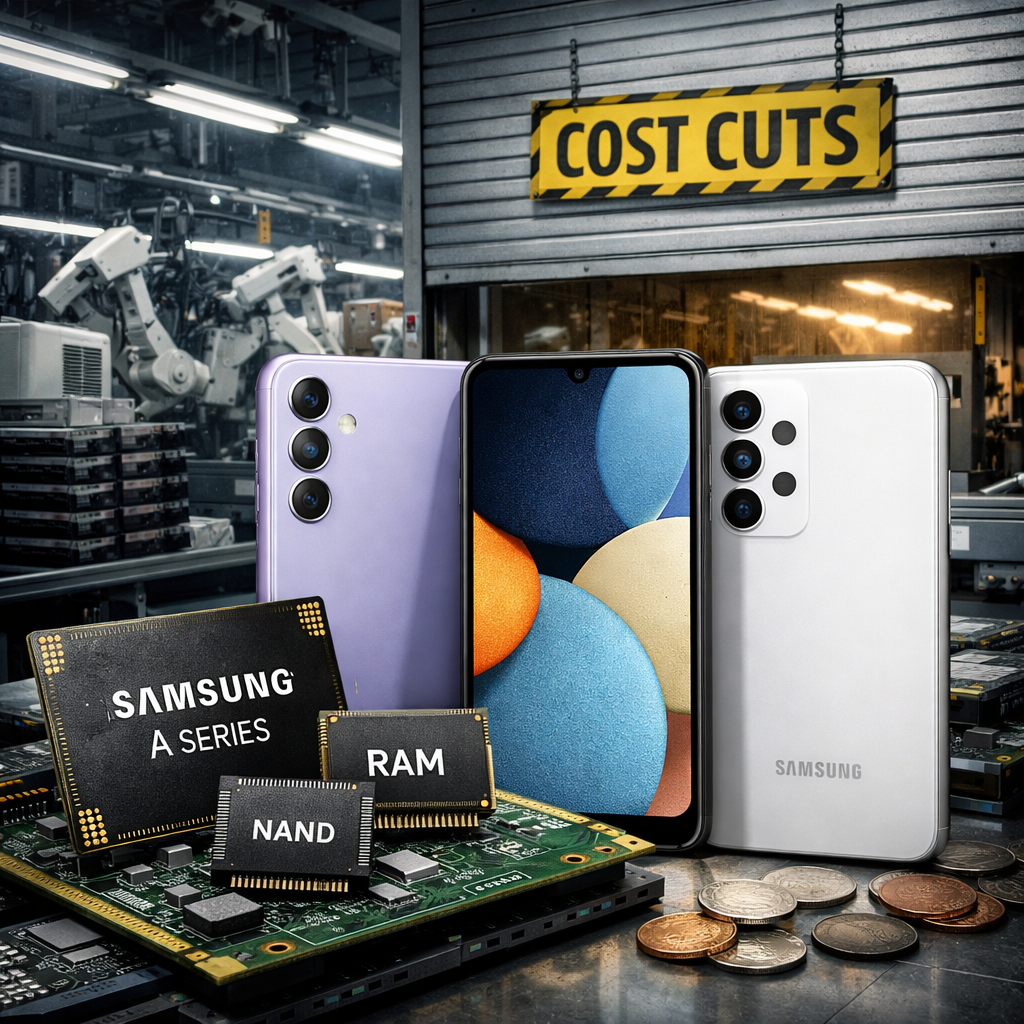
Samsung is planning to slash production of its entry-level and mid-range Galaxy A phones by about 20 percent, equating to roughly 10 million fewer units than originally projected. This adjustment is driven by soaring component costs — particularly memory and chipsets — which now make up around half of the total production expenses for mid-range devices. The cuts are part of a broader move to shift focus toward premium flagship phones, which promise higher margins under today’s tight market conditions.
What’s Driving the Shift
The company’s Mobile Communications division has reported losses this year, and analysts suggest the strategy is intended to stem those losses by prioritizing devices with stronger profitability. By reducing output of the Galaxy A lineup, resources can be redirected to flagship models like the Galaxy S series and upcoming premium releases. Pricing pressures alongside supply chain challenges — especially for memory and chipsets — have squeezed margins in the mid-tier segment.
Orders for components in Q4 have already been trimmed by 20 percent compared to earlier plans in the year. Samsung expects similar cuts of over 10 percent for its Galaxy A line throughout next year, signaling prolonged constraints rather than a temporary dip in production.
Market Impact and What’s at Stake
While the Galaxy A devices usually dominate Samsung’s volume sales — often the brand’s best-sellers — recent market shifts have seen flagship devices like the Galaxy S26 break those records earlier in the year. The trimming of Galaxy A production could ripple through Samsung’s revenue mix, affecting unit volumes even if profitability increases.
Consumption trends also hint that demand for premium features and build quality is rising, and Samsung appears to be betting that consumers will follow. However, pricing pressures and supply constraints may mean mid-range phones become scarcer or more expensive — a risk in price-sensitive markets.
Analysis: This scaling back in Galaxy A production reflects a pivotal moment for Samsung as it recalibrates its product strategy. It’s not just about cutting costs — it’s about matching resources to where returns are highest. Flagship lines tend to carry premium margins, but they also depend heavily on scale and innovation to stay competitive. What to watch now: how consumers respond to tighter mid-range availability and rising prices, and whether these restructuring efforts translate into improved financial health for Samsung’s mobile division over the next year.