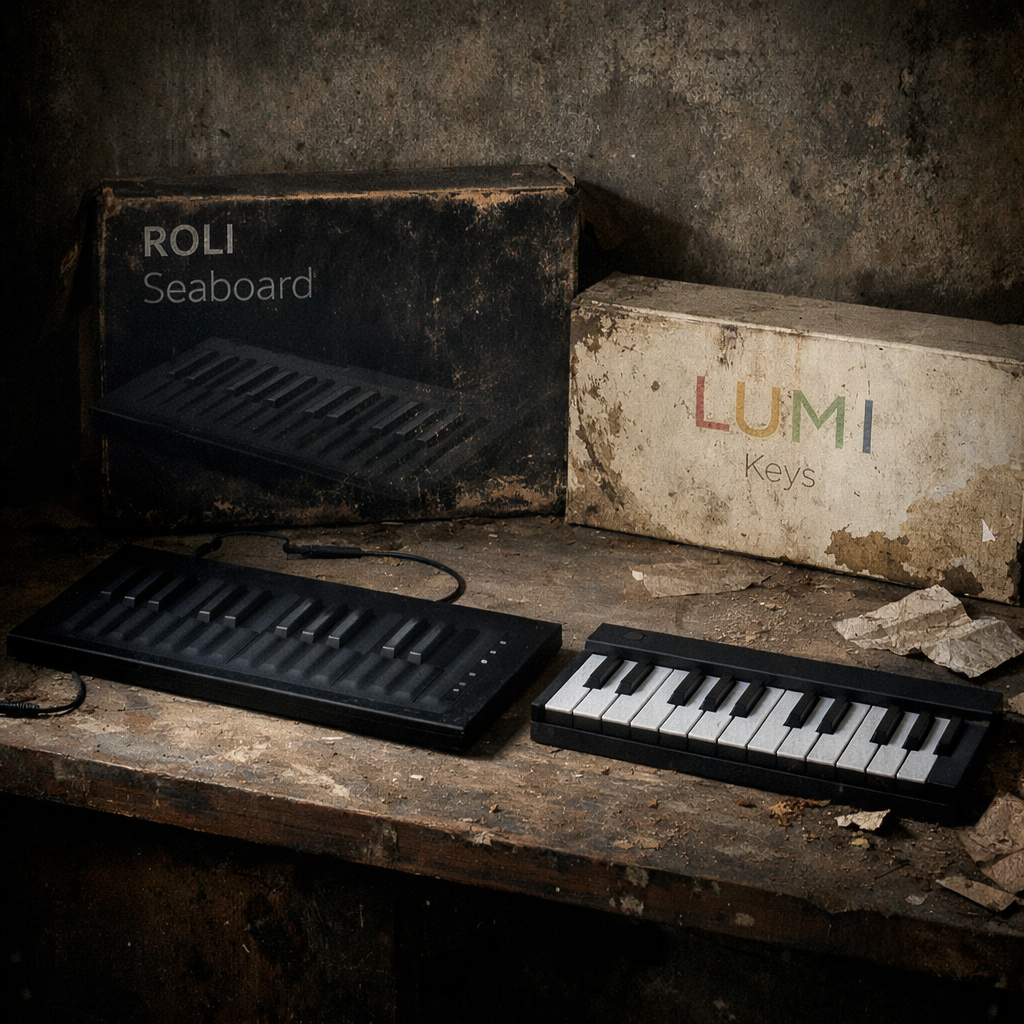
Roli, the British maker of Seaboard, Lumi Keys, and Lumi Blocks musical instruments, has entered insolvency for a second time, leaving customers caught without clear answers on orders, refunds, or support.
The company officially went into administration on October 20. This marks its second collapse under the UK insolvency laws—the first occurred in 2021 amid supply chain chaos during the COVID-19 pandemic. Back then, Roli accepted a government relief package and rebranded later that year as Luminary Roli, claiming that the change was largely nominal. However, the business has since steadily deteriorated.
Persistent reports from users accuse Roli of failing to deliver on promises: warranty requests go unanswered, orders arrive incomplete or not at all, and refunds seem increasingly unlikely. A number of customers say they’ve been stonewalled for some time.
Internal sentiment points to management missteps. Some former staff blame Roli’s one-time CEO, Roland Lamb, who was reportedly removed from his position earlier this year. Others suggest that the business was never built on a solid foundation. Evidence from a Kickstarter campaign for Lumi Keys implies the company struggled from its early crowdfunding stages.
Community Rises to Fill the Gap
As Roli itself fades, musicians and developers from online forums have mobilized to keep Roli instruments usable. In recent months, community-engineered software patches and open-source tools have emerged to compensate for company silence and ongoing product neglect.
One longtime user expressed concern that their investment—sometimes hundreds or thousands of dollars—may become useless as key services, updates, and replacements vanish with Roli’s collapse. Such fears underscore the risk when a niche hardware company vanishes, not just for customers but for the broader music tech ecosystem.
With the company now heading toward dissolution, promises of future support or order fulfillment appear increasingly hollow. Administrators will decide the fate of Roli’s remaining assets, and with them, whether any portion of customer expectations will be met.
The story of Roli reflects a familiar pattern in small hardware ventures: ambitious innovations, early enthusiasm, then financial fragility exposed by external shocks or internal mismanagement. For existing owners, the project has transitioned from hopeful musical instrument to a cautionary tale. Watching who’s able to salvage value—whether through community tools, legal remedy, or asset sale—will be key moving forward.