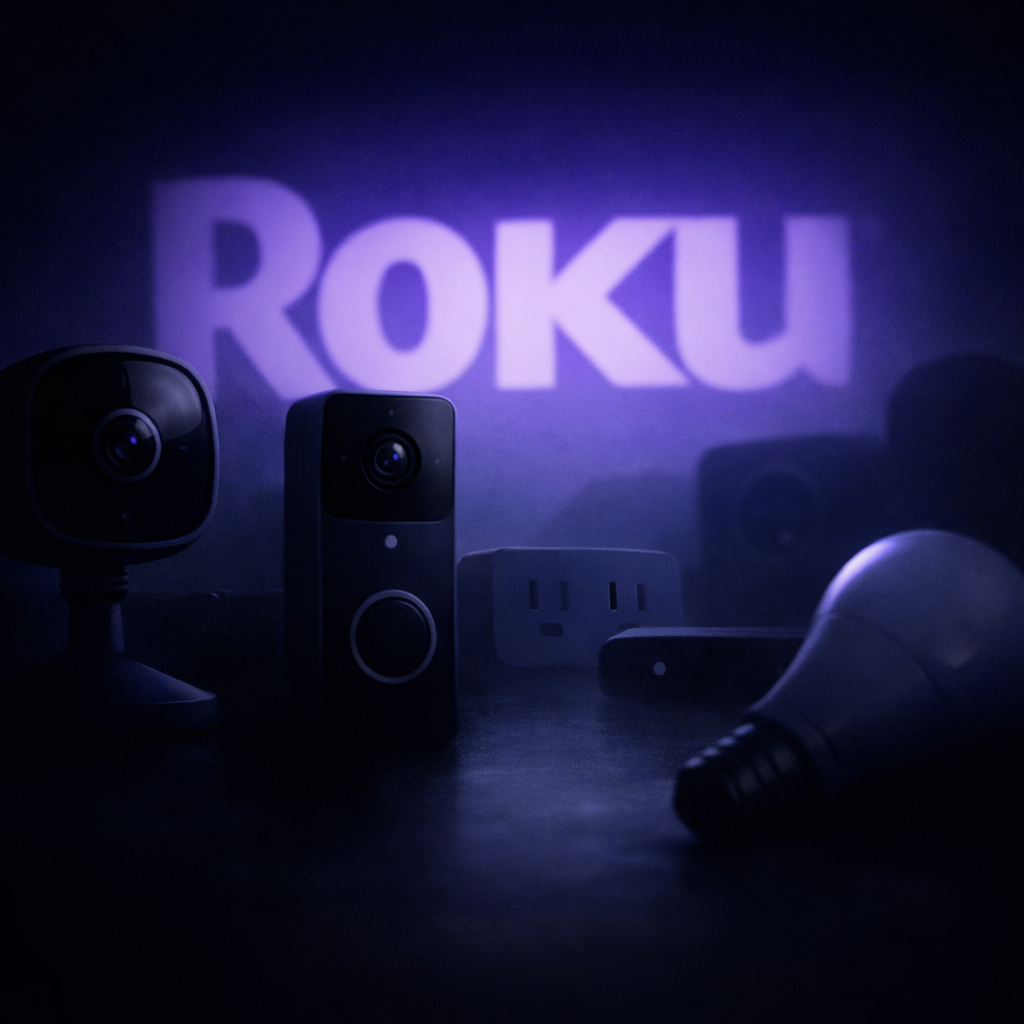
Roku is officially retreating from the smart home arena after four years of trying to stake its claim with devices like cameras, video doorbells, smart plugs, bulbs, and lighting strips. The company has confirmed it will phase out sales of Smart Home hardware while continuing to support existing products and services. The move closely follows Fox’s completed $22 billion acquisition of Roku.
The Smart Home Strategy That Never Took Off
When Roku first entered the smart home market in 2022, its initial offerings were mostly rebadged Wyze products—budget-friendly accessories like plugs, lights, cameras and video doorbells––all falling under $100. In 2025, Roku introduced its own smart home hardware with devices such as the Battery Camera and Battery Camera Plus, aiming for two-year battery life per charge. Despite revenue for Roku’s Devices segment growing about 33% year over year in Q3 2026, the business lost $48.6 million, more than double its losses from the same period in 2025. Higher memory component costs were cited as a major factor in the losses.
What’s Being Discontinued—and What’s Left for Sale
Most smart home products are now marked out-of-stock on Roku’s site, with only two items still available: the Roku Indoor Camera 360° and the Video Doorbell & Chime, both being cleared out as special offers. Smart lights, plugs, the monitoring system, and most cameras have already disappeared from Roku’s online store and many third-party retailers. Amazon in many cases is now limited to offering refurbished units.
According to Roku, existing product owners will still receive support and services, though no final sunset timeline has been announced. Firmware, server access, app features, and subscription plans are expected to continue—for now. Roku has not clarified how long cloud storage features, smart alerts, or security updates will remain operational. The company’s streaming platform business—its bread and butter—will continue untouched.
What Led to the Decision
Hardware losses were becoming a burden. In Q3 2026, device revenue came in at $193.7 million, but Roku reported a gross loss of $48.6 million for its Devices category—including smart home products. Most of Roku’s financial growth came from platform revenue—advertising and subscriptions—which hit $1.31 billion during the same period.
This strategic pullback appears timed with Roku’s new ownership under Fox. While the smart home business was already quietly receding—with product listings disappearing and investor communications dropping mentions ahead of the acquisition announcement—Fox’s purchase seems to have accelerated the final decision.
Roku’s smart home efforts were aimed at increasing revenue through hardware and through recurring subscription services for cloud functionality and AI-powered alerts. The products were also intended to keep users within Roku’s ecosystem—similar to how smart TVs or streaming devices operate—but these ambitions never translated into a viable profit center.
As of now, consumers still holding Roku smart home devices should keep software and firmware updated, back up or download any cloud recordings they deem important, and stay alert to possible wind-downs or price changes. If buying now, it may only make sense if the price reflects that the product’s long-term support is uncertain.
Even for those not directly affected, Roku’s pullback highlights how hard it is for streaming platforms to succeed in hardware-driven smart home categories. The margins are thin, competition is intense, and maintaining cloud infrastructure over time carries ongoing costs.
This move sharpens Roku’s corporate mission: streaming first. Roku is now refocusing on its core business—its platform, viewer engagement, ads, and subscriptions—while ditching experiments that drain resources without delivering commensurate returns. Fox, which now owns Roku, seems to support this tighter focus. The smart home chapter may be ending, but for Roku, this signals a return to what it does best: delivering content, not cameras. What matters is how Roku handles its promise of support—watch for timelines or changes in the subscription terms. Also, smart home users should keep an eye on how this impacts interoperability with other platforms and whether Roku’s retreat creates openings for competitors who can build stronger ecosystems with local storage or alternative hardware models.