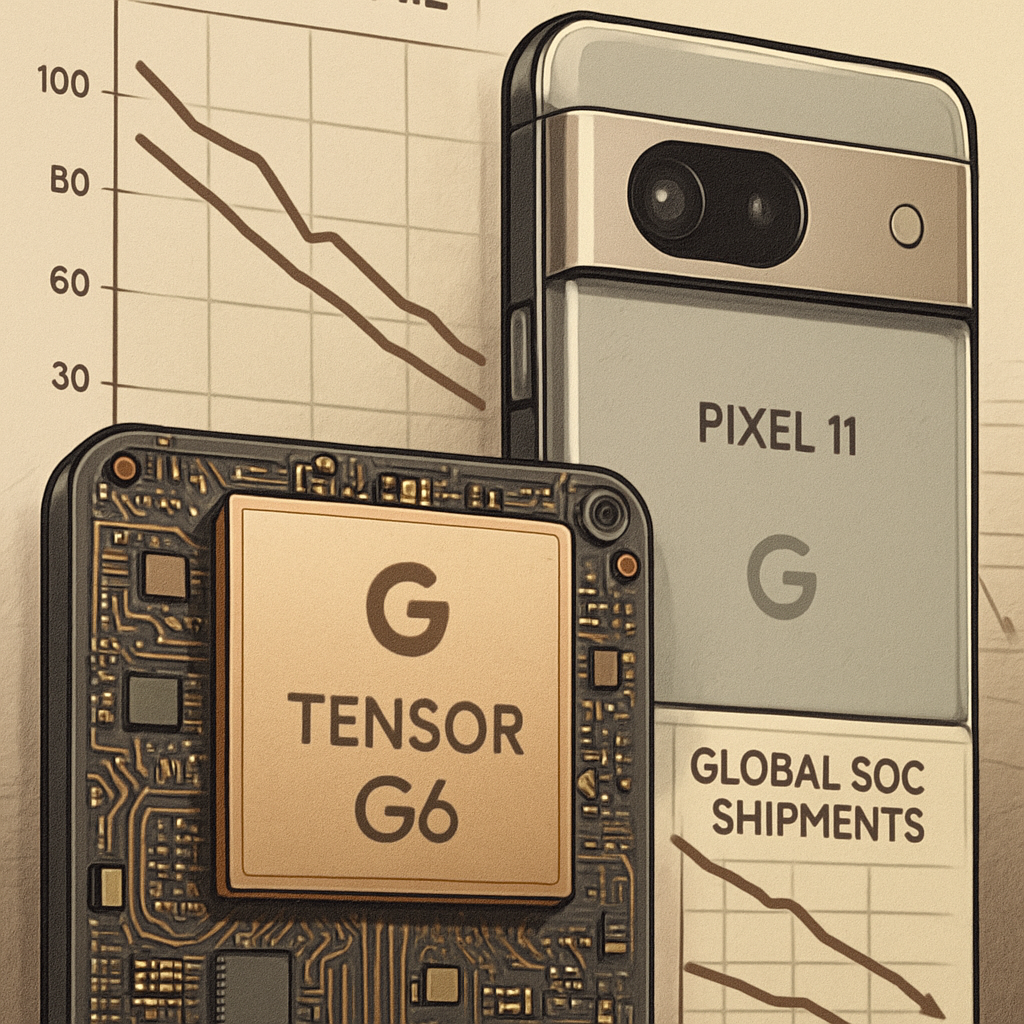
In the first half of 2026, the global smartphone market experienced a significant downturn, with system-on-chip (SoC) shipments declining by 15% compared to the same period in 2025. This decline has been particularly impactful for major chipset manufacturers like MediaTek and Qualcomm, which have seen their market shares erode as companies like Google and Samsung continue to develop and integrate their proprietary SoCs.
MediaTek’s market share decreased from 37% to 32%, while Qualcomm’s share fell from 26% to 22%. In contrast, companies such as Google, Samsung, and UNISOC have reported growth in their SoC shipments. This shift is largely attributed to the rising costs of memory components, which have surged by 300% year-over-year. As a result, manufacturers are increasingly turning to in-house chip development to better control costs and differentiate their products.
Google’s Tensor chips exemplify this trend. The upcoming Pixel 11 series, set to be announced on August 12, will feature the Tensor G6 SoC, continuing Google’s strategy of integrating custom-designed processors into its devices. This approach not only enhances performance but also allows for more seamless integration of hardware and software, particularly in the realm of artificial intelligence (AI) capabilities.
The demand for AI-focused chipsets has been a bright spot in the otherwise declining SoC market. Shipments of generative AI chipsets have increased by 24% year-over-year, indicating a growing emphasis on AI functionalities in smartphones. Google’s Tensor series is at the forefront of this movement, aiming to provide advanced AI features that set its devices apart from competitors.
Samsung is also investing heavily in its proprietary Exynos line of processors. However, it’s noteworthy that the latest Galaxy Z Fold 8 series utilizes Qualcomm’s processors globally, suggesting a strategic balance between in-house development and external partnerships.
As memory prices continue to rise, the trend toward proprietary SoCs is likely to persist. Companies that can effectively develop and integrate their own chipsets may be better positioned to navigate the challenges of the current market, offering consumers devices that are both innovative and cost-effective.
In summary, the decline in global SoC shipments underscores the challenges facing the smartphone industry. However, the growth of proprietary chipsets like Google’s Tensor series highlights a strategic shift that could redefine competition and innovation in the market. As companies strive to balance cost management with technological advancement, the development of in-house processors may become an increasingly critical factor in their success.