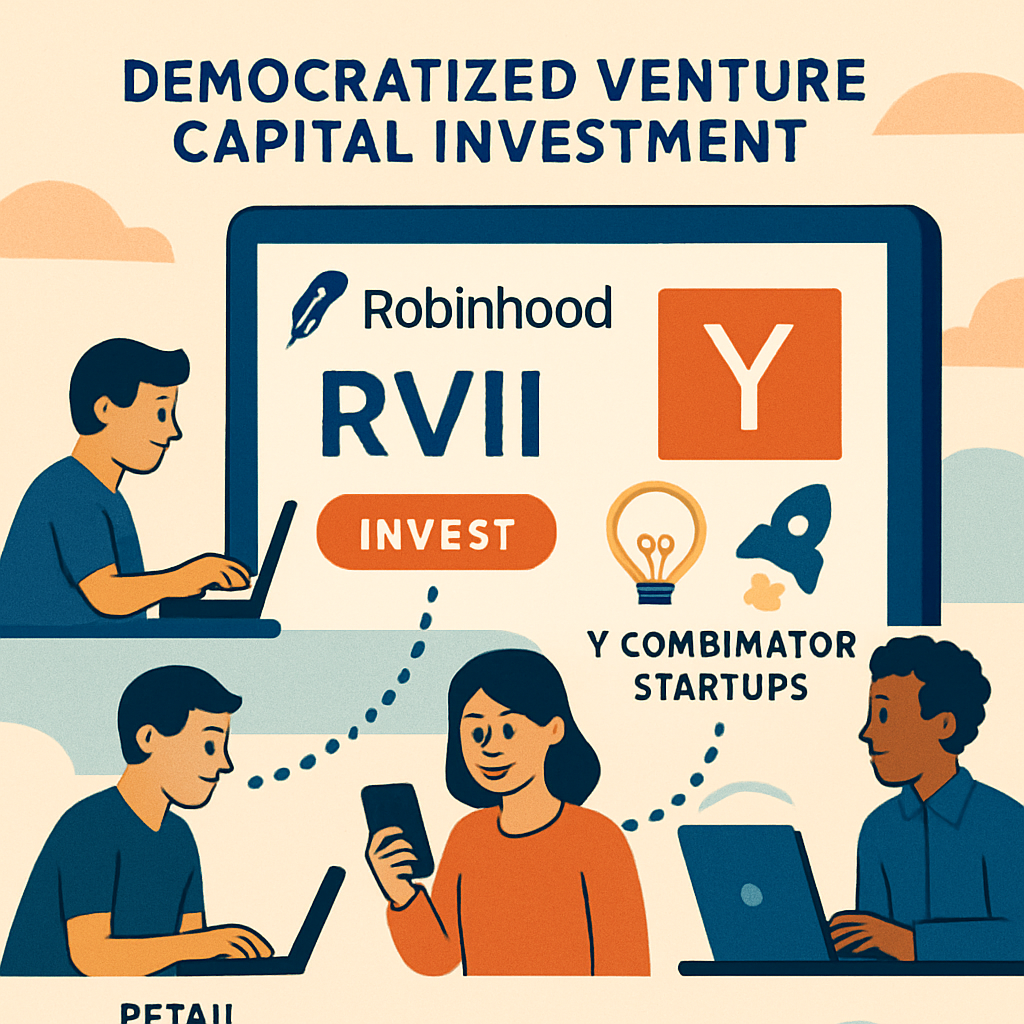
Robinhood has announced the upcoming launch of Robinhood Venture Fund II (RVII), a publicly traded fund designed to provide retail investors with exposure to startups affiliated with Y Combinator. Scheduled to debut on August 13 at an initial price of $25 per share, RVII aims to raise up to $200 million to invest in companies founded by current and former Y Combinator participants, contingent upon these startups’ willingness to sell their shares.
While RVII offers retail investors the opportunity to invest in a diversified portfolio of Y Combinator-backed startups, it’s important to note that shareholders will not directly own equity in these individual companies. Instead, they will hold shares in the fund itself, which can be traded on the open market. The potential for profit hinges on the fund’s performance and the appreciation of its share price over time.
The fee structure for RVII includes a management fee of 2% of net returns, along with additional fees that bring the total to just over 4%. Additionally, the fund will allocate 20% of any profits, known as “carried interest,” to a Robinhood-affiliated entity. This means that if the fund realizes significant gains from successful startup exits, a portion of these returns will be distributed to Robinhood’s unit.
Unlike traditional venture capital funds, which typically have a finite lifespan of around 10 years and plan for eventual distribution of profits to investors, RVII does not specify an end date for returning profits. While the fund may issue cash distributions, investors should primarily anticipate returns through the appreciation of the fund’s share price.
Robinhood’s previous venture, Robinhood Ventures Fund I (RVI), focused on acquiring shares in prominent private companies such as Databricks, Mercor, and OpenAI. Since its initial public offering at $21 per share, RVI’s stock has experienced fluctuations, peaking at over $56 in May and currently trading around $28 per share. This volatility underscores the inherent risks and potential rewards associated with investing in such funds.
In 2025, Robinhood faced criticism for offering crypto assets described as tokenized shares of companies like OpenAI and SpaceX without the involvement of these firms. Unlike those offerings, RVII operates more like a special purpose vehicle, directly purchasing actual shares in the startups, thereby providing a more tangible investment opportunity for those interested in backing Y Combinator-affiliated companies.
By launching RVII, Robinhood is democratizing access to venture capital investments, traditionally reserved for institutional investors and high-net-worth individuals. This initiative allows retail investors to participate in the potential growth of early-stage startups, albeit with the associated risks and fee structures. As the fund prepares to go public, prospective investors should carefully consider these factors and assess their risk tolerance before investing.