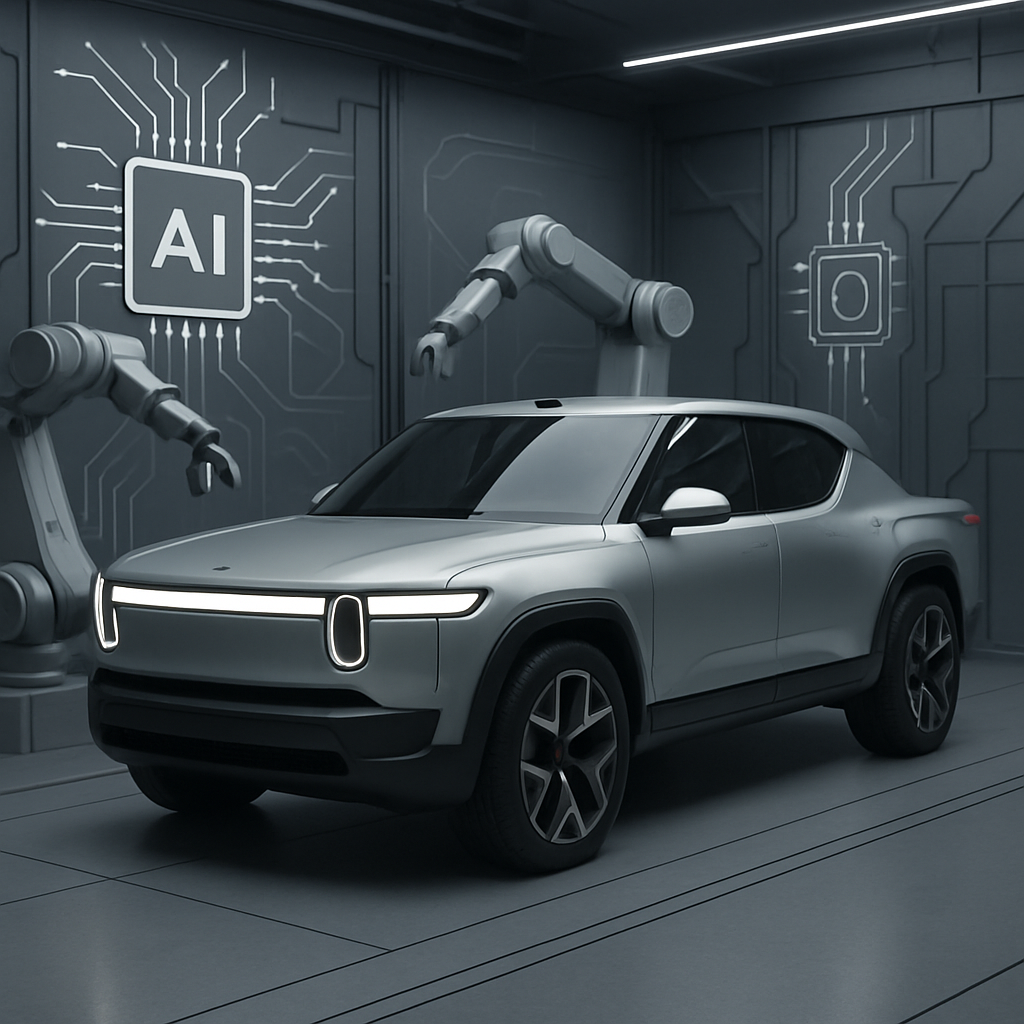
Rivian isn’t just transforming how we power our rides—it’s redefining what it means to be an automaker. CEO RJ Scaringe has laid out a bold strategy: Rivian is expanding beyond SUVs and trucks to become a full-scale tech supplier by decade’s end. From developing proprietary AI, autonomy systems, and custom silicon to spinning off robotics ventures and deepening partnerships, the automaker is aiming for much more than electric vehicles alone.
A shift in architecture and AI
Over recent years, Rivian has been more vertically integrated than ever. Internally built AI models now power the company’s in-vehicle assistant, and it’s building an end-to-end automated driving stack for both its consumer vehicles and future robotaxis in collaboration with Uber.
Rivian’s technological ambitions also include developing its own silicon: a custom 5-nanometer chip in development via a collaboration between Arm and TSMC. In parallel, it’s entered a multibillion-dollar joint venture with VW Group geared toward electric vehicle architecture and software.
Beyond vehicles: robotics, autonomy, licensing
Rivian is extending its reach beyond traditional EVs. It spun out a micromobility-focused startup called Also, and founded an industrial robotics startup—Mind Robotics—that Rivian owns 31% of. The automaker counts itself as a prospective buyer from this venture, where former Tesla, Apple, and Ford executive Doug Field has taken the helm as president.
Licensing is becoming a familiar refrain. Scaringe has referenced plans to open up Rivian’s EV platform, software, and autonomy stack to other brands through licensing and partnerships, with the joint venture with VW as a potential springboard. Meanwhile, its robotaxi efforts with Uber could lead to broader commercial deployment if successful.
Redefining form, function, and the future
Scaringe believes autonomy won’t just change how vehicles are built mechanically—it’ll enable entirely new vehicle designs. He envisions “autonomous form factors” beyond existing models like the R2 and R3, allowing dramatic changes in vehicle shape and user experience.
These ambitions reflect an automaker that is stepping into the realm of tech platform provider—moving from making machines to supplying intelligence, software, and infrastructure.
Rivian’s next act is about transformation. The company is no longer only about electric trucks and SUVs—it’s aiming to be a backbone of mobility tech. For the industry, this means heightened competition in EV architecture, autonomous platforms, and AI-driven driving stacks. Rivian’s success will depend on execution: whether it can scale its silicon development, hit milestones in its robotaxi plans, and deliver licensing deals that respect its ambitions without compromising quality. What to watch: announcements of vehicle models built on its licensed platforms, moves in autonomous regulation, and the outcomes of its robotic spin-outs. Rivian is setting the stage for a potentially seismic shift—to not just driving transportation forward, but defining the tools that steer the road ahead.