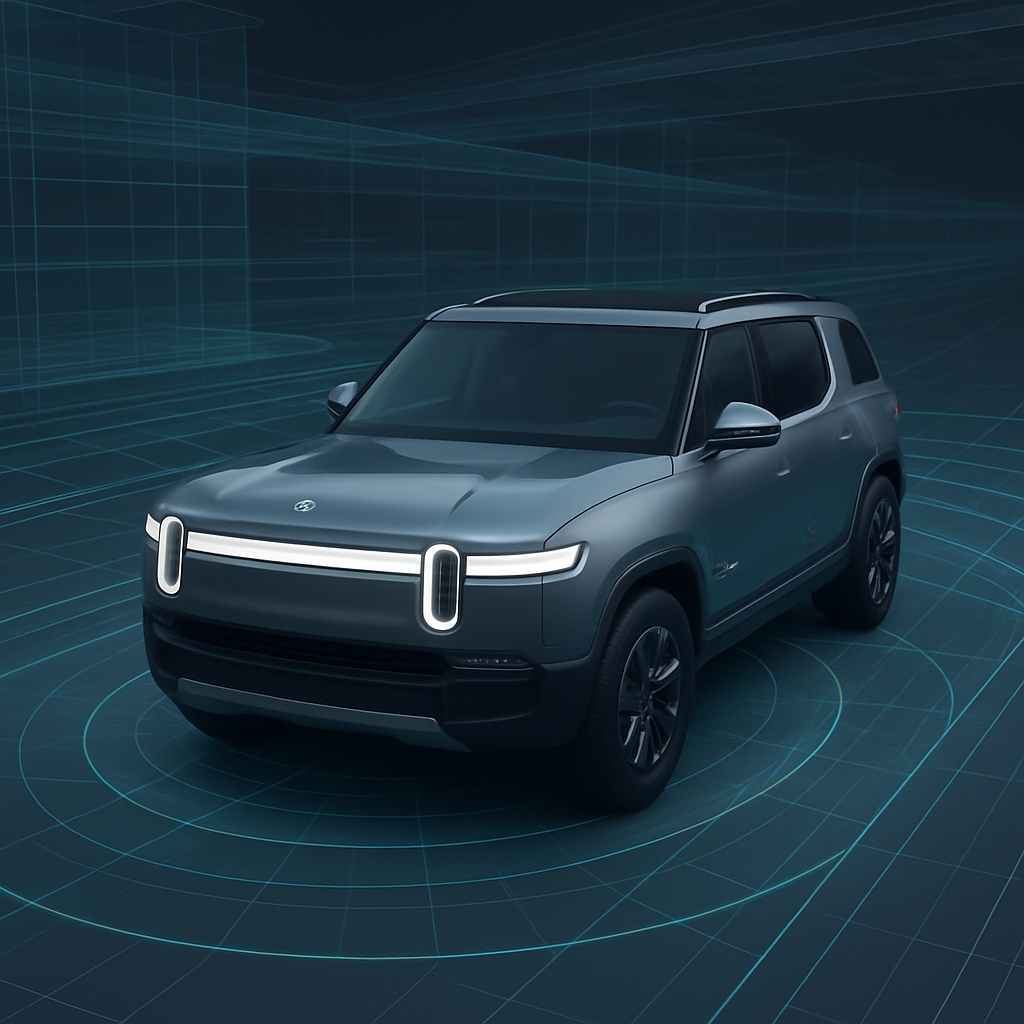
Electric vehicle and robotics company Rivian has purchased Third Dimension, a U.K.-based startup specializing in creating hyperrealistic 3D environments from real-world imagery and video. The acquisition centers on leveraging that technology to speed up Rivian’s driver-assistance software and its robotaxi self-driving systems, rather than expanding into the gaming market.
Transforming real data into virtual worlds
Founded in 2024 by Tolga Kart and Piotr Sokólski, Third Dimension drew investors including Abstract Ventures, MVP, Soma Capital, and Solari Capital. Its original mission was to streamline video game development with its rendering technologies, but the founders also saw applications in defense and autonomous vehicles. Under Rivian, the 15-person team—mostly UK-based—will now contribute directly to autonomous vehicle innovation. They will become part of Rivian’s autonomy and AI division, led by James Philbin, and further establish Rivian’s AI hub in London.
Simulations play a crucial role in the development of self-driving systems by enabling continuous training and validation without the unpredictability and risk of real-world edge cases. Traditional simulators often rely heavily on synthetic data produced by game engines, which can fail to faithfully represent complex real-environment conditions. Third Dimension’s platform aims to close this “reality gap” by using actual visual data to generate environments that closely match real streets, weather, and lighting.
Data muscle meets modelling innovation
Rivian is already collecting massive quantities of real-world driving data from its customer fleets—which include R1S pickup trucks, R2 SUVs, and delivery vans—with vehicle owners contributing anonymized camera data. The company says it receives more than 400,000 video sequences every day. By deploying Third Dimension’s technology, Rivian believes it can simulate dangerous or rare scenarios without waiting for those events to naturally occur in the field.
While financial terms were not disclosed, the acquisition gives Rivian access to Third Dimension’s human talent and tech stack just as the company scales its autonomous ambitions. Rising demand for robotaxi services—such as those Rivian plans to supply—depends heavily on the ability to handle complex driving situations safely and reliably nationwide.
This deal reflects Rivian’s push to integrate machine learning, perception AI, and virtual simulation more tightly into its self-driving roadmap. By building virtual worlds grounded in actual data, Rivian hopes to reduce reliance on synthetic-only training and accelerate progress toward Level 4 autonomy.
What this means: Rivian’s move demonstrates how automakers are evolving their simulation strategies to deliver safe autonomy faster. The marriage of vast real-world data and advanced 3D world modeling could narrow the gap between simulation and reality—often the bottleneck in autonomous validation. Key things to watch: how well Rivian scales these virtual environments, and whether this approach yields measurable gains in edge-case performance and safety.