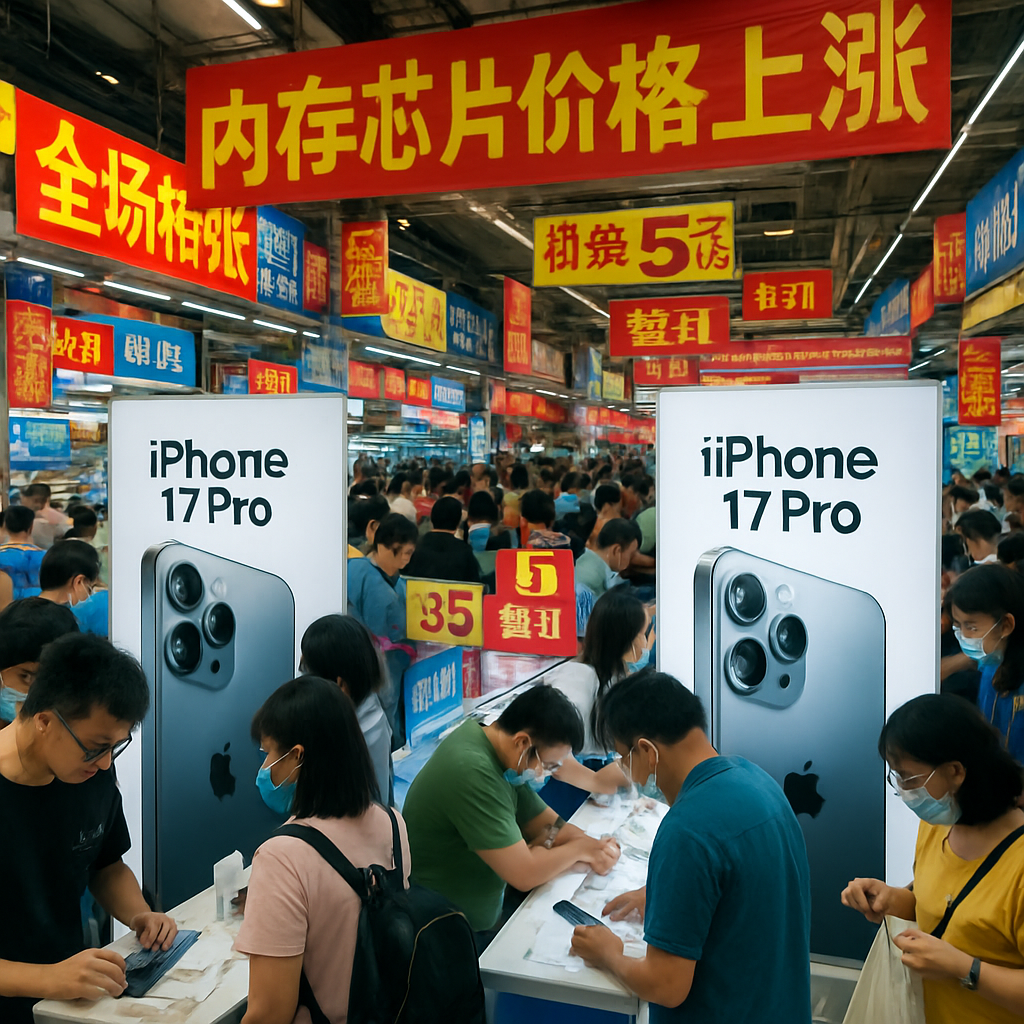
China’s smartphone market is experiencing significant challenges due to escalating memory chip prices, leading to a 13% decline in sales during the recent 618 shopping festival. This downturn occurred despite Apple’s aggressive discounting strategies aimed at boosting sales.
The 618 shopping festival, which runs from May 26 to June 21, is a major event in China’s retail calendar, often serving as a barometer for consumer electronics demand. However, this year, the festival saw a notable decrease in smartphone sales compared to the previous year. Data from Counterpoint Research indicates that all major Chinese smartphone brands, except Huawei, reported double-digit declines in sales. For instance, Honor experienced a 33% drop, while Xiaomi’s sales fell by 24%.
The primary factor contributing to this decline is the surge in memory chip prices. The rapid expansion of AI infrastructure has intensified demand for memory components, leading to increased costs for manufacturers. This price hike has constrained the ability of smartphone brands to offer substantial discounts during the 618 festival, traditionally a period of aggressive promotions.
Apple, in an effort to counteract the market downturn, initiated a promotional campaign approximately one month before the 618 festival. The company offered total savings of up to CNY 2,000 on the iPhone 17 Pro series through a combination of official discounts, platform promotions, and trade-in incentives. These efforts resulted in stronger sales for Apple, elevating the company to the second position in the Chinese smartphone market during the festival period.
Despite Apple’s success, the overall market trend remains concerning. The rising costs of memory chips are not only affecting pricing strategies but also impacting consumer demand. Xiaomi’s President, Lu Weibing, has warned that the continuous increase in memory chip prices could push flagship smartphone prices above 10,000 yuan (approximately $1,400 USD) by the end of 2026. He also noted that this upward trend in memory costs is expected to persist at least until the end of 2027, placing long-term financial pressure on the entire mobile phone industry.
In response to these challenges, some smartphone manufacturers are adjusting their product lines to focus more on premium devices, where higher margins can help offset increased component costs. However, this shift may further alienate price-sensitive consumers, potentially leading to prolonged market contraction.
The current situation underscores the complex interplay between technological advancements, supply chain dynamics, and consumer behavior. As AI infrastructure continues to expand, the demand for memory chips is likely to remain high, perpetuating cost pressures on consumer electronics. Manufacturers and consumers alike will need to navigate this evolving landscape, balancing innovation with affordability.