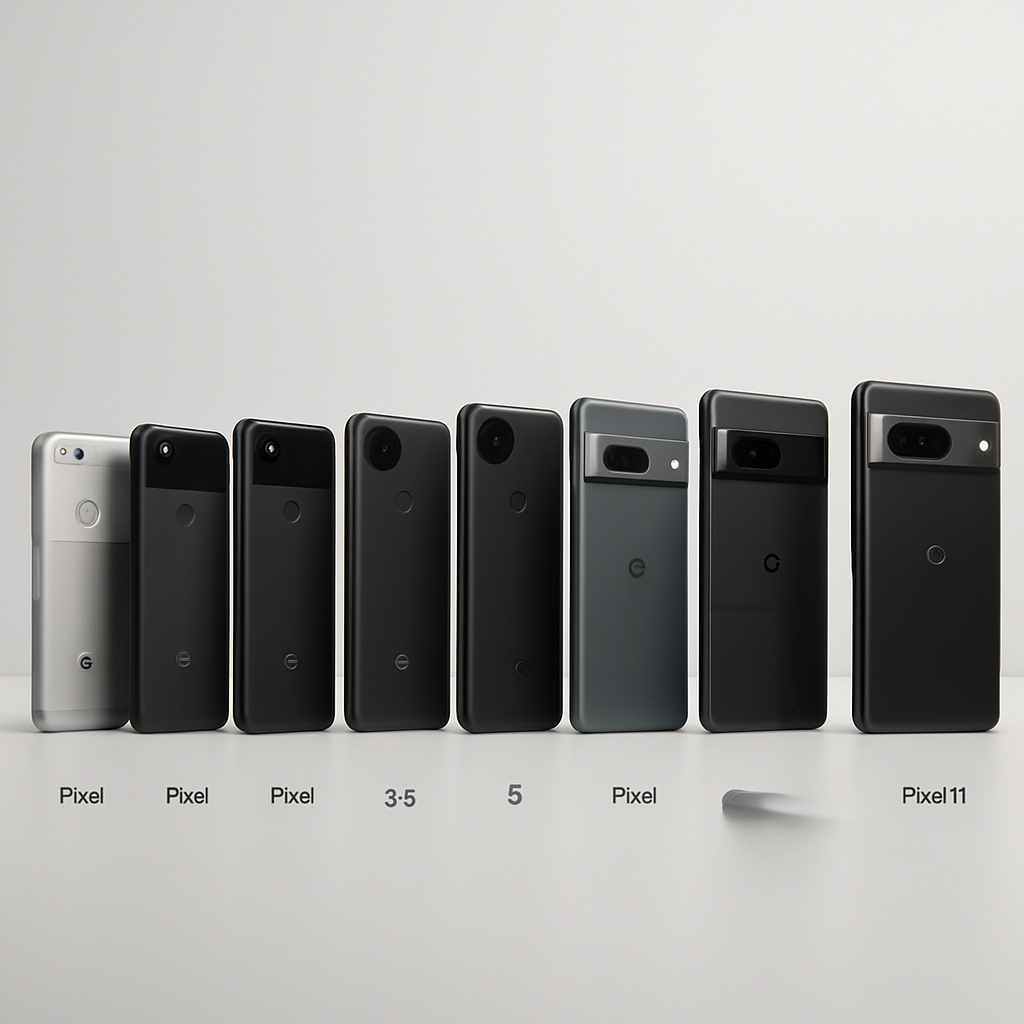
This week marks ten years since Google stepped away from Nexus and launched its first Pixel phones: the Pixel and Pixel XL. That debut was just the beginning of a decade-long journey that’s seen Google experiment, pivot, expand, and finesse its approach to hardware — but which Pixel model has stood out as the best so far?
Early Lessons & Breakthroughs
The original Pixel pair set Google’s priorities: superb computational photography and clean software integration. Though they lacked features like water resistance and stereo speakers, their imaging consistency laid the groundwork. Their successors, the Pixel 2 and 2 XL, delivered on polish with the two-tone “Panda” design and front-facing stereo speakers — even as the 2 XL’s display drew criticism for its viewing angles.
Then came the Pixel 3 series, which leaned into innovation by introducing dedicated camera hardware and Night Sight low-light performance. Despite limitations like 4 GB RAM and legacy display notches, the 3 series is still praised for refining Google’s software strengths. The shift to more affordable pricing came with the Pixel 3a line, which married flagship camera performance with budget pricing.
Pivots, Form Changes & Flagship Resurgence
With Pixel 4 and 4 XL, Google went experimental: radar gesture controls, Motion Sense at 90 Hz, and 3D Face Unlock. Yet poor battery life (especially in the smaller model) and awkward trade-offs soured some reviews. The Pixel 5 era leaned back toward value over specs, but still delivered smoother design and strong battery life under mid-range processors. The Pixel 6 marked Google’s return to flagship territory with its custom Tensor chip, radical camera bar redesign, and specs that genuinely challenged rivals.
Later, the Pixel 7 series improved thermals, added wireless charging even in the more affordable 7a, and elevated screen refresh rates. Then came broader experiments: the Pixel Fold entered foldable territory; the Pixel Tablet blurred lines between smart display and mobile device. Pixel 8 and 8 Pro introduced bold hardware upgrades — brighter screens, seven years of OS support, improved design language. And the Pixel 9 line expanded size options (including Pro XL and Pro Fold), flattened edges, next-gen Tensor G4 chips, and welcomed satellite connectivity. Pixel 11 builds atop that evolution, refining hardware efficiency and software experience across the board.
Through all this, there’s been a clear pattern: Google tests new form factors and unique features while slowly raising its software and imaging baseline. Flagship innovations tend to migrate down to more budget-friendly devices over time.
Why This Poll Matters
Readers are now being asked to vote on which Pixel device they believe represents Google’s high point so far — the model that combined design, performance, camera, and value better than any other. The poll excludes wearables to focus purely on phones.
It’s a way to reflect on a decade of evolution: from the first Pixel’s camera promise, through mid-range value, to ambitious designs and powerful custom silicon. Which phone set the standard? Which turned the corner in design? Which delivers the best real-world value today?
Analysis: As Google approaches another landmark — the Pixel 11 — this poll is more than nostalgia. It highlights what consumers care about most: cameras, software longevity, form factor innovation, and pricing. What to watch for: whether voters lean toward the radical changes of the Pixel 6-9 era or stick with the simpler, more focused earlier models. The outcome could expose how Google should prioritize design and features going forward, especially as competition in imaging and foldables heats up.