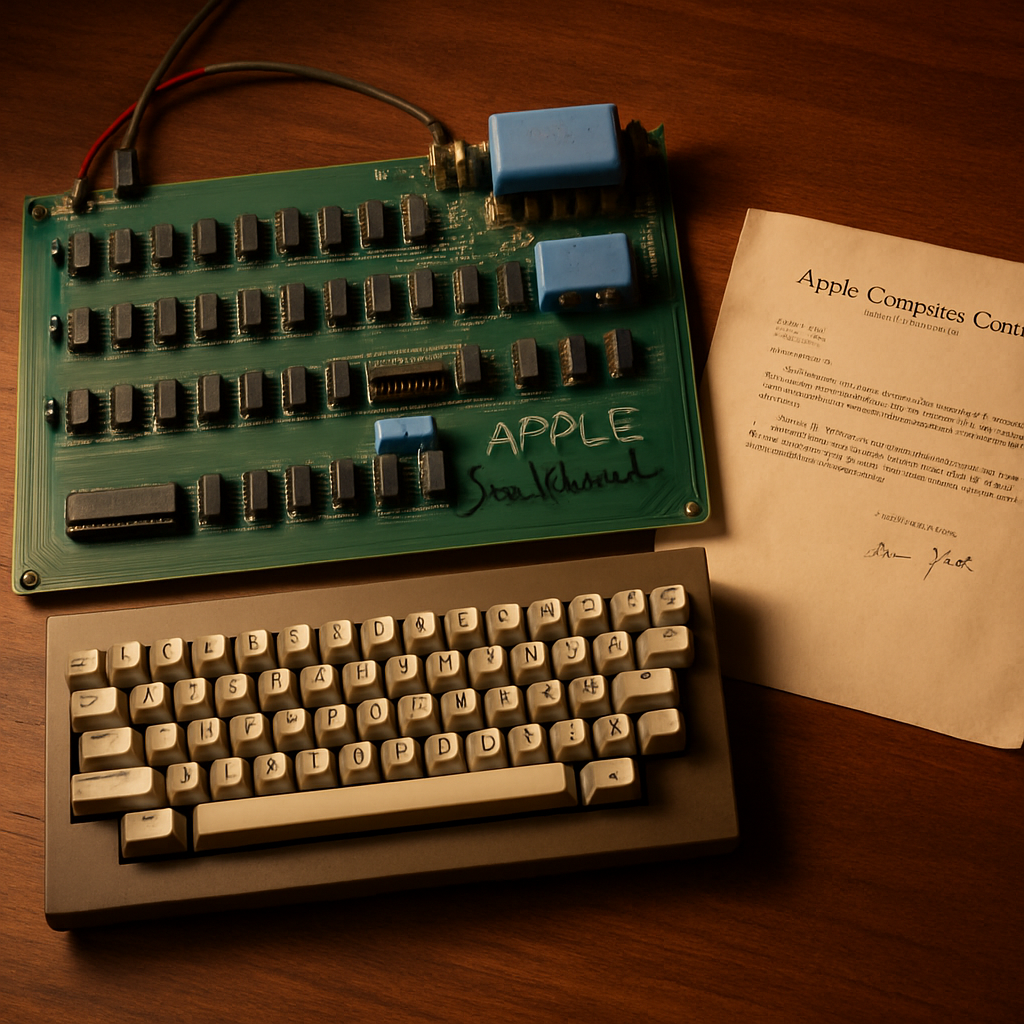
In a headline-grabbing auction, a working Apple-1 computer, labeled “Hatfield,” sold for a record $1,148,200 (including buyer’s premium) on October 14. It eclipsed its pre-sale estimate of $500,000 to $800,000 after a 28-minute bidding duel. This sale marks the highest price ever recorded at auction for a commercially sold Apple-1.
The “Hatfield” Apple-1 is named for Fred Hatfield, its original owner who famously complained to Apple back in 1978 about the lack of software for the machine. He received a letter from Steve Jobs promising to send an Apple II motherboard in trade for Hatfield’s Apple-1 — plus a payment of $400. Although Hatfield held on to the computer, he later sold it privately for around $40,000 in its repaired state. The current owner restored it and added Steve Wozniak’s signature to the motherboard before putting it up for auction.
While this isn’t the most expensive Apple-1 ever, since rare prototype units have fetched prices north of $2 million, it does overhaul previous public sale records. The most comparable earlier milestone was in 2013, when this very same machine sold at auction for approximately $686,000. Other Apple-1 variants, like the “Celebration” board, sold for $815,000 in 2016 and later exceeded $2 million in January 2026.
Why This Apple-1 Stands Out
This unit checks several rare boxes: it’s an operational Apple-1, once owned by someone who directly corresponded with Steve Jobs, and restored with one of Apple’s co-founders’ signatures. That combination — provenance, historical context, functionality, and signed hardware — tends to drive extreme values in collector circles.
Despite its fame, the machine isn’t a prototype, which places it below the absolute top tier of Apple-1 heritage in price. Prototypes are far rarer and historically rooted closer to Apple’s earliest days, which helps explain why some models have leapt past $2 million.
Nevertheless, the auction result pushes the ceiling for comparably authentic Apple-1 machines, showing robust demand for Apple’s early history among collectors and institutions. It also underscores how stories — like Jobs’ reply to Hatfield — can significantly amplify value.
Analytical Angle: This sale isn’t just about a vintage computer fetching a big number—it reflects how provenance and narrative increasingly matter in collector markets. For Apple-collectibles, matching hardware with authentic documentation or correspondence can multiply value more than most technical specs. As the market for tech history grows, we’ll likely see more such high-value sales where the story behind a device sells it as much as the device itself. Expect auction houses, museums, and large collectors to double down on sourcing machines with compelling backstories—and maybe tensions over authenticity and preservation along the way.