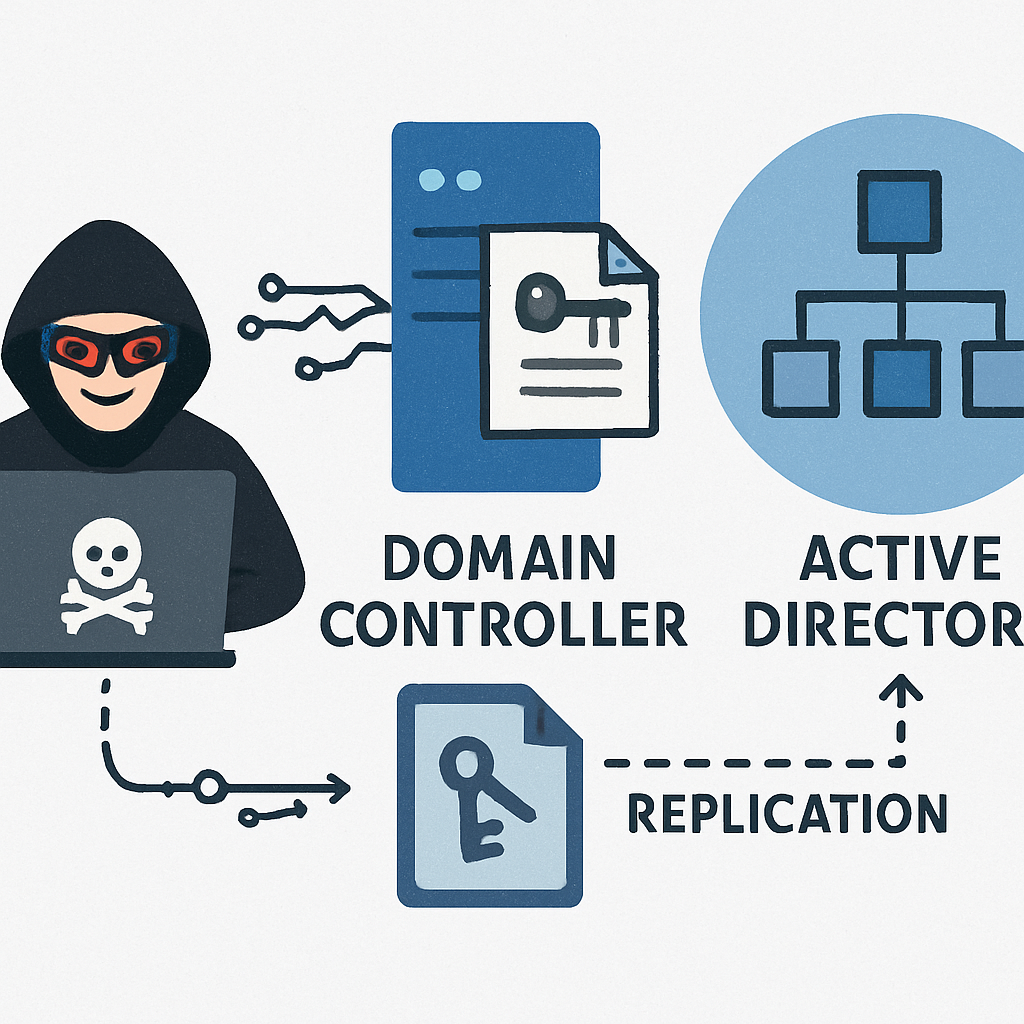
The Qilin ransomware group has recently employed a sophisticated technique known as DCSync to escalate privileges within Active Directory environments. This method allows attackers to impersonate domain controllers and extract sensitive data, including password hashes, without directly accessing the domain controllers themselves.
Security researcher Maurice Fielenbach identified this tactic during an investigation into a Qilin intrusion. The attack was detected through anomalies in Windows Security logs, where the built-in Administrator account initiated unexpected directory replication requests. These requests, logged under Event ID 4662, indicated unauthorized attempts to access and replicate directory data.
The DCSync technique exploits the Directory Replication Service Remote Protocol (MS-DRSR) to request password data. By obtaining the ‘DS-Replication-Get-Changes-All’ permission, attackers can access all domain data, including password hashes. This approach enables them to harvest credentials without triggering traditional security measures.
To mitigate such attacks, organizations should implement the following measures:
- Audit and restrict accounts with ‘Replicating Directory Changes’ and ‘Replicating Directory Changes All’ permissions.
- Enable Directory Service Access auditing on domain controllers to monitor replication requests.
- Analyze Event ID 4662 logs for unauthorized replication activities, especially those initiated by non-domain controller accounts.
By proactively monitoring and controlling replication permissions, organizations can reduce the risk of unauthorized access and potential data breaches.
The Qilin ransomware group’s use of DCSync underscores the evolving nature of cyber threats targeting Active Directory. As attackers continue to refine their methods, it is imperative for organizations to stay vigilant, regularly review security configurations, and implement robust monitoring to detect and respond to such sophisticated attacks promptly.