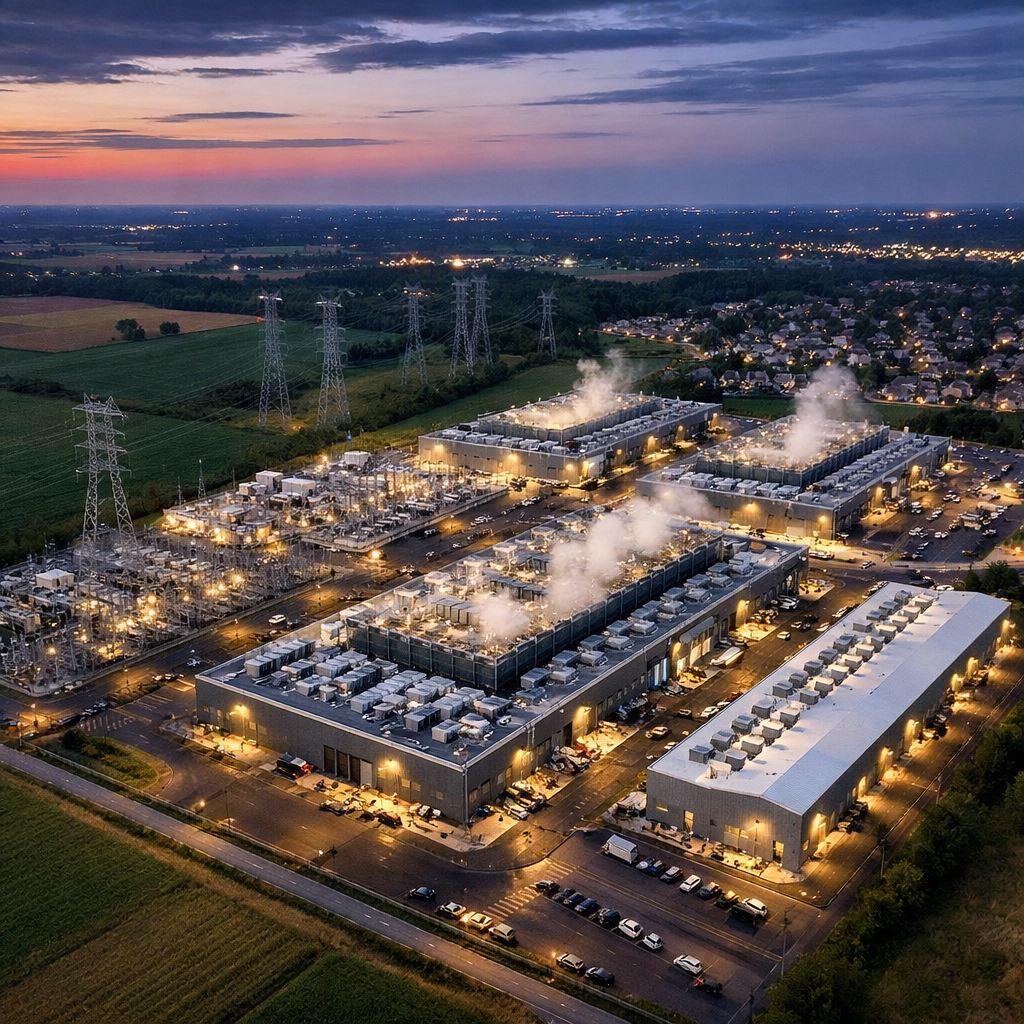
The U.S. midterms shifted power: Democrats now control both chambers of Congress, while a Republican resides in the White House. This setup could trigger heightened scrutiny of how and where AI data centers are built.
Data centers—massive facilities that house computing infrastructure for AI—emerged as a polling issue during the elections. Exit polling showed a majority of voters believe AI may cause more harm than good, with close to 80% opposing new data centers in their neighborhoods. Nearly 60% said data center policy factored strongly in their vote.
Pushback at the State and Local Level
In states like Ohio, Michigan, Texas, Maine, Nevada, Georgia, and South Carolina, candidates opposing fast-tracked data center construction saw electoral success. In Ohio, communities rejected measures to allow construction: voters banned data centers in one county and rebuffed related proposals elsewhere. OpenAI’s planned $500 billion facility in the state, backed by Nvidia funds, faced strong resistance. The incoming Ohio governor’s stance adds more uncertainty.
In Texas, the governor opposed the data center buildout, though the state’s grid vulnerabilities complicate those critiques. In Texas, too, a governor-elect won campaigning against data center expansion. Other states like Virginia—home to many data centers—have also come under fire for environmental and regulatory concerns, particularly around the reliance on gas turbines and other fossil fuel energy sources.
Federal Pressure Ahead?
With Democrats holding Congress, federal bills aimed at reining in data center expansion are gaining fresh momentum. One measure under discussion seeks to institute a national moratorium on data center development until rules are in place to protect communities, the environment, and energy prices. Another would stop companies from shifting power grid upgrade costs onto local residents.
Legislation already proposed by Senators and Representatives—including measures like the GRID Savings Act—focuses on preventing such externalized costs. Environmental rules, land-use rights, and stricter oversight of energy policy are also expected to be revised given recent shifts in leadership.
Companies building data centers have drawn criticism for unclear environmental disclosures, clandestine use of zoning laws or nondisclosure agreements with local governments, and benefiting from generous tax incentives. Voters and local activists argue these gains come at the expense of public health, energy costs, and environmental quality.
Still, there’s no consensus among Democrats on how far regulation should go. Some view a full moratorium as essential for making sure AI progress doesn’t come at undue cost; others fear overregulation could hamper technological competitiveness and even undermine national security claims tied to data buildouts.
Movement at the state and local levels appears to be picking up. New leaders, for example, have campaigned explicitly against unchecked development of AI infrastructure—one promises broad freezes, while others focus on tighter environmental and zoning oversight.
Why it matters: The post-midterm political landscape suggests the fight over data centers is far from technical—it’s now deeply political. As Congress shifts, so might the rules governing how AI infrastructure is built. What voters rejected in ballot initiatives could become policy in legislation, especially on energy, environment, and community rights. The coming months will test whether regulation will catch up with the fast pace of AI development—and what that will mean for tech companies, local governments, and citizens alike.