Threat actors have quietly injected the PolinRider password-stealing malware into multiple GitHub projects, including AsyncAPI Generator, CircuitVerse, and Open Food Facts. This breach could divert software downloads into perilous territory, exposing users to stolen browser credentials, GitHub login data, and sensitive macOS Keychain information.
How the Malicious Code Got In
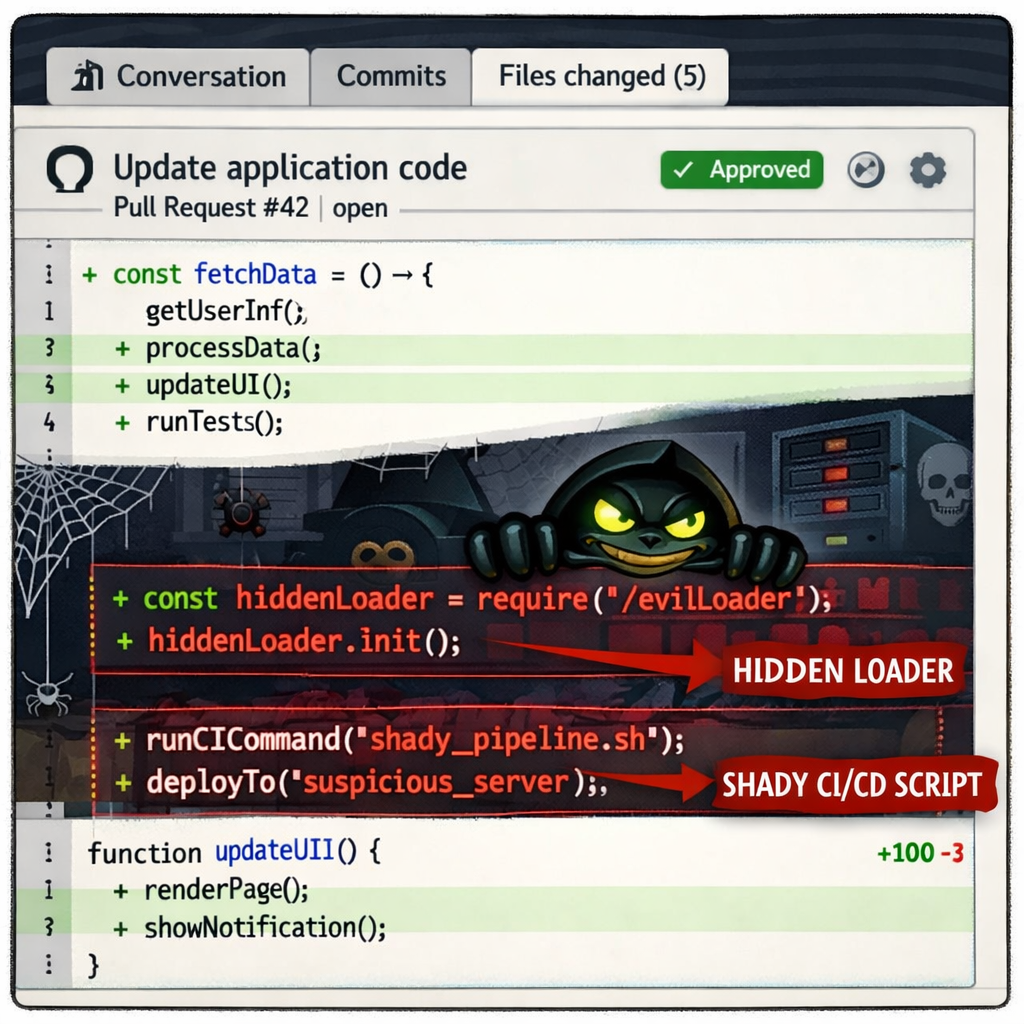
The infection began around October 19, when pull requests from the user “Eternity0207” introduced camouflaged code into projects’ workflows. While the account has since been suspended, it left behind 217 pull requests across several repositories. Of these, 145 were merged, meaning they passed through GitHub’s approval process, though in many cases the malicious code never executed.
In CircuitVerse, the malicious script ran within its automated release pipeline, creating installers for Windows, macOS, and Linux that were later available to download. In Open Food Facts, compromised commits triggered build failures, but led maintainers to inadvertently rotate sensitive secrets. AsyncAPI’s systems blocked the exploitation by enforcing strict approval for external workflow contributors, preventing their pull requests from running in continuous integration.
PolinRider’s Stealth Tactics
PolinRider makes use of subtle, hard-to-spot methods to avoid detection. Attackers used force-pushes—rewriting history on active branches—to swap in malicious code after legitimate commits. In some cases, the malicious changes mimicked the style of signed commits and employed nearly invisible modifications like whitespace or changes buried far inside files to escape review tools.
Some of the offending files included fake fonts tied to editor tasks, or JavaScript loaders masquerading within build and test scripts. Certain loaders hid key triggers—like specific headers or paths—that communicate with external servers to initiate later stages. Those exposed later stages can harvest passwords stored in browsers, credentials in macOS Keychain, and GitHub tokens.
Scope, Remediation, and IoCs
In a sample of 622 repositories across 311 GitHub accounts, the loader was confirmed in 576 cases. While this number is remarkable, it’s not representative of GitHub’s entire ecosystem. Investigation revealed Ethereum-related data used to route victims to command-and-control servers. Blocking a single IP won’t be enough; the infrastructure shifts dynamically.
The article provides a list of Indicators of Compromise, including Ethereum wallet IDs, server IP addresses, HTTP headers, URL patterns, SHA-256 hashes of infected files, and suspicious tasks in project configuration files. System administrators are urged to scrutinize past worklogs and artifact builds, especially in workflow logs from October onward. Clean branches, trusted build environments, and tighter permissions for external contributions are top defences.
Any device that may have run the loader should be considered compromised. A full cleanup is recommended: reinstall clean versions, rotate all potentially exposed credentials—GitHub, npm, SSH, cloud—and ensure code editors like VS Code are set to restricted mode for unfamiliar projects.
Why This Matters
The incident marks a dangerous evolution in how malware spreads—not through widely used packages but via project infrastructure itself. Rather than attacking developers’ registries or end-user packages, these attackers inserted themselves into upstream build pipelines—often with little chance for detection.
This is more than just another malware outbreak. It underlines how software supply chains and CI/CD systems are becoming key battlegrounds. As more tools rely on automated workflows and external contributions, attackers are shifting targets. Moving forward, open source maintainers and infrastructure teams will need to treat code reviews, workflow approvals, and build artifacts with the same gravity as any edge-facing service.