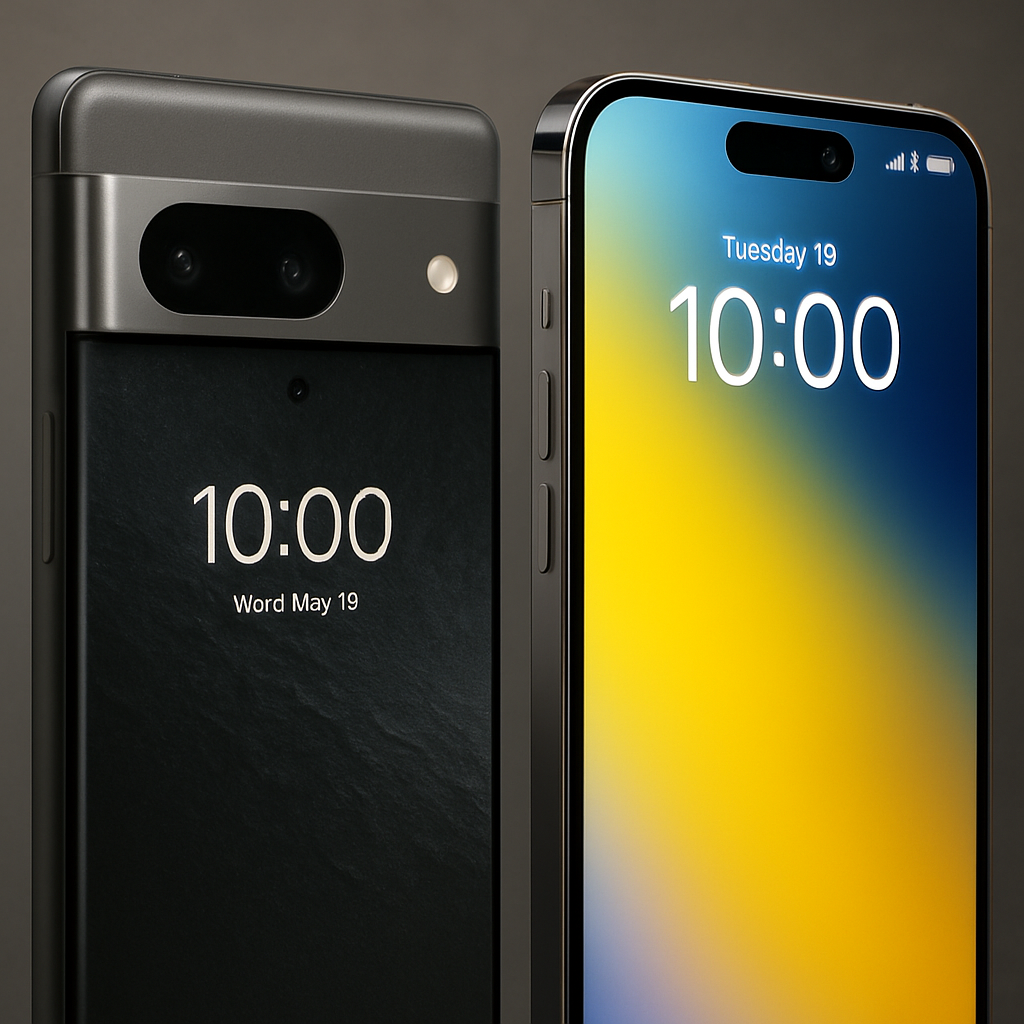
With Apple’s iPhone 17 Pro (2025) and Google’s freshly launched Pixel 11 Pro (2026), we now have two banner phones standing across different design philosophies. One leans into dramatic refreshes; the other improves via iteration. The question: does the Pixel 11 Pro, with its modest tweaks, really stand a chance against Apple’s more radical update?
Design & Display: Evolution vs. Revolution
Google has kept the Pixel’s shell largely familiar this year—just refined. The Pixel 11 Pro and Pro XL follow last year’s standout look with subtle changes: slightly improved materials, better finish, a bit more grip. Still, elements like its magnetic accessory mounting remain weaker than what Apple delivers from the get-go. In contrast, Apple’s iPhone 17 Pro shows more visual distinction straight away, particularly with its stronger magnets and design refresh that’s noticeably different from previous Pro models.([9to5google.com](https://9to5google.com/2026/08/21/pixel-11-pro-vs-iphone-17-pro-can-a-re-run-contend-with-a-re-do-video/))
On display performance, the Pixel pulls ahead in certain specs. Google’s panel now hits a peak brightness of up to 3,600 nits—surpassing the iPhone 17 Pro Max’s 3,000 nits on paper. Color playback is more vivid and contrast-heavy by default, though Apple opts for a more natural, muted palette out of the box. For users who don’t care much about technical numbers, both phones deliver excellent screens; for the detail fan, Pixel’s panel is more aggressive.([9to5google.com](https://9to5google.com/2026/08/21/pixel-11-pro-vs-iphone-17-pro-can-a-re-run-contend-with-a-re-do-video/))
AI Features & Software: Deep Integration vs. Polished Controls
With Android 17 (and the upcoming QPR1 update), the Pixel further weaves in AI both in UI design—additions like frosted glass and Gaussian blur—and core functionality. Key is Gemini Intelligence, Google’s step forward to blend model-powered tools deeply into the OS. Apple, meanwhile, with iOS 27 and Siri’s revamp, is accelerating its AI efforts too. Some of Apple’s improvements are enabled via partnerships—in this case, integrating Gemini models under the hood.([9to5google.com](https://9to5google.com/2026/08/21/pixel-11-pro-vs-iphone-17-pro-can-a-re-run-contend-with-a-re-do-video/))
Still, there are gaps. Apple offers strong usability controls—voice customization, pausing, disabling spoken responses—that Pixel lacks. Pixel tends to stay live-listening and model-updating in real time, which gives it flexibility. But users seeking restraint, polish, and fine control over voice assistants may still prefer what Apple delivers.([9to5google.com](https://9to5google.com/2026/08/21/pixel-11-pro-vs-iphone-17-pro-can-a-re-run-contend-with-a-re-do-video/))
Camera: Balance of Hardware and AI
Both phones deliver excellent camera systems, yet they approach things differently. Pixel’s Camera Looks resemble Apple’s Photographic Styles, but Google leans harder into applying AI directly into features like Pro Res Zoom, Video Boost, and Magic Camera—tools made for quick, AI-augmented creativity. Apple stays more reserved, letting hardware lead more often, with AI playing supporting roles.([9to5google.com](https://9to5google.com/2026/08/21/pixel-11-pro-vs-iphone-17-pro-can-a-re-run-contend-with-a-re-do-video/))
Color rendition on human skin is a standout for Google; its Real Tone tech feels especially well-tuned. Apple continues to favor warmer hues—some users love this “cinematic” finish, others see it as overly rich. Ultimately, while Pixel’s photo outputs are stellar thanks to its AI tools, the iPhone still uses its larger sensor work and physical components to push past what software alone can achieve.([9to5google.com](https://9to5google.com/2026/08/21/pixel-11-pro-vs-iphone-17-pro-can-a-re-run-contend-with-a-re-do-video/))
Verdict: When Subtle Changes Aren’t Enough
With both flagships in hand, it’s clear the Pixel 11 Pro catches up in many areas—display brightness, vibrant color, added AI capability—but it’s more re-run than overhaul. For buyers with an iPhone 17 Pro already, the leap isn’t dramatic. Meanwhile, Apple’s design shakeup and immersive redesign give the 17 Pro (Max) real presence in comparison. Pricing also plays a role: Pixel’s new features feel earned, but for the base model vs. Apple’s base, value becomes a concern.([9to5google.com](https://9to5google.com/2026/08/21/pixel-11-pro-vs-iphone-17-pro-can-a-re-run-contend-with-a-re-do-video/))
At the end of the day, the Pixel 11 Pro is a formidable opponent, strong in display tech and AI tools—but it still can’t fully match the iPhone 17 Pro Max’s hardware strengths or the distinctiveness of Apple’s update. For many, choosing will boil down to whether you prioritize pure hardware vs. AI enhancement, or visual polish vs. expressive tweaks.
This face-off signals where premium phones are going: performance is assumed; the battles now are in fine detail—design nuance, software flexibility, and AI trust. What to watch next: Apple’s response in iPhone 18, how Google tightens Siri vs. Gemini, and whether the value proposition of flagships shifts when differences become subtler.