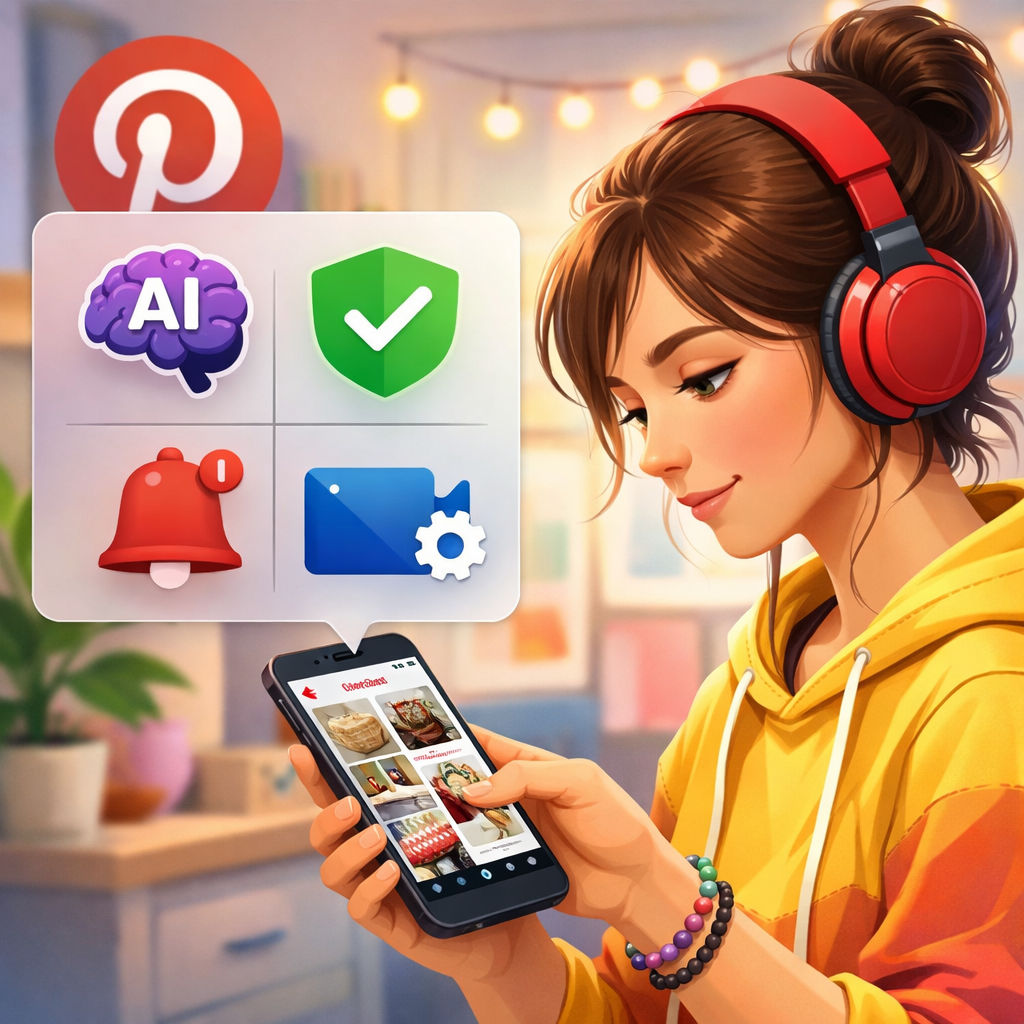
Pinterest is giving parents new tools to manage how much AI-generated content their teen users see. The platform has released an updated Parental Controls page that consolidates key settings and adds fresh options to adjust AI content exposure alongside controls for notifications and autoplay features.
All Parental Settings in One Place
The revamped Parental Controls dashboard brings together previously scattered settings—privacy, social permissions, ads personalization—into one unified space. From this central hub, caregivers can set a four-digit parent passcode that locks key account, privacy, data, and social settings. This passcode remains in effect until the teen turns 18. For younger accounts (under 16), profiles are private by default. Once a teen is over 16 and no passcode is in place, they’ll have the option to make their profile public.
New Safeguards Around AI and Teens’ Experience
A standout addition allows caregivers to limit or adjust the amount of AI-generated content appearing in a teen’s recommended feed. The update joins improvements around notifications, in-app interactions, and the autoplay behavior of videos. When teens try to make their experience less restrictive—say, to view more AI-generated posts—changes require parental passcode approval.
Existing features also include labeling of Pins when AI has generated or modified them. Pinterest uses both metadata and a classifier system to detect such content—applying a visible tag so users can distinguish AI material from human-made content. Regionally and across categories, users already had tools to reduce AI content exposure via the “Refine Your Recommendations” settings. Under-18 users, moreover, are automatically opted out of having their public uploads used to train Pinterest’s AI models.
The redesign also brings device-level integrations for iOS and Android, enabling control over Screen Time and Location settings directly from the new page. In short: parents now have a more holistic set of levers that governs teens’ privacy, content, and social visibility.
Pinterest’s change reflects rising concerns among researchers, activists, and families over how algorithmic feeds and AI content affect youth well-being. Other platforms have added controls for AI chatbots, restricted AI characters, or paused teen access to some generative features—but few have taken aim at the content filling feeds itself.
Why this matters: AI-generated content has increasingly crowded users’ feeds across platforms, sometimes blurring lines between what’s real and what’s synthetic. For teens—whose social identity, emotional development, and conceptions of reality are still forming—this makes exposure to AI content particularly sensitive.
What to watch: whether these tools work in practice. Are teens still seeing AI content even after parental limits? Will Pinterest enforce labels rigorously or allow loopholes? This move marks progress—but its success will depend on how deeply these controls reshape recommendation algorithms and enforcement policies.