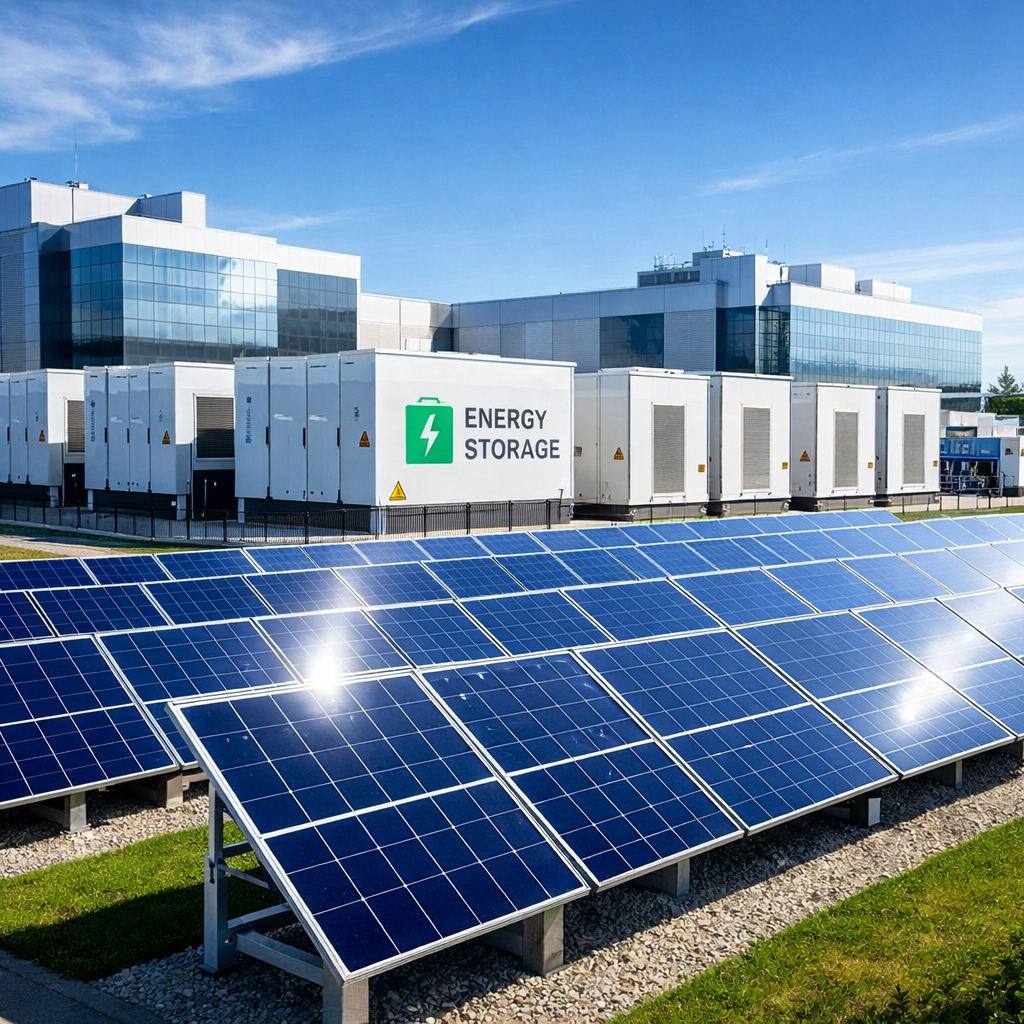
The AI era has sharpened focus on the energy demands of data centers, and one investor is pointing toward a cleaner, more reliable future. Brook Porter of G2VP believes pairing solar with long-duration batteries is the critical path forward — especially when compared to natural gas plants, which have been the go-to stopgap for many until cleaner solutions scale.
Why Solar & Storage Beat Gas in the Long Run
Porter explains that while natural gas has been used frequently to meet sudden demand spikes, it’s not keeping pace with what AI data centers really need. He points out that global solar capacity has surpassed one terawatt per year, while natural gas plants are still struggling to push out 60 to 70 gigawatts. The math is clear: solar — with its rapid expansion and modular build — offers far more upside on scalability compared to gas. Wright’s Law, which observes that costs decline as production scales, plays a key role here. That same law is helping solar and emerging storage technologies drive down costs, making renewables increasingly competitive.
Two Paths for the Next Wave of Data Centers
According to projections by G2VP, AI-driven data center investments are set to exceed $4 trillion by 2030. Within that wave, two distinct infrastructure types are emerging: smaller, grid-connected centers that have some local generation capacity; and larger off-grid centers powered by solar farms paired with long-duration storage. Going off-grid can minimize permitting delays and grid access issues, giving companies more control over how and when they build.
For long-duration storage, the conversation is shifting beyond lithium-ion. Companies like Form Energy and Antora Energy are building storage systems designed to be cheaper per megawatt-hour than traditional battery setups and fossil fuels, especially for round-the-clock operation. Although these emerging technologies aren’t yet mainstream among data center builders, Porter urges that leaders start planning now — laying infrastructure and making tech choices that will align with a renewable-powered future.
This approach draws on lessons from backing previous AI infrastructure ventures like Crusoe, where G2VP had early insight into what kind of energy setups scale efficiently. The emerging consensus is that speed and scale matter: modular solar arrays and energy storage pieces can ramp up fast, while gas plants — and the regulatory and supply chain issues around them — tend to slow everything down.
Why it matters: AI data centers are massive power consumers, and the stakes are high. Opting for solar plus storage could bring both cost savings and sustainability gains. Developers who wait may find themselves locked into fossil-dependent systems just as clean energy becomes cheaper and more scalable — a tough spot in an era where efficiency and green credentials are increasingly tied to success.