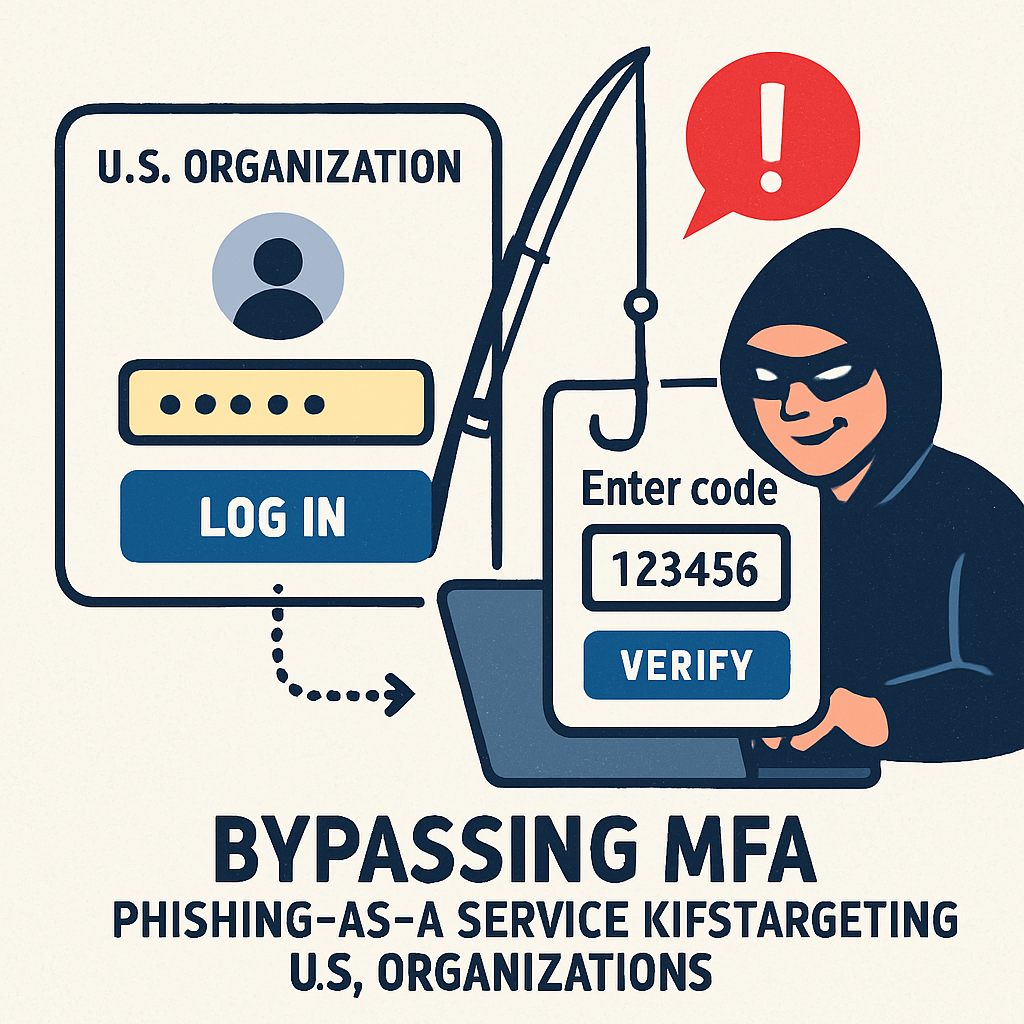
Phishing-as-a-Service (PhaaS) platforms are increasingly targeting U.S. organizations by exploiting vulnerabilities in multi-factor authentication (MFA) systems, particularly within Microsoft 365 environments. Three notable PhaaS kits—Sneaky 2FA, EvilTokens, and EvilProxy—have been identified as key players in these sophisticated attacks.
Sneaky 2FA: Adversary-in-the-Middle Attacks
Sneaky 2FA employs an Adversary-in-the-Middle (AiTM) technique, positioning itself between the user and the legitimate Microsoft 365 login page. This method allows attackers to intercept authentication credentials and session cookies in real-time. Victims are presented with a seemingly authentic login interface, and upon entering their credentials and completing the MFA process, the attackers capture the session tokens, granting them unauthorized access to the victim’s account. This approach effectively nullifies the protective measures provided by MFA.
EvilTokens: Exploiting OAuth Device Code Flow
EvilTokens takes a different approach by abusing the OAuth 2.0 device authorization grant flow. This method is typically used for devices lacking a keyboard, such as smart TVs, to authenticate users. Attackers trick victims into authorizing a malicious application by presenting a legitimate-looking device code authorization prompt. Once the victim completes the process, the attacker gains access tokens, allowing them to access the victim’s Microsoft 365 account without needing the actual credentials. This technique effectively bypasses MFA, as the authorization appears legitimate to the authentication system.
EvilProxy: Reverse-Proxy Credential Relay
EvilProxy utilizes a reverse-proxy mechanism to relay credentials and session cookies between the victim and the legitimate service. By acting as an intermediary, EvilProxy captures authentication data in real-time. Victims interact with what appears to be a genuine login page, but their inputs are transmitted through the attacker’s server. This allows the attacker to harvest credentials and session tokens, effectively bypassing MFA protections.
The emergence of these PhaaS platforms underscores a significant shift in cyberattack methodologies. Traditional MFA implementations, once considered robust defenses, are now being circumvented through these advanced techniques. Organizations must recognize that enabling MFA alone is no longer sufficient. Comprehensive security strategies, including user education, behavioral analytics, and the implementation of advanced threat detection systems, are essential to counteract these evolving threats. Staying informed about the latest attack vectors and continuously updating security protocols are critical steps in safeguarding sensitive information against these sophisticated phishing campaigns.