Introducing OWASP CVE Lite CLI: A Developer-Centric Vulnerability Scanner
In the ever-evolving landscape of software development, ensuring the security of applications is paramount. Recognizing the need for a more developer-friendly approach to vulnerability scanning, the Open Web Application Security Project (OWASP) has introduced the CVE Lite CLI—a free, open-source tool designed to seamlessly integrate dependency security checks into developers’ daily workflows.
Bridging the Gap in Developer Security Workflows
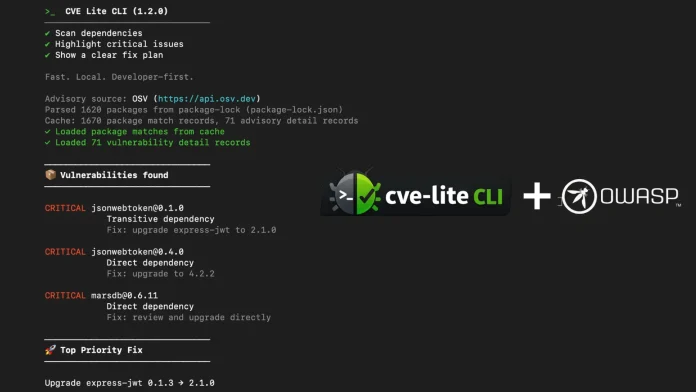
Traditional security scanners often operate within continuous integration (CI) pipelines, alerting developers to vulnerabilities post-code review or during merge processes. This delayed feedback can lead to alert fatigue, as developers are inundated with notifications that may lack immediate actionable guidance. CVE Lite CLI addresses this challenge by providing real-time, actionable remediation plans directly within the developer’s terminal, just before code is pushed. This proactive approach ensures that security becomes an integral part of the development process, rather than an afterthought.
Key Features of CVE Lite CLI
1. Local Dependency Analysis: The tool reads a project’s lockfile locally, ensuring that no sensitive data—such as source code, dependency trees, or credentials—leaves the developer’s machine.
2. Comprehensive Package Manager Support: CVE Lite CLI is compatible with all major JavaScript package managers, including npm, pnpm, Yarn, and Bun. This broad support ensures that developers across different environments can seamlessly integrate the tool into their workflows.
3. Remediation-First Output: Unlike traditional scanners that merely list vulnerability identifiers, CVE Lite CLI provides validated, copy-and-run install commands tailored to the specific package manager in use. This feature empowers developers to address vulnerabilities promptly and efficiently.
4. Usage-Aware Reachability: By employing static analysis, the tool detects whether vulnerable packages are actually imported in the source code. This capability significantly reduces false positives, allowing developers to focus on genuine threats.
5. Offline Advisory Database: For environments with limited internet access, CVE Lite CLI offers an offline advisory database. Developers can sync approximately 217,065 advisory records in under nine seconds using the command `cve-lite advisories sync`, ensuring that security checks remain uninterrupted.
6. Interactive HTML Reports: The tool can generate self-contained dashboards featuring severity cards, searchable findings tables, and copy-ready commands. This interactive report enhances visibility and facilitates better decision-making.
7. Auto-Fix Mode: With the `–fix` option, CVE Lite CLI applies validated direct dependency fixes using the detected package manager and automatically rescans the project. This feature streamlines the remediation process, saving valuable time.
8. CI/CD Integration: The tool supports continuous integration and continuous deployment (CI/CD) workflows by offering options like `–fail-on high`, which exits with a non-zero status on threshold breaches. Additionally, it can generate SARIF 2.1.0 output for GitHub Code Scanning and create CycloneDX 1.4 Software Bill of Materials (SBOM).
9. AI Assistant Integration: CVE Lite CLI can write skill files for AI assistants such as Claude Code, Codex CLI, Gemini CLI, Cursor, and GitHub Copilot. This integration allows AI assistants to analyze scan outputs and generate prioritized fix plans, further enhancing the developer experience.
Installation and Usage
Getting started with CVE Lite CLI is straightforward. Developers can install the tool globally using npm:
“`bash
npm install -g cve-lite-cli
cve-lite /path/to/project
“`
Alternatively, for a one-off scan, the following command can be used:
“`bash
npx cve-lite-cli /path/to/project
“`
These commands require no account setup or configuration, ensuring a hassle-free integration into existing development environments.
Conclusion
OWASP’s CVE Lite CLI represents a significant advancement in the realm of developer-centric security tools. By providing real-time, actionable insights directly within the development workflow, it empowers developers to proactively address vulnerabilities, thereby enhancing the overall security posture of their applications. As the software development landscape continues to evolve, tools like CVE Lite CLI will be instrumental in fostering a culture of security-first development practices.