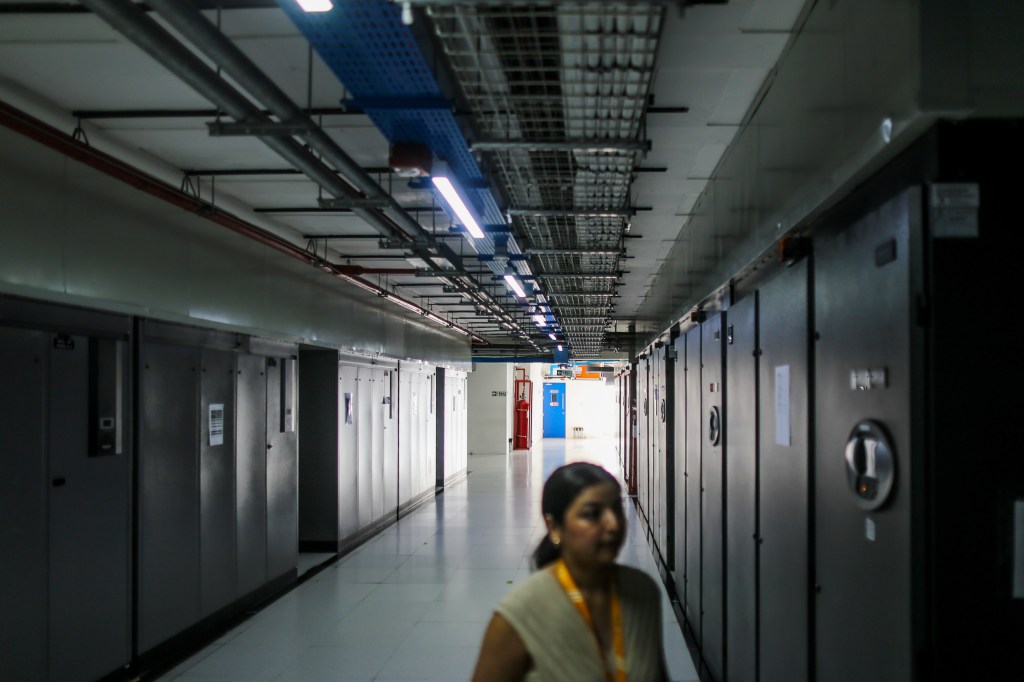
AirTrunk’s $30 Billion Investment to Revolutionize India’s AI Data Center Landscape
In a landmark move poised to transform India’s digital infrastructure, AirTrunk, an Australian data center operator backed by Blackstone, has announced a monumental investment of $30 billion to develop 5 gigawatts (GW) of AI-focused data centers across the country by 2030. This commitment underscores India’s burgeoning appeal as a global hub for artificial intelligence and cloud computing.
Strategic Expansion into India
AirTrunk’s foray into the Indian market began earlier this year with the acquisition of Lumina CloudInfra, marking a significant step in its expansion strategy. The planned 5GW capacity represents one of the largest investments in India’s digital infrastructure sector to date. According to research firm Bernstein, India’s data center capacity is projected to surge from approximately 1.5GW today to as much as 8GW by 2030, highlighting the country’s rapid digital growth and the increasing demand for robust computing facilities.
Government Initiatives and Incentives
The Indian government’s proactive measures have played a pivotal role in attracting such substantial investments. Earlier this year, New Delhi introduced tax exemptions for foreign cloud providers on services sold overseas, provided these workloads are managed from Indian data centers. This policy, effective through 2047, aims to position India as a favorable destination for global tech companies seeking to expand their AI and cloud computing capabilities.
Major Developments in Maharashtra
AirTrunk has already initiated significant groundwork for its expansion. Maharashtra Chief Minister Devendra Fadnavis recently announced a letter of intent for land allotment at the Raigad Pen Growth Center, where AirTrunk plans to establish a 3GW data center with an investment of approximately ₹2 trillion (around $21 billion). This project is set to become a cornerstone of AirTrunk’s Indian operations. Additionally, the company has a development pipeline of about 600 megawatts (MW) across key cities, including Mumbai, Chennai, and Hyderabad.
National and Global Implications
The announcement follows a meeting between AirTrunk CEO Robin Khuda and Prime Minister Narendra Modi. Prime Minister Modi emphasized that this investment would bolster India’s position as a global leader in cloud computing and artificial intelligence. AirTrunk’s commitment aligns with a broader trend of significant investments in India’s digital infrastructure by both international and domestic companies.
Global tech giants such as Amazon, Google, Microsoft, OpenAI, and Uber have recently announced major investments in cloud and AI infrastructure within India. Simultaneously, Indian conglomerates like Reliance Industries, Adani Group, and Tata Consultancy Services (TCS) have unveiled ambitious plans to expand their data center capacities. For instance, Reliance Industries is planning to build what could become the world’s largest AI data center in Jamnagar, India, with a capacity of 3GW, aiming to capitalize on the surging demand for AI services. ([techcrunch.com](https://techcrunch.com/2025/01/23/reliance-plans-world-biggest-ai-data-centre-in-india-report-says/?utm_source=openai))
Addressing Resource Challenges
The rapid expansion of data centers brings to the forefront challenges related to resource consumption, particularly electricity. Data centers are known for their substantial energy requirements, and industry analysts have identified power availability as a potential bottleneck. Deloitte estimates that data center build-outs in the Asia Pacific region could necessitate tens of terawatt-hours of additional electricity by the end of the decade. To mitigate these challenges, AirTrunk’s investment strategy is underpinned by government support, access to a large pool of technical talent, and a focus on renewable energy sources.
The Road Ahead
AirTrunk’s $30 billion investment is a testament to India’s growing prominence in the global AI and cloud computing landscape. As the company embarks on this ambitious project, it is poised to play a crucial role in shaping the future of digital infrastructure in India. This development not only signifies a significant economic boost but also positions India as a key player in the global AI ecosystem.